Practical Sales Training™ > How To Lose The Sale > Assumed Intent
Assumed Intent
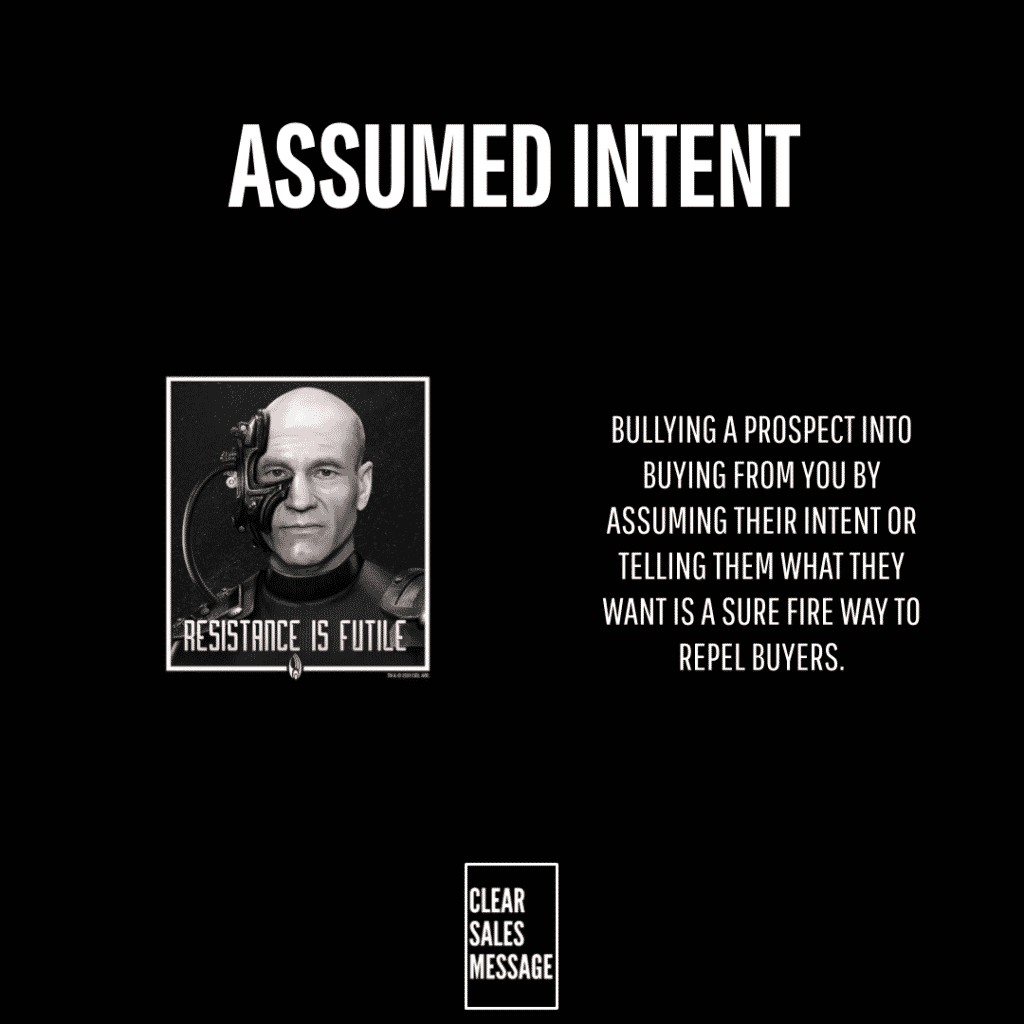
Nobody likes being told what they think. But in sales, it happens all the time.
Assumed intent is when a seller skips the question and jumps straight to the answer. Instead of finding out whether the buyer is interested, they simply act as if they already are. The conversation moves from “are you interested?” to “of course you’re interested” – and the buyer feels steamrolled before the conversation has even started.
This is one of the reasons sales gets a bad reputation. So if you want to keep it, avoid this behaviour entirely.
What Is Assumed Intent?
Assumed intent is when a salesperson makes decisions on behalf of the buyer – deciding what they want, what they need, and what they will do – without checking first. The seller replaces questions with statements and curiosity with certainty.
It shows up in language. Words like “when you join us,” “as you will have seen,” or “you will definitely want this” all assume the buyer has already made a decision they have not made. The seller treats the outcome as settled before the buyer has had a say.
However, the most damaging form of assumed intent goes beyond language. It is a mindset – one where the seller believes their job is to push rather than to ask. As a result, the buyer’s actual needs become irrelevant to the conversation.
Why Does Assumed Intent Lose The Sale?
Buyers need to feel heard. When a seller skips straight to telling them what they want, that need goes unmet. Instead of feeling understood, the buyer feels managed. And a buyer who feels managed does not buy – they disconnect.
Assumed intent also removes the buyer’s sense of control. Buying is a choice. The moment a seller acts as if the choice has already been made, the buyer’s instinct is to reassert control – usually by pulling back or saying no. So the pushier the approach, the more resistance it creates.
Trust is another casualty. Sales relationships depend on the buyer believing the seller has their interests at heart. Assumed intent signals the opposite. It shows the seller cares more about closing than about whether the solution is actually right. That signal, once sent, is very hard to unsend.
Finally, assumed intent tends to attract exactly the kind of attention a salesperson does not want. Buyers who feel pressured talk about it. They warn colleagues. They leave reviews. Because of that, one clumsy interaction can do damage well beyond the original conversation.
How Does Assumed Intent Show Up In Sales?
Presumptive language in outreach
Cold messages and emails often carry assumed intent without the sender realising it. Phrases like “when you attend our event” or “as you will know, this is a problem for businesses like yours” presume agreement the buyer has never given. The result is a message that feels presumptuous rather than helpful – and gets ignored or deleted as a result.
Skipping the discovery stage
Some sellers launch straight into a pitch before asking a single question. They assume they already know what the buyer needs and therefore skip the part of the conversation that would actually tell them. However, every buyer is different – and the fastest way to miss what matters to them is to stop listening before you start.
Dismissing hesitation
When a buyer raises a concern or asks for time to think, assumed intent treats that as an obstacle rather than useful information. The seller pushes on, reframes the objection, and keeps closing. But hesitation is data. It tells you something important about where the buyer is – and ignoring it guarantees you will not address what is actually holding them back.
Framing urgency around the seller’s needs
“I need to know by Friday” or “we only have two spots left this month” – when these statements reflect the seller’s pipeline rather than the buyer’s reality, they are a form of assumed intent. They assume the buyer should reorganise their priorities around the seller’s timeline. Most buyers see through this instantly, and it damages credibility rather than creating urgency.
When Assumed Intent Does The Most Damage
Assumed intent does the most damage at the start of a relationship. A cold outreach message that presumes interest poisons the well before any trust has formed. Because first impressions are hard to reverse, a presumptuous opener often ends the conversation before it begins.
It also causes significant damage in complex or high-value sales. The bigger the decision, the more the buyer needs to feel in control. In those contexts, assumed intent does not just lose the current deal – it closes the door on the entire relationship.
Similarly, it hurts in any market where buyers talk to each other. Professional sectors, tight-knit industries, and online communities all share experiences. A buyer who feels pushed around will tell others – so the damage spreads far beyond the individual interaction.
How To Avoid Assumed Intent
Ask before you assume
Replace every statement about what the buyer wants with a question. Instead of “you will want to see how this works,” try “would it be helpful to see how this works?” The content is nearly identical – but the second version gives the buyer a choice, and that choice makes all the difference.
Listen to hesitation rather than pushing through it
When a buyer pauses or raises a concern, treat it as information rather than resistance. Ask what is behind it. The answer will tell you far more about how to help them than any amount of pushing ever could. And because the buyer feels heard, trust builds rather than erodes.
Audit your outreach language
Read back your cold emails and messages and look for presumptive words – “when,” “as you will know,” “obviously,” “of course.” Each one assumes something the buyer has not confirmed. Replace them with open language that invites a response rather than pre-empting one.
Put the buyer’s timeline first
If you need a decision by a certain date, explain why that date matters to the buyer – not just to you. Real urgency helps buyers make decisions. Manufactured urgency based on your own targets creates resentment. The difference is whether the reason serves them or just serves your pipeline.
Common Assumed Intent Mistakes
Confusing confidence with presumption
Confidence in your offer is a good thing. Assuming the buyer shares that confidence without checking is not. The line between the two is whether you have asked. A confident salesperson says “I think this could be a great fit – can I ask you a few questions to check?” A presumptuous one says “this is exactly what you need” before the buyer has said a word.
Using scripts that bake in assumed intent
Some sales scripts are built on presumptive language from the first line. If your opening assumes the buyer has a problem, wants a solution, and is ready to act – without asking any of those things – the script itself is the problem. Review your scripts for assumed intent and replace presumptive statements with open questions throughout.
Treating silence as agreement
A buyer who does not push back is not necessarily on board. Silence often means the buyer is processing, uncertain, or too polite to object. So never interpret a lack of resistance as a yes. Check in instead – ask where they are and what they are thinking. That question alone can save deals that would otherwise quietly disappear.
Assumed Intent – An Example
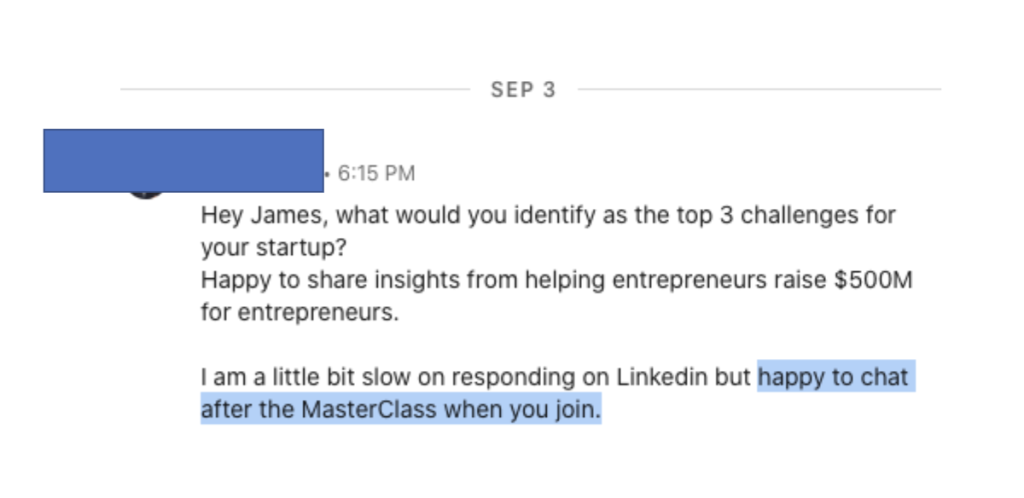
A salesperson sends a cold LinkedIn message. The message is friendly, but one word gives it away: “when.” As in – “I’d love to tell you more about what we do. When you join our webinar this Thursday…”
The buyer never said they wanted to join a webinar. They never said they were interested in the topic. But the seller has already decided they will attend – and structured the message around that assumption.
To make it worse, the message ends with a note that the sender is “too busy to respond on LinkedIn” – despite having sent the message on LinkedIn in the first place. So the buyer is told what to do, presumed to be interested, and then informed that a reply is inconvenient. The result is a message that feels dismissive, presumptuous, and entirely about the seller’s needs.
That is assumed intent in action. And it is exactly why the message gets ignored.
See Also