
Practical Sales Training™ > How To Keep Your Clients Happy > The “How To” Effect

The “How To” Effect
What Is It?
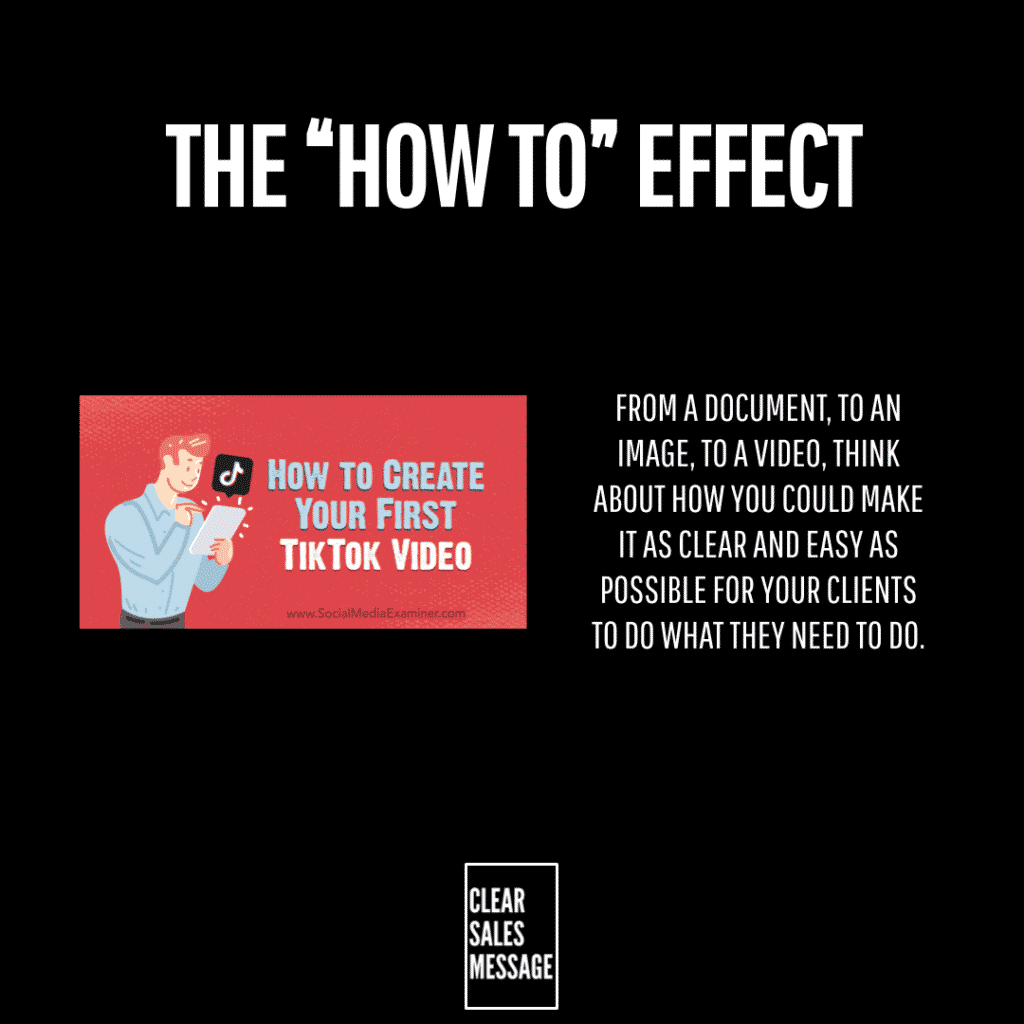
The “How To” Effect helps clients reach their goal. You do this with clear, step by step instructions.
It sounds simple. But most businesses skip this step, and buyers pay the price for it.
Why Does It Work?
It works because of the path of least resistance. The easier something feels, the more likely someone is to actually do it.
So if you spell out the steps clearly, you raise the odds of success. And when your client succeeds, your product or service gets the credit.
This matters more than most sellers realise. A confused buyer doesn’t ask for help. They just quietly give up instead, and you never even know why.
How Can You Use It?
Guide Them Through Your Own Offer
Start with your own product or service. Write out the exact steps someone needs to get value from it. Choose video, text or images, whichever makes the instructions easiest to follow.
Guide Them Through The Bigger Picture
Your offer is often just one part of a bigger challenge for your client. So think beyond your own product. If you sell accounting software, that’s part of running a business. Help with the wider challenge too, and you become useful even when you’re not the one being used.
When It Works Best
This works best when your product has a learning curve, even a small one. New tools, new processes and new services all create a moment of hesitation. A good guide removes that hesitation fast.
It also works well for complex purchases. The more steps involved, the more valuable a clear guide becomes. Buyers feel supported instead of stuck.
When It Becomes Dangerous
The risk is writing a guide that assumes too much. If you skip steps because they feel obvious to you, your client gets lost. And a lost client rarely asks why. They just quietly drop off.
Overly technical language causes the same problem. Even a great guide fails if it reads like a manual for experts, not people just starting out.
A guide that’s too long can backfire too. If it feels like homework, people abandon it halfway through.
Common Mistakes
Assuming Too Much Knowledge
What feels obvious to you often isn’t obvious to a new client. So spell out every step, even the small ones.
Sticking To One Format
Some people read, some watch and some just want a checklist. Offer more than one format, since one size rarely fits everyone.
Only Covering Your Own Product
If you only ever talk about your own offer, you miss a chance to help more broadly. That broader help is often what earns real trust.
The “How To” Effect – An Example
The Invoice Guide
A company that sells accounting software publishes a post titled “How to Set Up Your First Invoice in Under 5 Minutes.” It includes a 5-step text guide, screenshots of each step, a short video demo and a downloadable PDF checklist.
This removes confusion right from the start. A new user sees instantly that getting going is easy, and that help is already built in. Because of that, the software feels more valuable before anyone’s even used it properly.
The same company also publishes wider content, like “How to Organise Your Finances Before Tax Season.” This attracts a bigger audience than their product alone ever could. It also positions them as helpful experts, not just a vendor.
Together, these guides do two jobs at once. They support existing users, and they quietly bring in new ones too.
See also