Practical Sales Training™ > How To Keep Your Clients Happy > Care Instructions
Care Instructions
“Wash with similar colours. Wash inside out. Iron on reverse.” A tiny label, but it quietly shifts responsibility for the result onto the person wearing the jumper.
That’s a Care Instruction. It doesn’t just deliver something. It tells the buyer how to keep it working the way it should.
This page covers what Care Instructions are, why they reduce silent disappointment, and how to use them without sounding controlling.
What Are Care Instructions?
Care Instructions are the guidance you give buyers on how to look after, use, or maintain what they’ve bought from you, so they get the best possible outcome.
This isn’t about rules or warnings. Instead, it’s about setting expectations and showing that the result depends on how someone treats it after the sale, not just on what got delivered at the point of purchase.
Care Instructions shift responsibility gently. They make it clear that success is a shared effort, while reassuring the buyer that you’ve thought beyond the transaction itself.
Why Do Care Instructions Work?
Care Instructions work by reducing post-purchase anxiety and preventing silent disappointment. When nobody tells buyers how to look after something, they fill the gap with assumptions. Those assumptions are often wrong.
By clearly explaining what helps, what harms, and what to avoid, you remove ambiguity. So the buyer feels supported rather than blamed, and guided rather than restricted. It frames outcomes as something you can protect, not something that randomly succeeds or fails.
This is exactly why clothing labels, warranties, onboarding guides, and usage recommendations exist. They aren’t there to limit enjoyment. Instead, they’re there to preserve it. So the presence of Care Instructions signals that the product or service is valuable enough to warrant real attention and care.
How Can You Use Care Instructions In Sales?
Use Them Where Behaviour Affects Outcomes
Care Instructions work especially well when results vary depending on behaviour, effort, or environment. So they work well in services, education, transformation-based offers, and anything where misuse could quietly undermine the outcome.
Pre-empt Problems Calmly
You can use them to reduce refunds, manage expectations, and protect your reputation without sounding defensive. They also let you pre-empt common problems in a calm, neutral way, before they turn into real dissatisfaction.
When done well, Care Instructions feel thoughtful, not controlling. They tell the buyer, “this matters, and we want you to get the most from it.” Care Instructions aren’t about limiting use. They’re about protecting results.
When Care Instructions Work Best
They work best when a result genuinely depends on what the buyer does next, rather than being fixed entirely at the point of sale. A jumper, a skincare routine, or a piece of software all need ongoing care to perform as promised.
They also work especially well when misuse is common but easy to prevent, since a short, clear instruction can stop a problem before it ever becomes a complaint or a refund request.
When Care Instructions Become Dangerous
They backfire when they read like a legal disclaimer rather than genuine guidance, making buyers feel like they’re being protected against, rather than supported.
They also lose impact if buyers never actually see them, since a Care Instruction buried in small print or an unread email does nothing to prevent the very problem it was meant to stop.
Common Care Instructions Mistakes
Writing Them Like A Warning Label
A list of stern do’s and don’ts feels defensive rather than helpful. Frame instructions around getting the best result, not avoiding blame.
Burying Them Where Nobody Reads
Instructions hidden in fine print or a rarely opened email rarely get followed. Put them somewhere the buyer will naturally see them, right when they need them.
Leaving Them Too Vague To Act On
A general instruction like “use carefully” gives a buyer nothing concrete to actually do. Be specific enough that someone can follow the advice without guessing.
Care Instructions – An Example
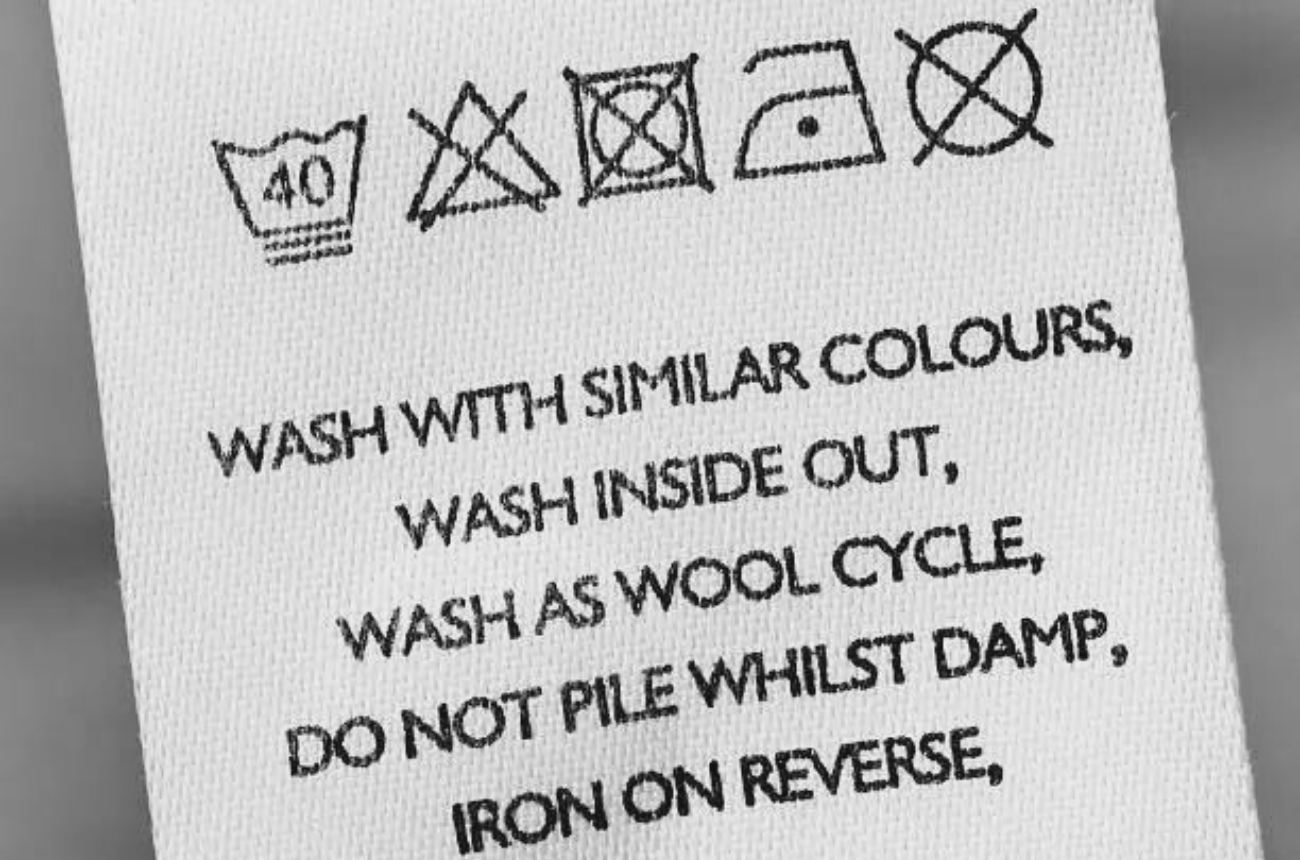
A clothing label shows this in its simplest, most literal form. Wash symbols set out a 40 degree wash, alongside written instructions: wash with similar colours, wash inside out, wash as wool cycle, do not pile whilst damp, iron on reverse.
None of that tells the buyer the garment is fragile or poorly made. It tells them exactly how to keep it looking the way it did the day they bought it. Ignore the label, and any fading or shrinking becomes a result of the wash, not the product itself.
That’s Care Instructions doing their job quietly. The label isn’t a warning. It’s a shared plan for keeping the result good, long after the sale is done.
See also