
Practical Sales Training™ > How To Lose The Sale > Obligation

Obligation
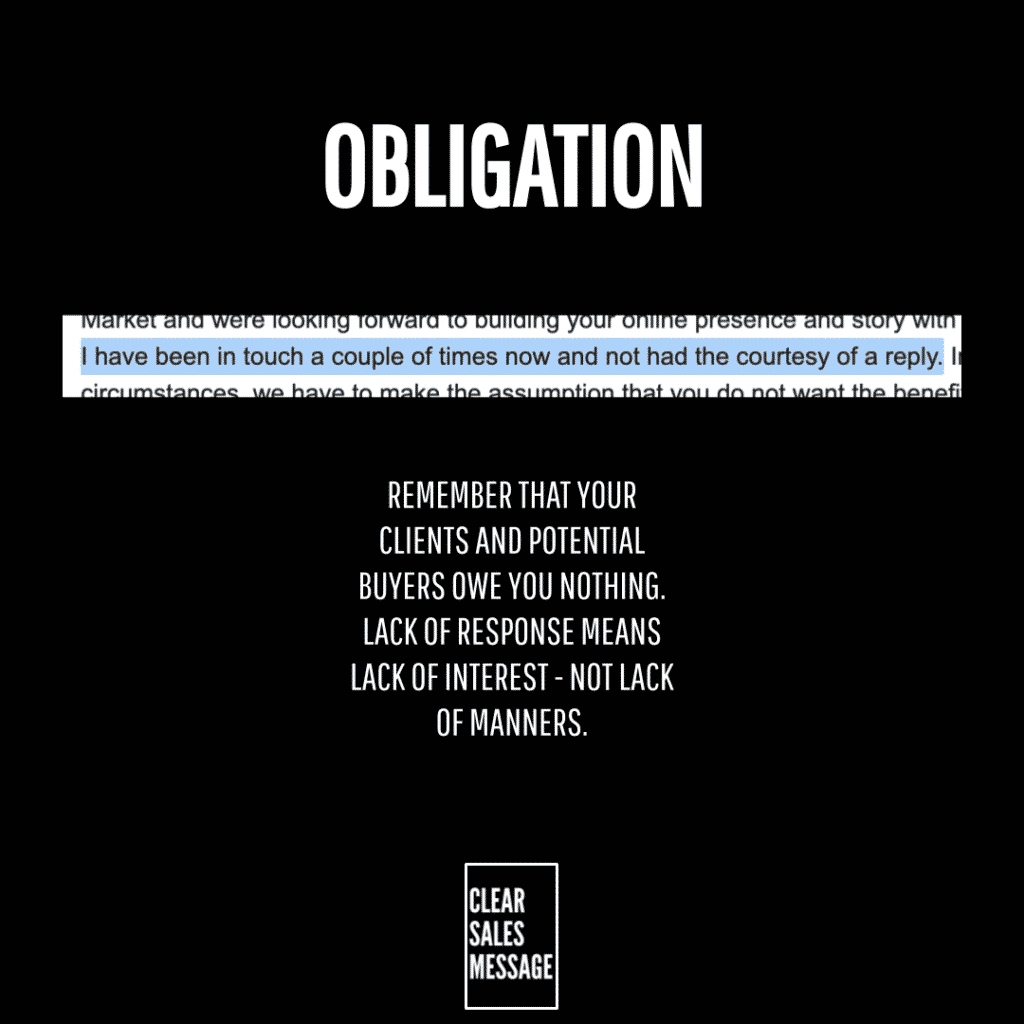
If you send someone a cold email and they do not reply, they are not being rude. They are just not interested. That is their right. And treating silence as bad manners is one of the fastest ways to destroy any chance of a future relationship.
Obligation is what happens when a seller runs out of patience and starts making their frustration the buyer’s problem. It shows up in messages that guilt, pressure, or shame the person for not responding. It feels justified in the moment. But it never works.
Nobody has ever built a good business relationship on a foundation of guilt. So if someone is not engaging, the answer is not to push harder. It is to move on.
What Is Obligation?
Obligation in sales is when a seller makes a buyer feel that they owe them a response, a meeting, or a decision. It usually appears after a series of ignored messages, when frustration takes over and the outreach turns passive-aggressive or openly hostile.
It is the opposite of how good sales relationships start. Strong relationships need genuine interest on both sides. Resentment and guilt cannot hold anything worth having together.
Why Does Obligation Lose the Sale?
It loses the sale because it shifts the focus from the buyer’s needs to the seller’s feelings. The moment a message centres on how offended or frustrated the sender is, the buyer stops thinking about the product. They start thinking about how uncomfortable this person is making them feel.
Even a buyer who was genuinely interested but just busy will pull back when they receive a guilt-laden message. The tone signals how the seller handles pressure. And if this is how they behave before the sale, buyers wonder how they will behave after it.
There is also no upside. In the best case, the buyer feels awkward and ignores the message. In the worst case, they share it with others. Either way, the opportunity is gone.
How Can You Avoid Obligation In Sales?
Set a Follow-Up Limit and Stick to It
Decide in advance how many times you will follow up with a prospect who has not responded. Two or three touches is usually enough. After that, send a short, graceful close and move on. A clear limit stops frustration building and keeps your outreach professional throughout.
End With an Open Door, Not a Guilt Trip
Your final message to a non-responsive prospect should leave things on good terms. Something like “I understand this might not be a priority right now, so I will step back. If things change, here is how to reach me” keeps the door open without pressure. Circumstances change, and a buyer who was not ready six months ago might be exactly ready now.
Replace, Do Not Chase
Every minute you spend chasing someone who is not interested is a minute you could spend finding someone who is. So when a prospect goes cold, redirect that energy into opening new conversations. Your pipeline moves forward, your mood stays intact, and you never send a message you will regret.
When Obligation Does the Most Damage
It does the most damage in small industries where everyone knows each other. A hostile follow-up message does not stay private. People forward it, screenshot it, and talk about it. So a moment of frustration can follow you around a market for years.
It also hits harder when the buyer was close to saying yes. A warm prospect who had simply gone quiet can walk away permanently after one poorly worded message. The gap between interest and irritation is smaller than most sellers realise, so timing matters as much as tone.
When the Temptation Is Hardest to Resist
The temptation peaks when the pipeline is thin and every opportunity feels critical. When you need the business badly, silence from a prospect feels like a personal rejection. But that emotional state is exactly when sellers send their worst messages.
It is also harder to resist when you have put real time into a prospect. Writing a detailed proposal, doing research, or attending a meeting makes silence feel even more unfair. But the investment you chose to make does not create an obligation on their side.
Common Obligation Mistakes
Sending the Angry Follow-Up
Writing a frustrated message and firing it off immediately is almost always a mistake. If you feel the urge to call out someone’s silence, write the message, save it as a draft, and read it again the next morning. Most of these messages look very different after a night’s sleep. And the ones that still seem reasonable usually are not.
Mistaking Silence for Rudeness
Buyers are busy. Inboxes are full. A lack of reply is rarely about manners. It is almost always about priorities. So treat silence as a signal about fit, not a comment on your worth. The buyer who does not reply to a cold email owes you nothing, however good your message was.
Burning the Bridge on the Way Out
How you leave a conversation matters as much as how you start it. A sarcastic or bitter final message closes the door permanently and damages your reputation in the process. A graceful exit keeps the relationship intact. Markets are smaller than they look, and people have long memories.
Obligation – An Example
A marketing consultant sends a cold email to a prospect. After two ignored follow-ups, they send this: “I have sent you three emails now, and it is really bad manners not to even reply. Is this how you treat all your potential partners?”
That message ends any chance of a sale. Even a prospect who was interested but simply busy will walk away after reading it. A better final message would be: “I understand this might not be a priority right now, so I will step back. If things change, here is how to reach me.” That keeps the door open, protects the relationship, and leaves the buyer with a good impression of how the seller handles rejection.
See Also: