
Practical Sales Training™ > How To Convert > Cost Neutral

Cost Neutral
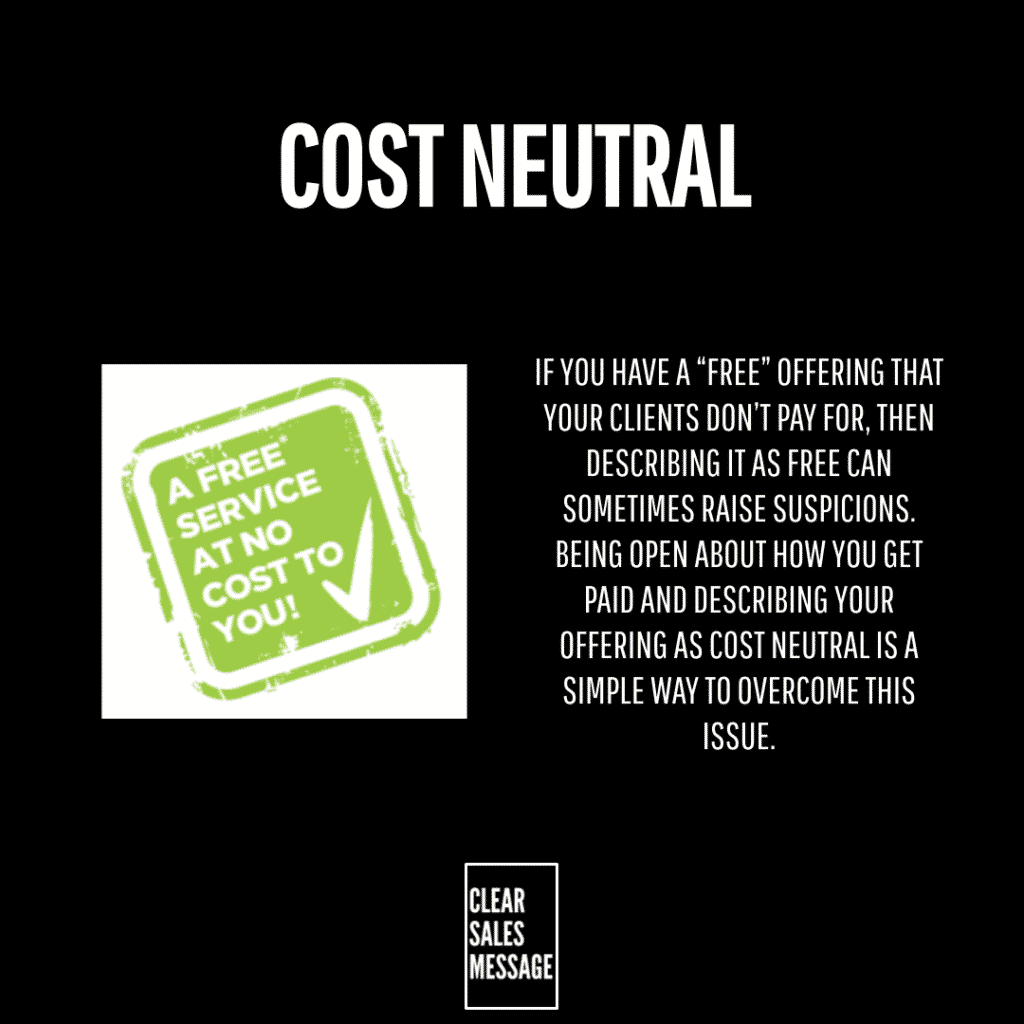
Free is a strange word in sales. It should make things easier. But it often makes them harder.
Buyers hear “free” and their guard goes up. They wonder what the catch is, who really pays, and what you want in return. So instead of speeding up a decision, free can slow it right down.
Describing yourself as cost neutral is a smarter way to frame it. You explain that your service costs the buyer nothing, and you tell them exactly how you do get paid. That honesty does something simple but powerful. It removes the doubt before it has a chance to grow.
What Does Cost Neutral Mean?
Cost neutral means your service costs the buyer nothing, but a third party pays you. Instead of just saying “it’s free,” you explain the whole picture. You tell them what it costs them (nothing), and you tell them how you earn (commission, referral fee, supplier funding, or similar).
For example, a mortgage broker might say: “There’s no fee for you. The lender pays us when we place your mortgage.” That one sentence kills the most common objection before a buyer even raises it.
In fact, the phrase “cost neutral” itself signals something different from “free.” It sounds considered and honest. It implies you have thought about how this works and you are not hiding anything.
Why Does Describing Yourself as Cost Neutral Work?
It works because people are wary of free things. We all know nothing costs nothing, so when someone offers something for free, we assume a sales pitch is coming, a catch sits somewhere, or a cost hides in the small print.
This is not irrational. It is a sensible defence. Buyers have been burned before, so they protect themselves with suspicion. As a result, your free offer gets less trust than a paid one.
Framing yourself as cost neutral breaks that pattern. Instead of just claiming to be free, you explain the business model. You show the buyer that a third party funds your service, and that they are not the product. That kind of transparency is disarming. It also explains why people sometimes prefer to pay for a diagnosis rather than have one for free. Paying feels safer because it feels honest. Cost neutral framing gives you that same sense of trust without charging anything.
How Can You Use Cost Neutral Framing In Sales?
Start by asking whether your buyers ever hesitate at the word free. If they do, this framing is worth testing straight away.
Swap “free” for “cost neutral”
Try replacing “our service is free” with “our service is cost neutral to you.” Then add a single sentence explaining how you do get paid. That combination removes doubt in one move. It answers the unspoken question before the buyer has to ask it.
Name the funding source
Vague is not reassuring. So be specific. Say who pays you, how, and when. “The supplier pays us a commission once you place an order” is far more convincing than “third parties pay us.” The more clearly you explain it, the more honest it sounds.
Use it early, not as a defence
Do not wait for a buyer to raise suspicion. Instead, lead with it as part of how you introduce yourself. Get it on the table early so it lands as helpful context, not as damage control.
Write it into your materials
Your website, proposals, and pitch decks should all explain the model. Buyers often check these before they speak to you. So if it sits there in black and white, their doubt gets resolved before the first call even happens.
When Cost Neutral Framing Works Best
This framing works best when a third party genuinely funds your service and you can name that party clearly. It also works well in sectors where buyers expect a sales pitch, because the honesty stands out. Financial services, insurance, recruitment, and comparison platforms are all good examples.
It works especially well when the buyer watches their budget closely. Telling them your service costs them nothing, and showing them how the model works, removes one of the biggest barriers in one sentence. Similarly, it helps when a buyer compares you to a paid alternative. The cost neutral framing shifts the conversation from “why is this free?” to “this is a better deal for me.”
When Cost Neutral Framing Becomes Dangerous
This only works when it is true. If you describe yourself as cost neutral but the buyer later finds hidden charges, you lose all credibility. The trust you built with the explanation turns into a bigger problem than the original suspicion ever was.
It can also backfire if the explanation sounds rehearsed or defensive. If you say “we’re cost neutral” in a way that feels like a script, it raises more questions than it answers. The goal is for it to feel like a natural, honest part of how you explain what you do, not like a line you use to get past an objection.
However, the biggest risk is using it too late. If a buyer has already decided something is off, dropping the explanation at that point can feel like back-pedalling. That is why it needs to come early.
Common Cost Neutral Mistakes
Saying “free” and leaving it there
Free without an explanation invites doubt. Always follow it with how you get paid. One extra sentence does all the work.
Being vague about the funding
“Our partners fund us” tells the buyer almost nothing. Instead, name the source, name the mechanism, and be clear about when it happens. Vague answers feel evasive even when you do not mean them to.
Waiting for a buyer to push back
Some sellers only explain the model when a buyer objects. But by then the suspicion already has roots. Lead with it. Make it part of your standard introduction so it never becomes a defensive conversation.
Not putting it in writing
If this only lives in a verbal pitch, buyers may forget it or doubt it later. So write it down. Put it in your proposal, your website, your emails. Written clarity builds trust that sticks.
Cost Neutral – An Example
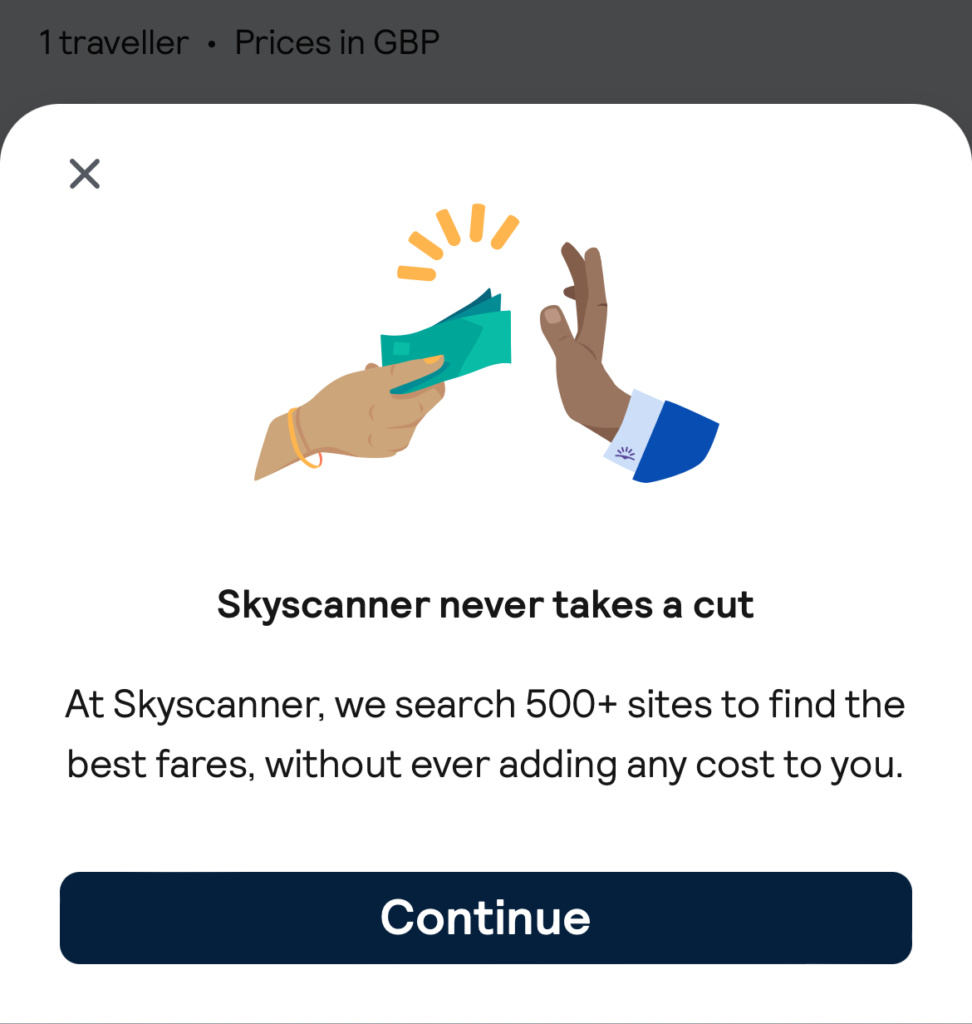
Skyscanner is a clear example. Their flight search costs users nothing. But they do not just say “free.” They make it obvious that airlines and booking platforms pay to appear in results. No hidden fees sit on top. Anyone who looks can see how the model works, and that visibility kills the question of “so what’s in it for them?” before it forms.
As a result, buyers trust the results more. They do not feel sold to. They feel like they are using a tool that works in their interest, even though Skyscanner earns from every booking. That is the power of cost neutral framing done well.
See Also