Practical Sales Training™ > How To Convert > Paid for Flexibility
Paid for Flexibility
Some buyers want to book with you but worry about what happens if things change. Their diary is unpredictable, so a commitment that carries a penalty for cancellation feels like a risk they are not ready to take. As a result, they do not book at all.
Paid for Flexibility solves that hesitation. By offering a second pricing option that includes the right to cancel or reschedule without penalty, you give those buyers a way in. They pay a little more for the peace of mind, and you earn more per booking while winning clients you would otherwise have lost.
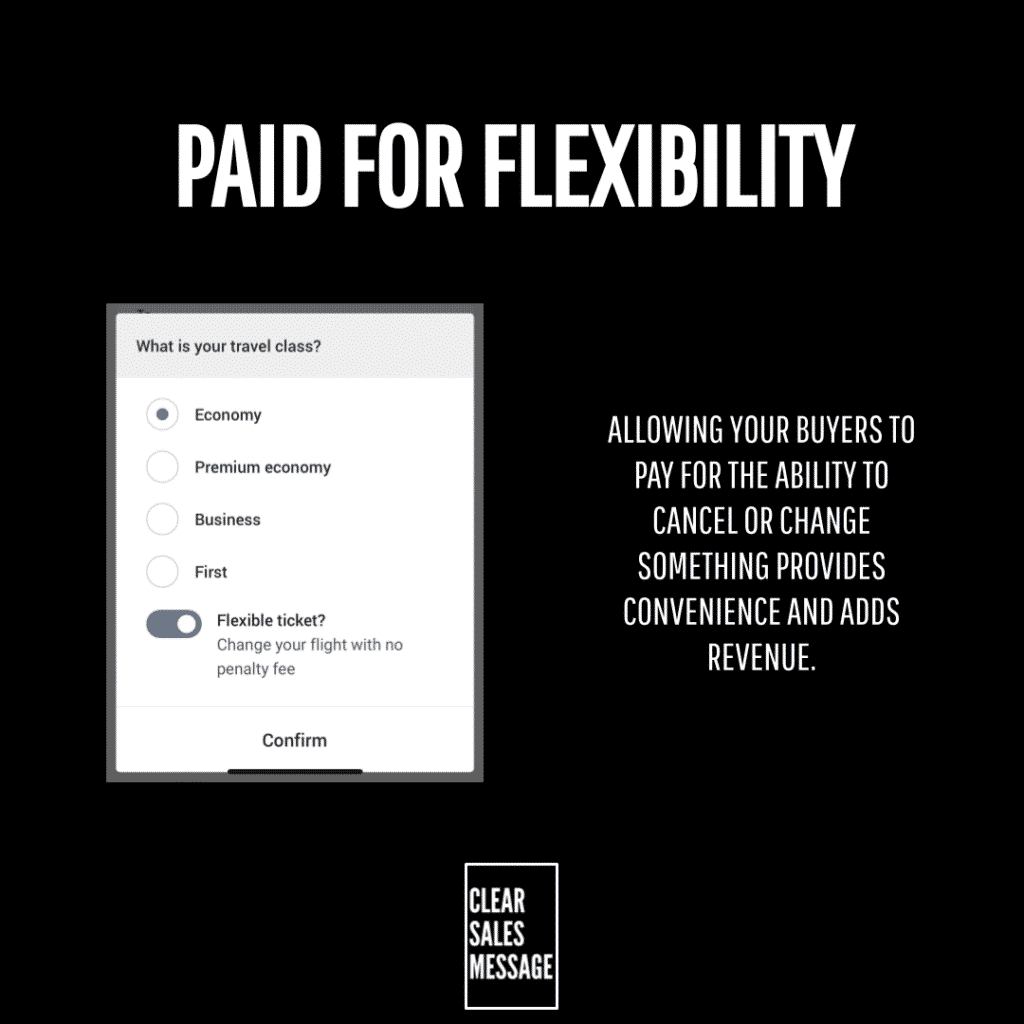
Everyone familiar with airline pricing already understands this model. The question is whether your business uses it yet.
What Is Paid for Flexibility?
Paid for Flexibility is a two-tier pricing model where the standard option is non-refundable and the premium option includes the right to cancel or reschedule without losing money. The buyer pays more for the flexible version and gets the security of knowing that a change of plans will not cost them their booking.
Airlines do this with refundable and non-refundable fares. Hotels do it with flexible and non-flexible rates. However, the same principle applies equally well to coaching sessions, consultancy time, event tickets, or any service where you allocate a slot that carries a cost if it goes unfilled.
Why Does Paid for Flexibility Work?
It works because the fear of losing money is a powerful motivator. When buyers book the standard option, they know that cancelling means losing what they paid. That risk is enough to stop some buyers committing at all. The flexible option removes that risk and replaces it with a small, known, and controllable cost instead.
From the buyer’s perspective, paying a premium to avoid a potential penalty feels entirely rational. They are not wasting money. In fact, they are buying certainty. And certainty, as a product, has real value to buyers whose lives do not run to a fixed schedule.
From a business perspective, the model also works in two ways. It generates higher revenue per booking from buyers who choose the flexible option. It also converts buyers who would never have booked under a rigid non-refundable structure, so the total number of clients grows too.
How Can You Use Paid for Flexibility In Sales?
Create Two Clear Tiers
Start by setting a standard price for your session, slot, or service. This option is fixed and non-refundable. Then set a higher price that includes the right to cancel or reschedule within a defined window. The gap between the two should reflect the real cost of a last-minute cancellation to your business, while still feeling like a fair premium to the buyer.
Make the Flexible Option Easy to Find
Buyers who want flexibility will not go looking for it if it sits buried in your booking process. So present both options clearly at the point of purchase and name them in a way that makes the difference obvious. Because the buyer can see both options side by side, the choice feels simple rather than confusing.
Set Clear Terms for the Flexible Option
Buyers need to know exactly what the flexibility covers. How far in advance can they cancel? How many times can they reschedule? Clear terms protect you from abuse and also give buyers the certainty they are paying for. Vague terms, however, undermine the value of the option and create disputes you do not need.
When Paid for Flexibility Works Best
It works best when your service involves allocating a specific block of time that you cannot easily fill at short notice. Coaching sessions, consultancy calls, training workshops, and event slots all fit this model well. Because a last-minute cancellation carries a real cost to you, charging for the right to cancel is entirely fair.
It also works well when your target buyers have variable schedules. Senior professionals, founders, and parents often struggle to commit to fixed appointments. So offering a flexible option removes that hesitation and wins bookings you would otherwise lose to a rival with no cancellation penalty.
When Paid for Flexibility Becomes Difficult
The model is harder to apply when your cost base does not change whether a buyer cancels or not. If a cancellation costs you nothing, charging for the right to cancel is harder to justify. In that case, buyers may question the value of the flexible option because they cannot see a clear reason for the price difference.
There is also a risk of attracting buyers who book the flexible option with no real intention of committing. If cancellation rates on the flexible tier run high, review the terms. A shorter cancellation window or a small admin fee can reduce this without removing the appeal for genuine buyers.
Common Paid for Flexibility Mistakes
Setting the Flexible Price Too Close to the Standard Price
When the gap between the two options is too small, most buyers default to the flexible one regardless of whether they need it. As a result, you lose the revenue benefit of the standard tier. So set the premium at a level that makes both options feel like a genuine choice rather than an obvious default.
Making the Terms Too Complicated
A flexible option surrounded by conditions and exceptions quickly stops feeling flexible. If the buyer has to read three paragraphs of small print to understand what they can and cannot do, the peace of mind they were paying for disappears. So keep the terms to one or two clear sentences and make them easy to find before the buyer commits.
Not Offering It at All
Many businesses never offer a flexible option because they assume buyers will either book the standard tier or not book at all. In reality, however, a segment of almost every audience will pay more for flexibility when given the chance. Not offering it means leaving that revenue on the table and losing those buyers to whoever does.
Paid for Flexibility – An Example
An online fitness coach charges £50 for a one-on-one session. The booking is fixed and non-refundable. However, for £70, clients can book a flexi session that lets them reschedule or cancel up to 24 hours before without losing their money.
Busy professionals with unpredictable schedules happily pay the extra £20 for that security. For the coach, the flexi sessions earn more per booking and also bring in clients who would never have committed to the fixed option. So the model serves both sides well: the buyer gets certainty and the business gets higher revenue and a wider pool of clients.
See Also: