
Practical Sales Training™ >
How To Convert >
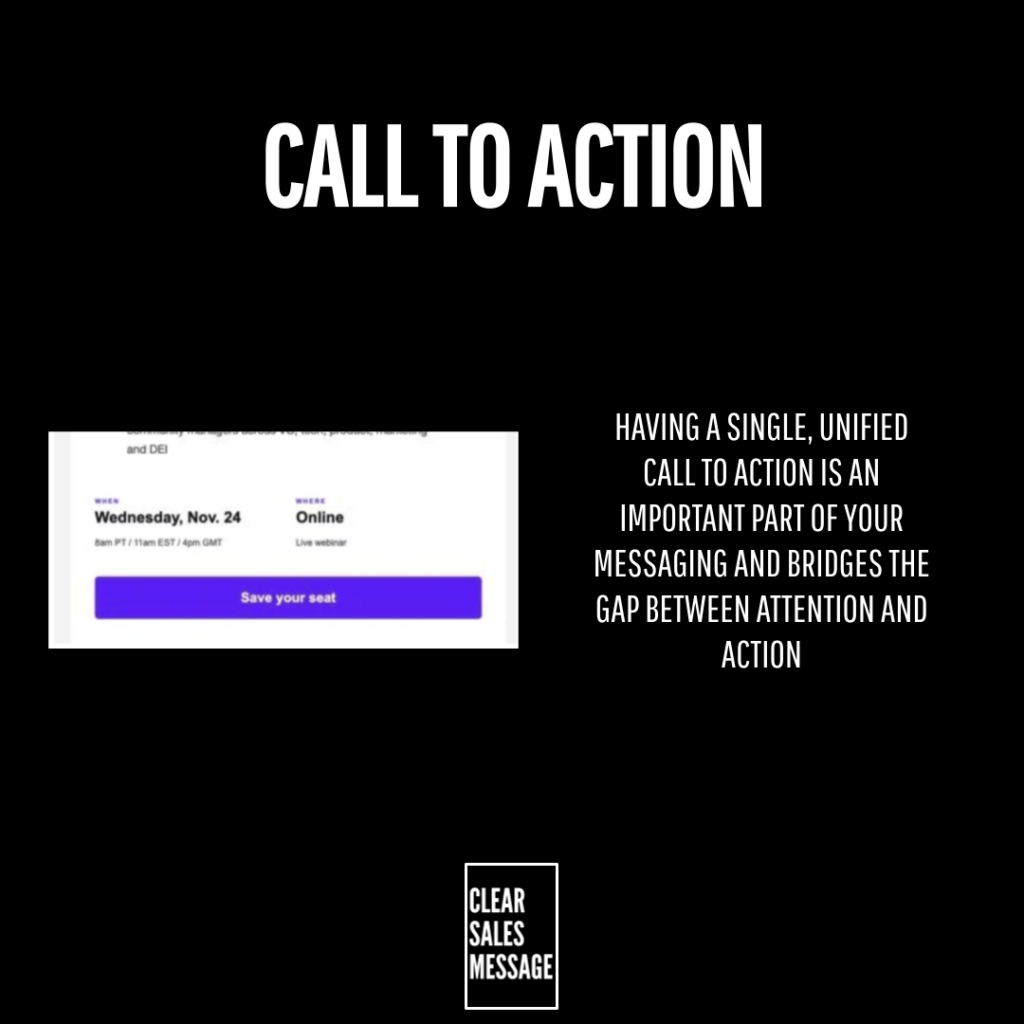
Call To Action

Call To Action
Most buyers won’t take the next step on their own. Not because they’re not interested, but because nobody told them what the next step is. So they leave, move on, and forget about you.
A call to action fixes that. It’s a short phrase, question, or statement that points your buyer toward the next move. It removes the guesswork and gives them something clear to act on.
Used well, a call to action works across every part of your sales process. Your emails, your proposals, your website, your calls. Everywhere you communicate, you have a chance to tell people what to do next.
What Is a Call To Action?
A call to action is a statement, phrase, or question that highlights the next step for your buyer to take. It might be as simple as “book a call” or as specific as “click here to get your free report before Friday.”
The job of a call to action is to move people forward. So it has to be clear, direct, and easy to follow. Vague requests get vague results. Specific asks get specific responses.
A good call to action also tells buyers why to act, not just what to do. For example, “book a call” is fine. But “book a call and find out exactly where your sales are leaking” gives them a reason to move.
Why Does a Call To Action Work?
It works because most people need to be told what to do. That’s not an insult. It’s just how people process choices. When the next step is obvious, they take it. When it isn’t, they stall.
There’s also a confidence factor. A clear call to action signals that you know what you’re doing. It shows you have a process. Buyers find that reassuring, so they’re more likely to trust you and follow your lead.
Similarly, a repeated call to action builds familiarity. When buyers see the same phrase across your emails, your website, and your proposals, it becomes memorable. And memorable messages convert better than ones that change every time.
How Can You Use a Call To Action In Sales?
There are many ways to build a call to action, but the goal is always the same: make it punchy, clear, and easy to remember. Here are 36 examples to inspire you.
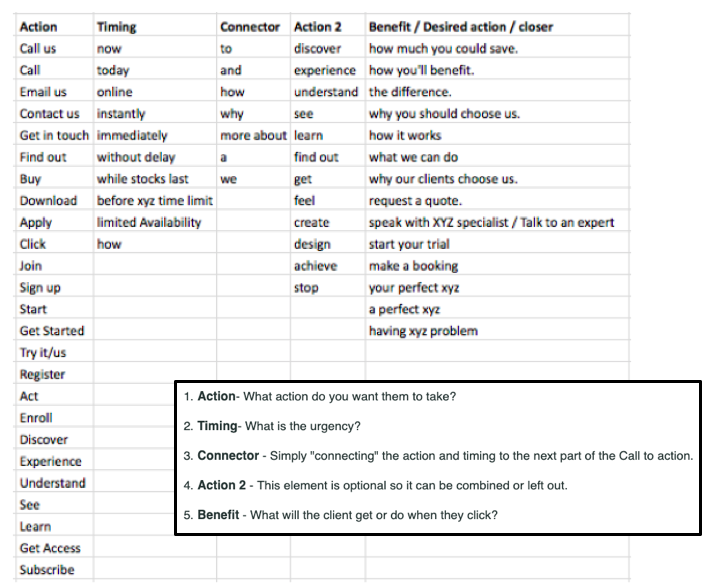
Put it at the end of every communication
Every email, proposal, and voicemail should end with a clear next step. Don’t leave buyers to figure out what to do. Tell them. Even something as simple as “reply to this email and we’ll get started” is better than nothing.
Make it specific
Vague calls to action don’t convert. “Get in touch” is weak. “Book your free 20-minute call this week” is strong. The more specific you are, the easier it is for buyers to say yes.
Add a reason to act now
Buyers delay when there’s no reason to move. So give them one. A deadline, a limited space, a clear benefit they get by acting today. However you frame it, a reason to act now lifts your response rate.
Keep it short enough to repeat
The best calls to action are short enough that your buyers can repeat them to someone else. If it takes thirty seconds to say, it’s too long. Aim for one sentence. Two at most.
Use it consistently
Pick a core call to action for your business and use it everywhere. The more buyers see it, the more familiar it feels. Familiarity lowers resistance and makes it easier to act.
When a Call To Action Works Best
A call to action works best when the buyer already understands what you do. At that point, they just need a nudge. A clear next step removes the last bit of friction between interest and action.
It also works well at the end of a strong piece of content. A webinar, a case study, a proposal. You’ve built their interest and shown your value, so now is the time to tell them what to do with that momentum.
Similarly, it works in follow-up. Buyers who haven’t replied often just need a clear prompt. A direct call to action in a follow-up email can restart a conversation that looked dead.
When a Call To Action Becomes Dangerous
A call to action can work against you if the timing is wrong. Ask too early and you look pushy. The buyer isn’t ready, so a hard ask creates resistance instead of momentum.
It can also backfire if it asks for too much. Asking a cold prospect to sign a contract on the first touch is too big a leap. Instead, work with smaller asks that build trust step by step. Each small yes makes the next one easier.
Also, a weak or generic call to action is almost as bad as none at all. “Contact us” or “feel free to reach out” gives buyers nothing to hold onto. Be direct or don’t bother.
Common Call To Action Mistakes
Using too many at once
When you give buyers three calls to action in one email, they often take none of them. Too many options create confusion. Pick one clear next step and focus everything on that.
Making it about you, not them
“Call me when you’re ready” puts the work on the buyer. Instead, frame it around what they get. “Book your free session and leave with a clear plan” is about their outcome, not your diary.
Burying it in the middle
Your call to action should be hard to miss. Put it at the end, where eyes land after reading. If it’s buried in paragraph three, most buyers will never see it.
Changing it every time
Consistency builds recognition. If your call to action changes with every email or campaign, buyers never get used to it. So pick a core phrase and stick to it across your communications.
Call To Action – An Example
A business coach runs a free webinar but ends it by saying:
“Thanks for attending! Feel free to get in touch if you need help.”
Most attendees don’t take any action because the next step isn’t clear or compelling.
The coach then switches to a strong call to action:
“If you’re ready to double your sales this year, click the link in the chat to book your free 15-minute strategy session with me.”
This specific and action-oriented CTA drives more bookings because it tells the audience exactly what to do and why to do it now.
You can also be funny with your CTA, like this chap on LinkedIn. Click my moustache!

See Also