
Practical Sales Training™ > How To Lose The Sale > Opinionated Words

Opinionated Words
Buyers come to a conversation with their own view of the world. They have their own sense of value, their own budget, and their own idea of what a fair price looks like. None of that matches yours exactly. So when you offer your opinion, you risk introducing a doubt that was never there to begin with.
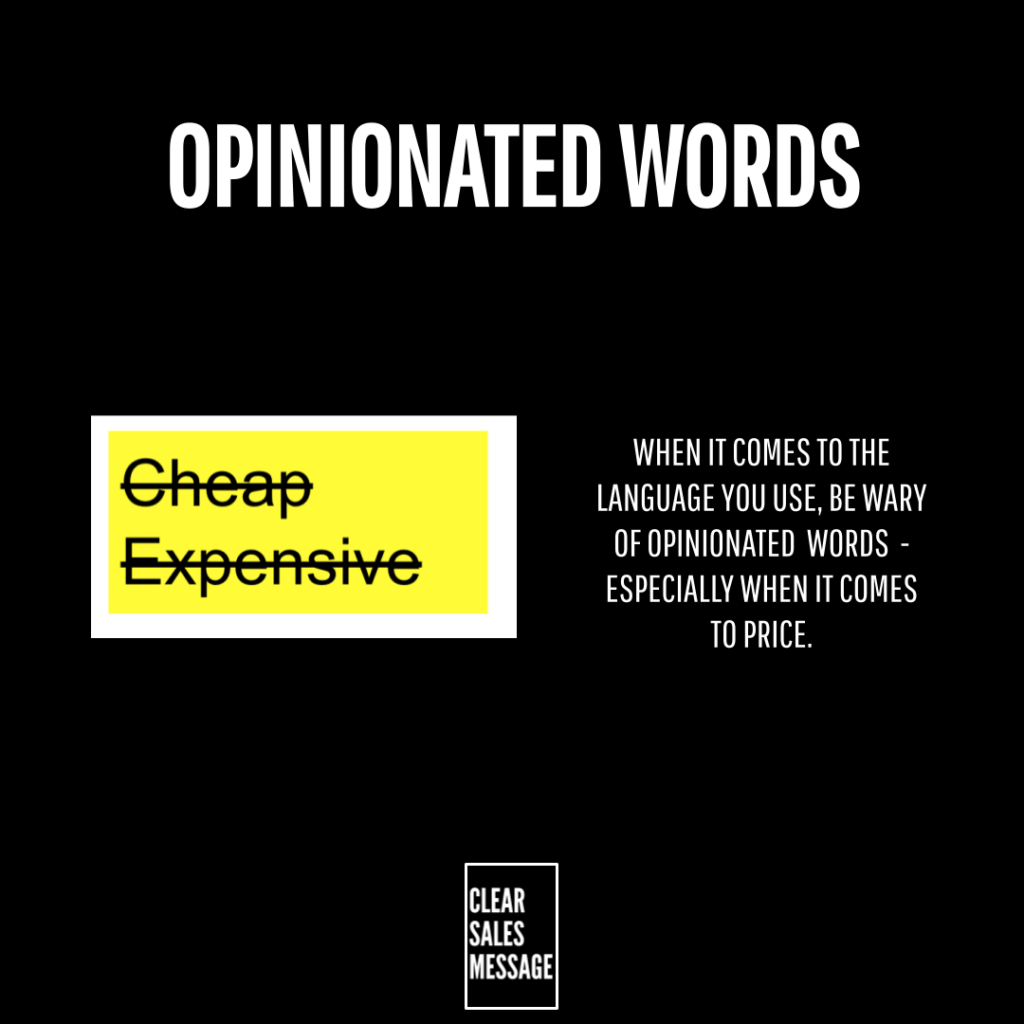
Opinionated Words are the phrases that reveal what you think rather than what the facts say. “It’s quite expensive.” “It’s a basic option.” “For what it is, it’s decent.” Each of these hands the buyer a reason to hesitate that you put there yourself.
The good news is that this mistake is entirely avoidable. Replace the opinion with a fact and the problem disappears.
What Are Opinionated Words?
Opinionated Words are any words or phrases in a sales conversation that express a subjective view rather than an objective fact. They most often appear around price, quality, and scope. Words like expensive, cheap, basic, simple, or “for what it is” all carry a judgment that the buyer did not ask for.
The problem is that buyers are viewing everything from their own perspective. A price you consider high might feel perfectly reasonable to them. But the moment you call it expensive, you invite them to question whether you believe in your own product. And that question is very hard to take back.
Why Do Opinionated Words Lose Sales?
They lose sales because your opinion carries no authority with your buyer. The only person who values your view is you. Your buyer is focused on their own problems and what they need to solve them. They do not want a running commentary on what you think of your own offer.
When you describe your price as expensive, two things happen. First, the buyer starts to wonder whether the product is worth the money. Second, and worse, they start to wonder why you are selling something you seem to have doubts about. Both of those thoughts hurt the sale.
Opinionated Words also signal a lack of confidence. And buyers pick up on that fast. If you do not seem sure about your own product, why should they be?
How Can You Avoid Opinionated Words In Sales?
Replace Opinion With Fact
Every time you feel the urge to describe your price or product with a judgment word, swap it for a factual statement instead. Not “it’s quite expensive” but “it’s £1,200 because it uses hand-cut diamonds and takes twelve hours to make.” The fact explains the price. The opinion undermines it. One of those helps the buyer decide. The other makes them hesitate.
Let the Buyer Form Their Own View
Your buyer does not need your help deciding how to feel about your price. Give them the information and trust them to reach their own conclusion. Because their perspective differs from yours, what feels expensive to you may feel entirely reasonable to them. The moment you tell them how to feel, you risk pointing them in the wrong direction.
Check Your Language Before You Speak
Opinionated Words tend to slip out when a seller feels nervous about price or uncertain about value. So notice when you feel that urge to qualify something. That is the moment to pause and rephrase. State the fact, explain the reason, and stop there. The buyer will take it from there.
When Opinionated Words Do the Most Damage
They do the most damage at the point of price presentation. This is already the moment a buyer is weighing up value against cost. Adding a negative opinion at that exact point amplifies every doubt they might already have. A neutral fact-based statement at the same moment does the opposite.
They also cause harm when a buyer is already close to yes. A warm, engaged buyer who hears “for what it is, it’s pretty good” will suddenly wonder what they are missing. The sale was nearly done. The Opinionated Word reopens it.
When the Temptation Is Hardest to Resist
The temptation peaks when you feel self-conscious about your price. If you worry a buyer will think you are too expensive, you may try to soften the blow by acknowledging it first. But that approach backfires almost every time. Naming the problem you fear makes the buyer focus on it. Staying factual and confident keeps their attention on the value.
It also surfaces when a seller tries to appear relatable or humble. Saying “I know it’s not the cheapest option” feels like honesty. But to the buyer, it sounds like doubt. Confidence in your offer serves your buyer far better than false modesty ever does.
Common Opinionated Words Mistakes
Describing Price Before the Buyer Does
Never volunteer a price judgment before the buyer reacts. State the number, explain what it covers, and wait. Many buyers will accept a price without question if you do not flag it as something to question. Calling it expensive before they say a word creates an objection that did not exist.
Using Qualifying Phrases That Signal Doubt
Phrases like “for what it is,” “it’s not bad,” and “I suppose it depends on your budget” all carry an implied lack of confidence. Cut them out. Say what the product does, what it costs, and why that price makes sense. Anything beyond that adds noise that works against you.
Doing a Ratner
The extreme version of Opinionated Words is openly criticising your own product or brand. Gerald Ratner famously described his own jewellery as “total crap” and destroyed a billion-pound business in one speech. Most sellers never go that far, but every small act of self-doubt moves in the same direction. If you would not say it in a room full of your best clients, do not say it in front of a single buyer either.
Opinionated Words – An Example
A jeweller says to a customer: “I know this ring is quite expensive for what it is, but it’s a nice piece.” Even if the customer was ready to buy, the word “expensive” and the phrase “for what it is” plant doubt. The buyer starts to think: if the seller does not believe it is worth the price, why should I?
A better approach uses fact instead of opinion: “This ring is £1,200 because craftspeople make it by hand using high-grade diamonds, which makes it a piece that holds its value.” That statement explains the price, supports the decision, and leaves no room for doubt. The buyer can now decide based on information rather than the seller’s uncertainty.
See Also: