
Practical Sales Training™ > How To Convert > The Refunded Incentive Effect

The Refunded Incentive Effect
Discounting is the default move when a buyer hesitates on price. But discounting has a cost. It trains buyers to wait for a deal, it erodes your perceived value, and the money goes out with nothing coming back in return.
The Refunded Incentive Effect is a smarter alternative. Instead of reducing the price upfront, you ask the buyer to pay full price and then earn a refund by doing something useful for you. A social media post. A review. A short video. Something that puts your product in front of their audience.
Because the buyer has to act to get the refund, only motivated buyers take part. And the ones who do take part become advocates, not just customers. That combination of word of mouth and lower net cost is far more valuable than a straight discount ever could be.
What Is The Refunded Incentive Effect?
The Refunded Incentive Effect is when a seller offers to refund part of a buyer’s purchase price in exchange for a specific promotional action. The buyer pays in full, completes the agreed action, and receives money back. The action is almost always some form of online endorsement, a post, a tag, a review, or a piece of content that puts the product in front of new people.
It is different from a cashback offer because the refund is conditional on effort rather than simply on the purchase. The buyer has to earn it. That condition is what makes the effect so useful. Because the refund is tied to a specific action, the seller gets something tangible in return rather than simply giving money away.
The model also works as a tiered system. Different levels of effort unlock different levels of refund. A quick social post might earn a small amount back. A video or a blog feature might earn significantly more. Because the buyer chooses the level that suits them, the system feels fair and flexible rather than prescriptive.
Why Does The Refunded Incentive Effect Work?
It works because it reframes the discount as a reward for effort rather than a concession on value. When a buyer earns a refund, they feel good about it in a way that a straightforward discount does not always produce. The action creates a sense of achievement, and the refund feels like something they deserved rather than something you gave away.
For the seller, the mechanics are equally strong. Every buyer who completes the promotional action reaches an audience of people who trust them. Because the endorsement comes from a real customer rather than an ad, it carries far more weight. So the refund cost is not just a marketing expense. It is a targeted investment in word of mouth from someone who already believes in the product.
There is also a commitment effect at work. A buyer who has posted about your product, tagged your brand, and shared their experience is not going to quietly return it. Because they have publicly endorsed it, they have a reason to stand by the purchase. That commitment makes them more likely to stay loyal and more likely to recommend you again in future.
Finally, the upfront full-price purchase protects your positioning. You never officially discounted. The buyer paid full price. The refund was earned, not given. So your pricing remains intact and your margins are only reduced in exchange for real promotional value.
How Can You Use The Refunded Incentive Effect In Sales?
The key is to design the actions clearly and make the process easy enough that buyers actually complete them. Here are the most effective ways to build this into your offer.
Define the Actions and the Refund Levels
Be specific about what the buyer needs to do and what they will get in return. Vague asks produce vague results. So set out each action clearly with a defined refund attached. A social post with your tag earns one amount. A longer piece of content earns more. Because the buyer can see exactly what each action is worth, they can choose the option that suits them and complete it confidently.
Use Viral Tagging to Maximise Reach
Ask buyers to tag your brand in every post that qualifies for a refund. Because the tag creates a visible link between their audience and your brand, it brings new people into your world with every piece of content shared. The refund pays for the reach. The tag makes the reach trackable. Together, they turn every participating customer into a small but effective marketing channel.
Make It Easy to Participate
If the process of claiming a refund is complicated, buyers will not bother. So keep the steps simple. Tell the buyer exactly what to post, where to post it, and how to let you know it is done. Because friction reduces participation, a clear and frictionless process will always produce more advocates than a complicated one.
Offer Tiered Options
Not every buyer will want to create the same type of content. A tiered system, where a quick photo earns a modest refund and a more involved piece of content earns more, gives buyers choice. Because each buyer can find a level that matches their comfort and effort, more will take part than if you offered a single fixed option. More participants means more content, more reach, and more word of mouth.
Use It as a Post-Purchase Upsell
The Refunded Incentive Effect does not have to be advertised before the sale. It can also be introduced after the buyer has purchased, as a way to reward and engage them once they have the product in their hands. Because the buyer already has something to show and talk about, the ask feels natural rather than like a condition of the original sale.
When The Refunded Incentive Effect Works Best
It works best when your product has genuine visual appeal or a story worth sharing. Buyers are more willing to post about something they are proud to own or excited to talk about. Because the content they create needs to be convincing to their audience, it also needs to be something they believe in. So the stronger your product, the better this approach performs.
It also works well for brands that are building their social presence. Every piece of user-generated content adds authenticity that paid ads cannot replicate. Because it comes from a real buyer rather than a marketing team, it lands differently with the audience who sees it. For a growing brand, that kind of organic credibility is extremely hard to buy and very easy to earn through a well-designed refund scheme.
Similarly, it works well in markets where buyers are price-sensitive but quality-conscious. The full-price purchase signals that your product is not cheap. The refund opportunity signals that you value your buyers enough to reward their support. That combination positions you as both premium and generous, which is a strong place to sit.
When The Refunded Incentive Effect Becomes Dangerous
The main risk is poor-quality content. When buyers create posts that are low effort, off-brand, or badly produced, the content reflects on you as much as it does on them. So set clear standards for what qualifies. Give buyers guidance on what a good post looks like. Because the content you accept becomes part of your brand’s online presence, be selective about what triggers the refund.
There is also a risk of the scheme feeling transactional rather than genuine. If buyers feel they are being used as unpaid marketing staff rather than rewarded as valued customers, the goodwill evaporates. So frame the offer generously. Lead with the benefit to the buyer and treat the promotional element as a natural extension of their enthusiasm for the product.
Common Refunded Incentive Effect Mistakes
Being Vague About the Actions Required
If buyers are unsure exactly what they need to do to qualify for the refund, most will not attempt it. Ambiguity kills participation. So write the requirements clearly and specifically. Which platforms count? How many posts? What needs to be included? Because clarity drives action, the more precise the brief, the more buyers will complete it.
Setting the Refund Too Low to Motivate
If the refund amount does not feel worth the effort, buyers will ignore the scheme. The refund needs to feel like a genuine reward, not a token gesture. So think carefully about what the action is worth to you in marketing terms and price the refund accordingly. A scheme that feels fair and worthwhile will generate far more participation than one that feels stingy.
No Process for Claiming the Refund
If buyers do not know how to claim their refund after completing the action, the whole scheme breaks down. So make the claiming process as simple as the action itself. A dedicated email address, a form, or a direct message process all work. Because a buyer who completed the action and then struggled to claim their refund will feel cheated rather than rewarded, the claiming step is just as important as the promotional step.
Only Promoting It Before the Sale
Buyers who are still deciding whether to purchase are less motivated by a refund scheme than buyers who already have the product and love it. So promote the Refunded Incentive Effect after the sale too, when the buyer is engaged, excited, and most likely to want to share. Because post-purchase enthusiasm is at its peak in the days after delivery, that is when the ask will land best.
The Refunded Incentive Effect – An Example
Smiirl, a company that makes social media counters for businesses, built a tiered refund scheme around their product. Buyers who shared their Counter experience online could earn money back depending on the type of content they created. A set of social media posts earned a small refund. A short interview for the brand’s blog earned more. A selfie video earned the most.
See the full scheme at smiirl.com:
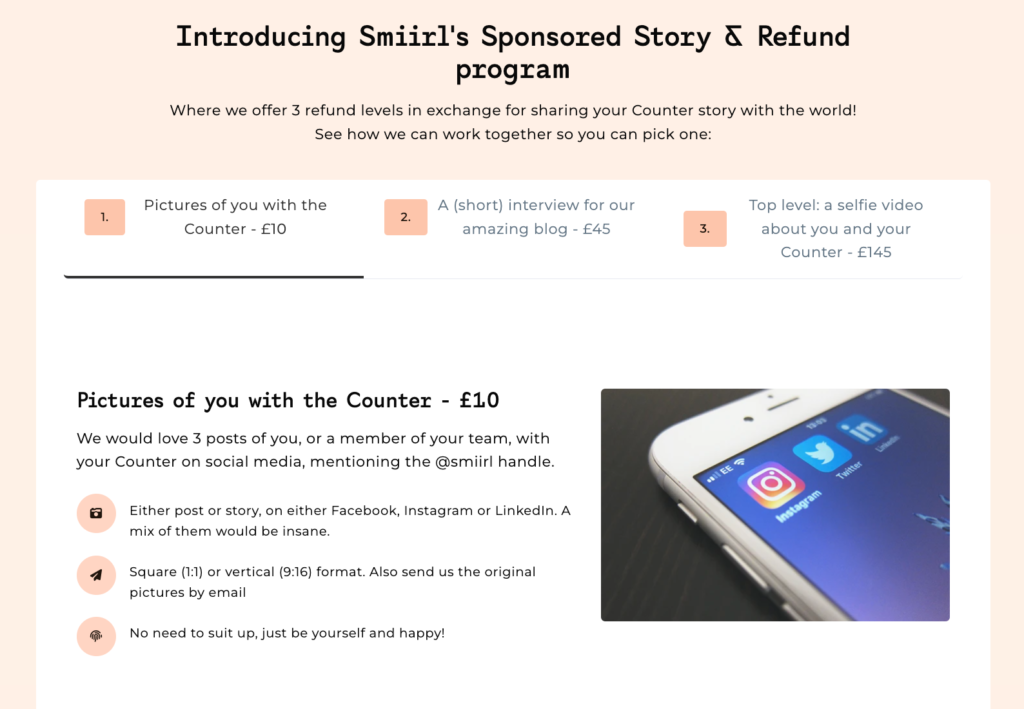
Each tier was clearly defined and the refund amounts were visible from the start. Because the buyer could see exactly what each level of effort was worth, the decision to participate felt straightforward. The buyer got money back. Smiirl got real customer content in front of real audiences. That is the Refunded Incentive Effect working exactly as it should.
See Also