
Practical Sales Training™ > Wordplay > Epistrophe

Epistrophe
What Is It
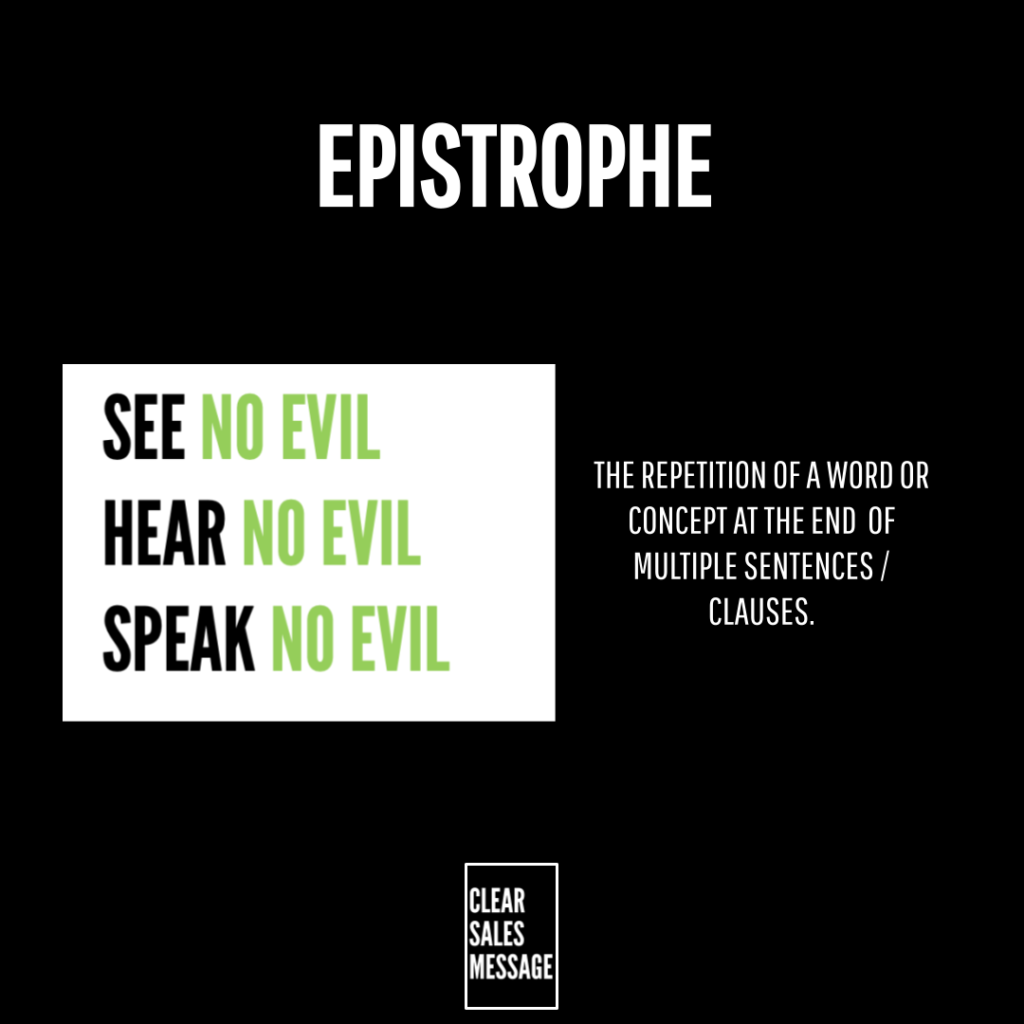
An epistrophe occurs when the end of a series of sentences ends in the same way, repeating the same word or phrase every time. Where alliteration plays with the start of words, and rhyme plays with sound, an epistrophe anchors every sentence to the exact same landing point. So the ear starts to expect it before it even arrives.
Why Does It Work
It works because of repetition. It’s a tool to make your point and to be remembered, and repetition is one of the oldest, most reliable tricks in persuasion for exactly that reason. Hearing the same word return again and again builds a rhythm that a single, varied sentence can’t match. That rhythm is what lodges the message in memory, long after the individual words have faded.
How Can You Use It
When speaking to an audience, or creating messages for social media or advertisements, epistrophes can start and end a communication by hammering home the point you want to make. Since the technique depends entirely on repetition, it works best when you already know exactly what single idea you want someone to walk away with. Every sentence you build has to end on that same word or phrase. Once you’ve settled on the anchor, the rest of the work is simply writing sentences that arrive there naturally, rather than feeling forced or clumsy.
Epistrophe – An Example
Hypothetical Example: A fitness coach says:
“You deserve to feel strong today.
You deserve to feel happy today.
You deserve to feel unstoppable today.”
The repetition of “today” at the end of each sentence creates rhythm and emphasis, making the message stick. So notice too that the words before the repeated anchor keep changing, strong, happy, unstoppable. That variety stops the passage feeling monotonous, while the ending lands in exactly the same place every time.
See also