
Practical Sales Training™ > Wordplay > Consonance

Consonance
Some phrases just sound right. You can’t always explain why. But there’s a rhythm to them that makes them easy to say, easy to hear, and hard to forget.
Consonance is one of the reasons that happens. When the same consonant sound repeats across a phrase, it creates a subtle beat. The words feel connected. The sentence feels crafted rather than thrown together.
In sales and marketing, that feeling matters. Because a message that sounds good gets repeated. And a message that gets repeated is one that sells.
What Is Consonance?
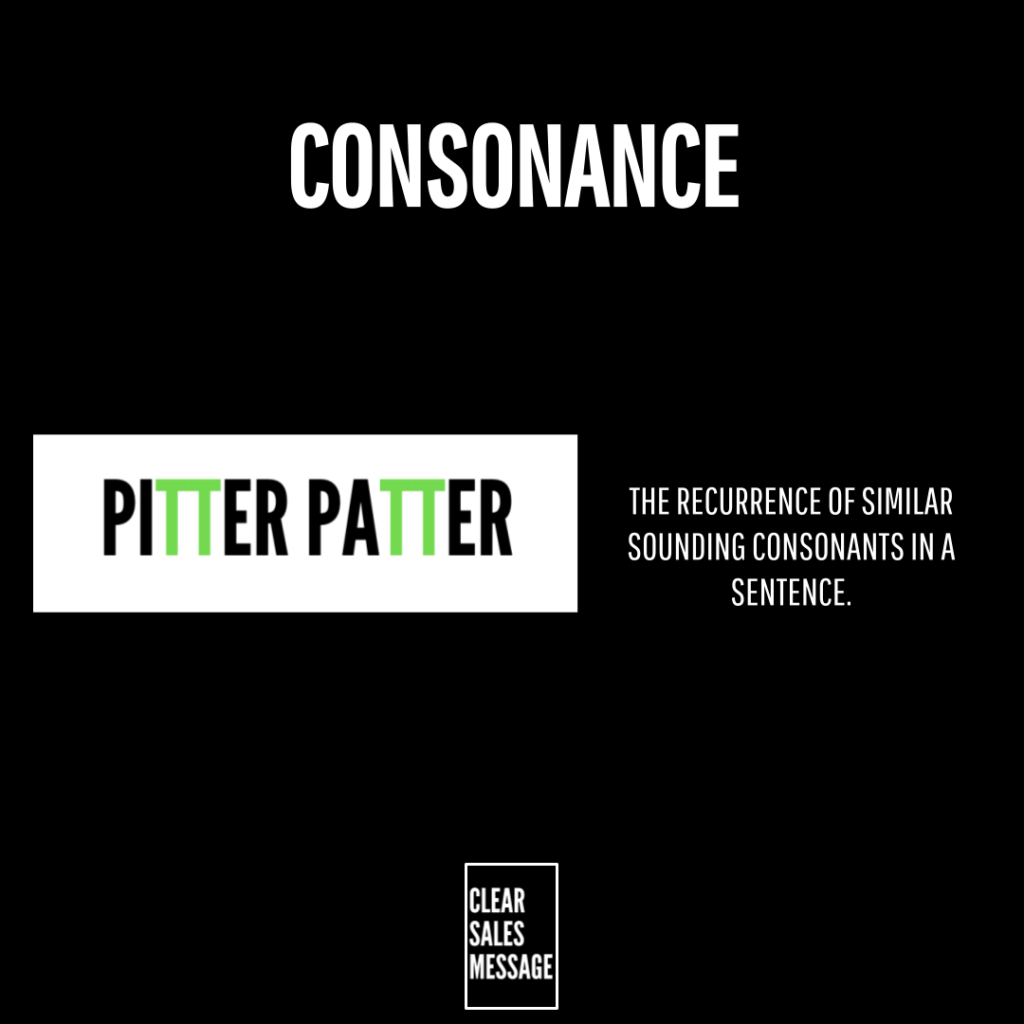
Consonance is a wordplay technique where the same consonant sound repeats within a sentence or series of words. Unlike rhyme, which focuses on the ends of words, consonance can appear anywhere. At the start, in the middle, or at the end of each word.
For example, “pitter patter” repeats the “tt” sound. “Black slack stack” repeats the “ck” sound. The repetition isn’t random. It creates a pattern the ear picks up on, even when the listener doesn’t notice it happening.
In writing, consonance sits alongside techniques like alliteration and assonance. However, it’s often the most flexible of the three, because it doesn’t demand that sounds appear only at the front of words. That freedom gives you more room to work with.
Why Does Consonance Work?
Repetition of sound creates pattern. And the brain loves pattern. When we hear a repeated sound in a phrase, it registers as intentional. As a result, the phrase feels more polished and more worth remembering.
It also makes sentences easier to say out loud. A line with consonance has a natural rhythm to it. So when someone repeats your tagline or pitch in conversation, it comes out smoothly. That smoothness makes it more likely to be passed on.
There’s also a credibility effect here. A phrase that sounds deliberate implies a speaker who thinks carefully. In sales, that signals professionalism and care. Buyers pick up on that, even if they can’t explain why one phrase felt better than another.
How Can You Use Consonance In Sales?
You don’t need to be a poet to use consonance. A few simple steps can help you build it into your messaging naturally.
Search for Sound Matches
Start with your key message and pick a consonant sound you want to work with. Then search for words that contain that sound and fit your meaning. For example, if you’re writing about speed, the “st” sound gives you words like fast, instant, consistent, and results. Weave a few of those together and you have the bones of a consonant phrase.
Apply It to Taglines and Headlines
Short, punchy lines are the best place to use consonance. Taglines, subject lines, slide headers, and call-to-action buttons all benefit from a bit of sound craft. Because the shorter the line, the more each word carries weight. So a consonant pattern in a five-word tagline hits harder than the same technique buried in a paragraph.
Use It in Spoken Sales Pitches
Consonance works especially well when spoken aloud. So consider it when crafting key phrases you use in calls, presentations, or videos. A line that sounds good spoken is also easier to remember. As a result, buyers carry your message with them after the conversation ends.
Keep It Subtle
The best consonance doesn’t shout. It hums quietly in the background. If a listener stops to notice the technique, it can feel forced. However, if they just find themselves drawn to the phrase without knowing why, the consonance is doing its job perfectly.
When Consonance Works Best
Consonance works best in short, high-impact lines. The technique needs a tight space to create its effect. In a long paragraph, the repeated sounds get lost. But in a headline, a tagline, or a key selling point, they shine.
It also works well when you want your brand to feel distinctive. Many businesses use plain, forgettable language in their messaging. So a phrase with a deliberate sound pattern stands out instantly. It signals that someone put thought into the words.
Similarly, consonance is valuable in competitive pitches. When buyers compare several suppliers, the one whose words flow and stick tends to feel more credible. That edge can be the difference between being remembered and being forgotten.
When Consonance Becomes Dangerous
The main risk is overdoing it. If too many consonant sounds pile up in one phrase, it becomes a tongue twister. The listener has to work to say it, and the message gets lost in the effort.
Also watch out for choosing sound over sense. A phrase can sound great but say nothing useful. In sales, clarity always wins over cleverness. So if you have to choose between a line that sounds beautiful and one that communicates clearly, go with clear every time. Then work on making it sound good as a second step.
And don’t force it. If the right consonant words don’t exist for your message, move on. A plain phrase said with conviction beats a clunky one built around a sound pattern.
Common Consonance Mistakes
Making It Too Obvious
Consonance works because it operates below the surface. When it becomes too heavy-handed, it reads like a gimmick. Aim for two or three matching sounds in a phrase, not five or six. Subtlety is the point.
Sacrificing Meaning for Sound
It’s tempting to swap a clearer word for one that fits the sound pattern better. But if the meaning suffers, so does the message. Always check that the phrase still says what you need it to say. Sound enhances meaning. It doesn’t replace it.
Only Using It Once
Consonance builds familiarity over time. So if you find a phrase that works, use it consistently. In your emails, your social posts, your proposals. Repetition of a well-crafted line turns it into something buyers associate specifically with you.
Consonance – An Example
A travel company builds a tagline using the “ck” consonant sound: “Relax, kick back, and pack for adventure.”
The repeated sound in “kick,” “back,” and “pack” creates a subtle beat that makes the phrase feel smooth and deliberate. Compare that to a plain version: “Take time to relax and prepare for travel.” Both say the same thing. But only one sticks.
Similarly, a coffee brand uses: “Sip, drip, and tip your senses.” The repeated “p” sounds add a playful rhythm that makes the line catchy and easy to repeat. As a result, buyers remember the brand because the words themselves do extra work.
In both cases, the technique is subtle enough that the listener doesn’t stop to analyse it. However, they do feel it. And that feeling is exactly what good consonance is designed to create.
See Also