
Practical Sales Training™ > How To Convert > Minimal Result Anchor

Minimal Result Anchor: Show Big Results From Small Effort
A result on its own is just a number, before you add any context to it. But the same result, achieved in barely any time, becomes a question in the buyer’s head. So the number stops being the point, and the gap it implies takes over.
That gap is where this technique does its real work.
What Is It
This is about showcasing buyer results by focusing on speed. Or on how little of your solution someone used to get there. Not the full result. The smallest version of it that still impresses.
Once a buyer sees the minimum required to get a strong result, they naturally picture the maximum.
Why Does It Work
It works because it makes a buyer wonder what else is possible with more time or more of the solution. Ten sales in a week quietly becomes forty in a month inside their own head, not yours.
You never made that claim directly. So there’s nothing to defend later, yet the impression still lands. This is anchoring at work, just without a number you have to stand behind.
How Can You Use It
Highlight Speed
Look through your client results for the fastest wins. A fast result does more work than a bigger result that took months. So it makes a buyer picture their own timeline shrinking.
Highlight Minimal Usage
Find clients who barely used your solution and still got a strong result. If a little effort produced that much, a buyer starts doing the maths on what full effort might produce instead.
Highlight Early, Uncommitted Results
Some of your best examples come from people who haven’t fully committed yet. They’re still experimenting, and the results already look strong. That contrast between low commitment and high results does the persuading for you.
When It Works Best
This works best when the underlying result is really strong on its own. The minimal effort framing only amplifies something already impressive. It also works best paired with something specific: a real number, timeframe, or name. Specifics make the bigger result feel earned, not invented.
When It Becomes Dangerous
It becomes dangerous the moment the buyer treats the implied bigger result as a promise. You never said it. But let the impression stand unchallenged, then fail to deliver. So the buyer feels misled regardless of what you technically claimed.
It also backfires if the minimal example is actually the exception, not the norm. So building a whole pitch around one outlier sets an expectation almost nobody else will match.
Common Mistakes
Letting The Implication Become A Promise
If a buyer starts repeating your implied number back to you as a guarantee, correct it early. An anchor is meant to spark imagination, not become a contract you never signed.
Cherry Picking A Result Nobody Else Gets Close To
One spectacular outlier makes a poor anchor if every other client falls far short of it. Pick a result that’s fast or minimal, but still realistically repeatable.
Doing The Maths For The Buyer Instead Of Letting Them
Spelling out the bigger number yourself turns a subtle anchor into an obvious sales claim. Show the small result, then let the buyer’s own head fill in the rest.
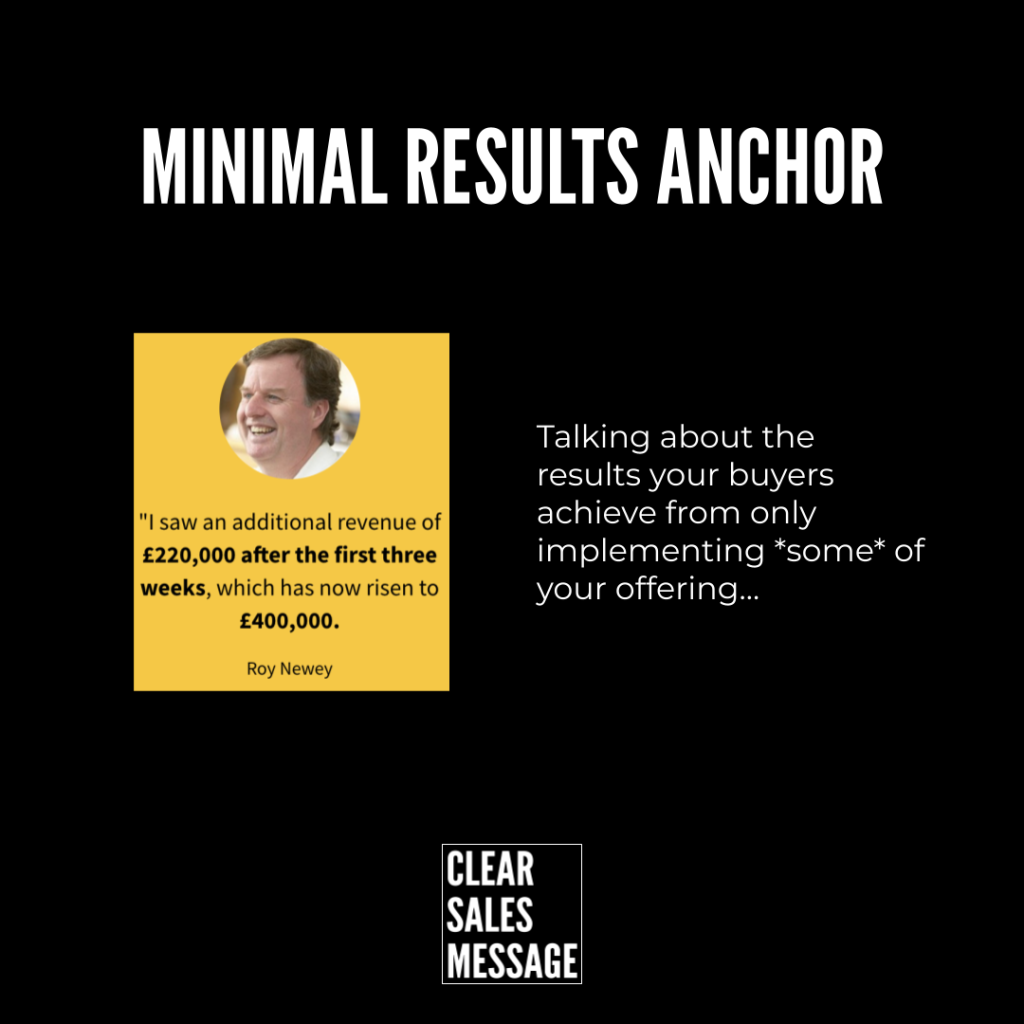
Minimal Result Anchor – An Example
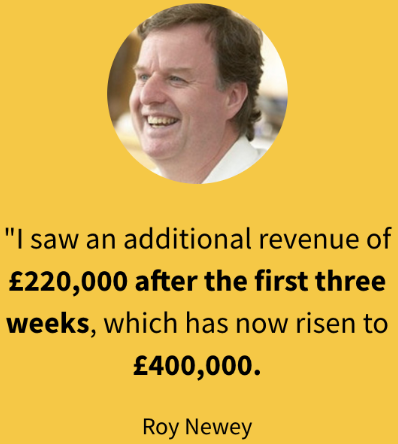
Three Weeks Into A Coaching Program
Here, someone has achieved a strong result just three weeks into a coaching program. So the message doesn’t need to spell anything out. Three weeks in, and results already look like this.
So a buyer reading that naturally starts wondering what the next three weeks might bring. You never have to say it out loud.
See Also