Practical Sales Training™ > Selling Communication Basics > Tropes

Tropes
You already know the underdog story. You already know the hero and the villain. You’ve seen them a hundred times, in a hundred films.
So when your sales message uses one of these patterns, your buyer doesn’t have to think. They already know how the story goes, and that makes your offer easy to follow.
What Is A Trope?
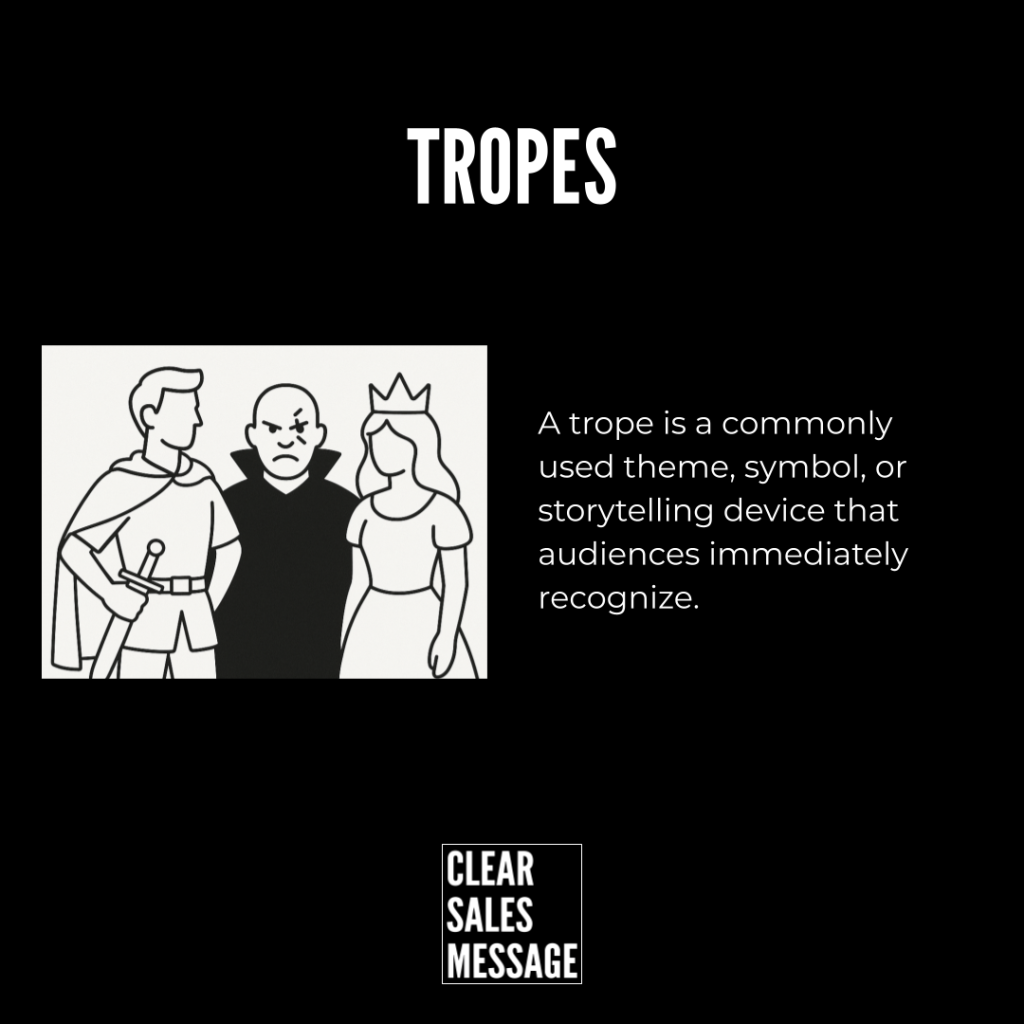
A trope is a familiar pattern, symbol or setup your audience already recognises. In stories, it might be the hero, the villain, or the wise mentor. In selling, it’s the way you frame something so it feels instantly clear and compelling.
Tropes work because they trigger a mental shortcut. Your buyer sees the setup and already knows roughly what happens next, which means you don’t have to explain it from scratch.
Why Does It Work?
People understand stories faster than facts. A trope feels familiar rather than foreign, and it creates context in seconds instead of paragraphs.
It also helps your buyer see themselves in the message. When you frame your offer using a trope, your buyer feels like they’re stepping into a story they already understand, and they already know how to act on it.
How Can You Use Tropes?
Use Role-Based Framing
Frame your buyer as the hero, your product as the tool, and their problem as the villain. It’s a simple shift, but it changes how the whole message lands.
“You don’t need to be an expert. You just need the right tool to win.”
Reference A Story Arc
Setups like “David vs Goliath” or “zero to hero” make your outcome instantly relatable, since your buyer already knows what that journey looks like.
“Most of our clients were overwhelmed at first. Now they run everything on autopilot.”
Contrast Yourself Against A Common Trope
If your industry is full of overused promises or false heroes, you can use that trope against itself. Position yourself as the exception, and the contrast does the selling for you.
“Unlike most platforms, we don’t trap you in a 12-month contract and hope you forget.”
Simplify A Complex Idea Through Story
A trope-driven metaphor can explain your product faster than a feature list ever could. Show your product as the sidekick that helps your buyer succeed, and the idea lands instantly.
The Underdog Vs The Giant
You’re small, nimble and human. They’re bloated, corporate and out of touch. This trope makes your buyer root for you before you’ve even made your case.
The Reluctant Hero
Your buyer never wanted to be the hero, but they’ve been forced into action anyway. You’re simply the guide who helps them rise to it.
The Trusted Guide
Your brand isn’t the hero here. Your customer is. You’re their Yoda, their sidekick, their secret weapon, and that framing puts them at the centre of the story.
David Vs Goliath
Your buyer is up against impossible odds. You give them the slingshot. It’s a simple frame, but it makes even a small advantage feel decisive.
The Makeover Or Transformation
Struggling to thriving. Confused to confident. Overwhelmed to in control. Before-and-after framing works because the contrast does most of the persuading for you.
The Villain Everyone Hates
Big banks. Slow systems. Clunky competitors. Name the shared enemy first, then show how you fix the problem it causes.
The Reformed Insider
“I used to be part of the problem. Now I’ve built the solution.” This framing builds authority fast, because it proves you understand the problem from the inside.
The Escape Plan
Your buyer feels trapped by complexity, cost or outdated tools. You offer the clean way out, and that relief alone can be the whole pitch.
The Shortcut Or Cheat Code
You’re not selling the journey. You’re selling the result, faster. Think of it as a hack or an unfair advantage your buyer gets to keep.
The Movement
It’s not just a product. It’s a cause. This trope works well for buyers who see themselves as rebels or pioneers challenging the old way of doing things.
When It Works Best
Tropes work best when your buyer already carries the story in their head. A hero-versus-villain frame lands instantly with someone frustrated by a clunky competitor, since you’re simply naming what they already feel.
They also work well in short-form content, like ads or landing pages, because a trope compresses a whole narrative into a single glance.
When It Becomes Dangerous
Tropes backfire when they feel forced. If your buyer doesn’t recognise themselves as the hero you’ve cast them as, the framing falls flat instead of landing.
It also becomes a problem if you lean on a trope your industry has used too often. An overused “David vs Goliath” pitch can sound tired rather than fresh, since your buyer has heard the same story from three competitors already.
Common Mistakes
Making Yourself The Hero
The most common mistake is casting your brand as the hero instead of your buyer. People buy into their own transformation, not yours, so keep the spotlight on them.
Picking A Trope That Doesn’t Fit
Not every trope suits every audience. A scrappy underdog frame can feel out of place if you’re selling to a large, risk-averse enterprise buyer.
Overcomplicating The Story
Tropes work because they’re simple. Layer in too many twists or characters and you lose the instant recognition that made the trope useful in the first place.
Tropes – An Example
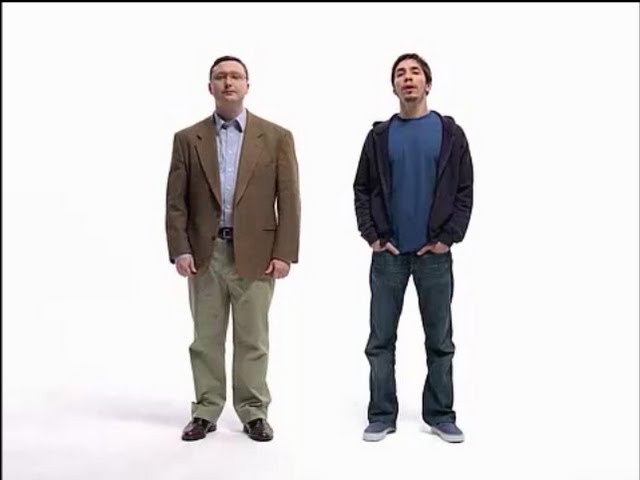
The Cool Guy Vs The Awkward Nerd
Apple’s long-running “Get a Mac” ad campaign is a well-known example of this trope, also called the Odd Couple or Contrast Characters setup. One character is relaxed and effortless. The other is stiff and overcomplicated. That contrast alone did most of the persuading, since viewers had already picked a side before the ad made a single claim about features.

See Also