Practical Sales Training™ > How To Convert > Email Tracking Software

Email Tracking Software
An email disappears into an inbox, and you’re left guessing. Did they read it? Did they even open it? Should you follow up today, or wait another week?
Email tracking software removes the guesswork entirely. You’ll know the moment someone engages, not days later when the trail has gone cold.
What Is Email Tracking Software?
Email tracking software lets you see what happens after you hit send. It tells you when someone opens your email, clicks a link, or views an attachment, so you can gauge their interest and follow up at the right moment.
Instead of guessing who’s ready to talk, you get real data on who’s engaged and exactly when they were paying attention.
Why Does It Work?
Email tracking tools work by adding a tiny, invisible tracking pixel to the emails you send. When a recipient opens the email, that pixel loads and sends you a notification in real time.
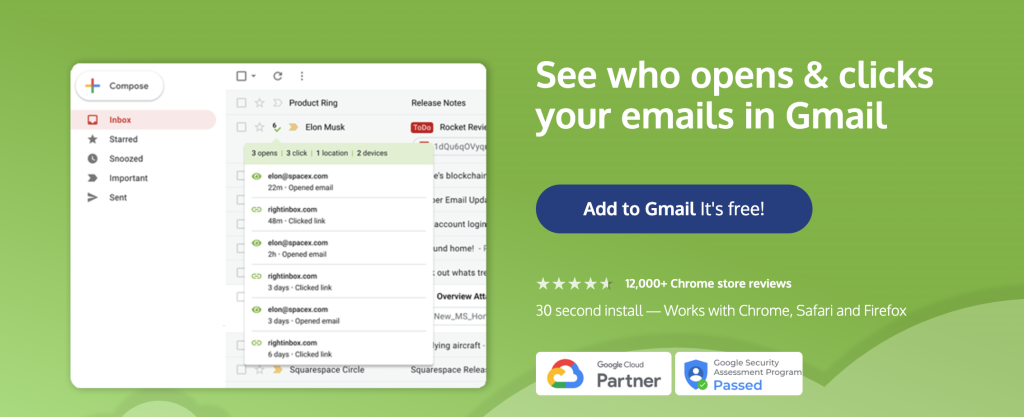
You’ll also get alerts for link clicks, attachment views, reopens over time, and activity across different devices. Everything gets tracked automatically and displayed in a simple dashboard or inside your CRM, so you always know exactly who to prioritise.
How Can You Use Email Tracking Software?
Follow Up At The Perfect Time
Call or message a prospect when they’re actively thinking about you. A follow-up sent minutes after someone reopens your email lands very differently to one sent at random.
Spot Hot Leads Instantly
See who’s engaging with your emails the most. A prospect reopening your proposal three times in one day is telling you something, even if they haven’t replied yet.
Stop Wasting Time
Focus only on prospects showing real interest. This prevents you from chasing someone who never even opened your last three emails.
Improve Reply Rates
Reach out when the likelihood of a response is genuinely highest. Timing a follow-up around actual engagement beats guessing at a “good moment” every time.
Close More Deals
Use engagement data to move faster and smarter through your pipeline. Whether you’re in sales, business development, or account management, this visibility helps you start more conversations and convert more leads.
When It Works Best
Email tracking works best in high-volume outreach, where it’s genuinely hard to know who’s engaged without automated help. It’s especially useful in longer sales cycles, where a prospect might go quiet for weeks before suddenly reopening a proposal.
It also performs well alongside a CRM, since engagement data becomes far more useful when it sits next to the rest of a prospect’s history rather than in a separate tool.
When It Becomes Dangerous
This becomes a problem if a prospect feels tracked in a way that crosses into invasive. Following up the instant an email is opened, every single time, can feel unsettling rather than attentive.
It also risks over-reliance on open data alone. An email opened on a preview pane or by a spam filter doesn’t necessarily mean genuine interest, so treat the data as a signal to investigate, not a guarantee.
Common Mistakes
Following Up Instantly Every Time
A reply that lands seconds after an email opens can feel uncomfortably immediate. Build in a small, natural delay so your timing feels attentive rather than surveillance-like.
Treating Every Open As Genuine Interest
Some opens come from spam filters or preview panes rather than a real read. Use open data as one signal among several, not as proof on its own.
Ignoring The Data Entirely
Setting up tracking but never actually checking it wastes the entire point of the tool. Build a habit of reviewing engagement data regularly, not just installing it and forgetting it.
Email Tracking Software – An Example
Comparing The Available Tools
Rather than a single case study, this is a useful resource in its own right. RightInbox has put together a page reviewing and ranking a number of email tracking software options, which is a good starting point if you’re deciding which tool actually fits your workflow.
See Also