Practical Sales Training™ > How To Get Attention > Chaos Packaging
Chaos Packaging
Packaging is usually invisible. Most buyers open it, ignore it, and bin it. Chaos Packaging makes the container part of the experience. The product gets noticed before it’s even opened.
It works by breaking the pattern. When every rival sits in a standard box, something wildly different stops buyers cold. They pick it up, photograph it, and share it. So the packaging does marketing work long after it leaves the shelf.
It’s also a signal. A brand that packages gin in an oil can says something bold. That boldness attracts buyers who think the same way.
What Is Chaos Packaging?
Chaos Packaging puts a product into an unexpected container to create surprise and grab attention. Instead of a predictable box or bottle, buyers get something they didn’t expect. That moment of surprise is the whole point.
The container might be a paint tin, a vintage oil can, or a toolbox. Any vessel that feels wrong for the product it holds will do the job. Because the mismatch creates curiosity, buyers linger longer and remember more.
It’s most common in limited editions, influencer kits, and premium products. In those contexts, the unboxing experience forms part of the brand story. But it also works in retail, where shelf standout is everything.
Why Does Chaos Packaging Work?
It works because it disrupts expectations. Buyers process familiar packaging automatically and move on. When something looks out of place, the brain pauses. That pause is attention, and attention is the first step to a sale.
It also works because it’s inherently shareable. An unusual container gives buyers a reason to photograph and post it. So the brand gets organic reach from every customer who shares their unboxing. That’s free advertising with a personal recommendation built in.
And it works because it signals confidence. A brand that puts gin in an oil can isn’t trying to blend in. That boldness signals quality, so buyers feel more willing to pay a premium.
How Can You Use Chaos Packaging In Sales?
Limited edition releases
A standard product in unusual packaging for a short run creates urgency and collectability. Buyers who miss it feel they’ve lost something, so they’re more alert next time.
PR and influencer kits
When you send to reviewers or influencers, the packaging is the first thing they see. It’s also the first thing they film. So a memorable container earns more coverage than a forgettable one would.
Retail shelf standout
When dozens of competitors share a shelf, a product that looks completely different stands out. Buyers pick it up, and picking up is the first step to buying.
Subscription boxes
Include quirky, unexpected packaging to create a sense of discovery each month. Because subscribers already expect something good, Chaos Packaging turns that expectation into genuine surprise.
When Chaos Packaging Works Best
Chaos Packaging works best when the brand has the personality to back it up. A playful or bold container on a corporate, serious product creates confusion rather than delight. So the packaging needs to fit the brand, even when it doesn’t fit the category.
It also works best when the target buyer values creativity and self-expression. Buyers who see their purchases as a statement respond far more to unusual packaging. A conventional buyer may find it gimmicky rather than compelling.
And it works best when the product quality matches the packaging ambition. Chaos Packaging raises expectations. If the product disappoints, the bold container makes the letdown feel even worse.
When Chaos Packaging Becomes Dangerous
The risk is confusion. A container that looks too much like something else can mislead buyers. They may not know what the product is. Engine gin in an oil can is clever, but if buyers genuinely can’t tell it’s a drink, the concept works against itself.
There’s also a practical risk. Unusual containers often cost more to produce, fill, and ship. If the premium packaging doesn’t translate into a higher price point, the margins disappear. So always model the cost before committing to the format.
And there’s a risk of the novelty wearing off. Chaos Packaging is most powerful on first encounter. If the same container appears every year, it stops feeling like chaos. It starts feeling like the norm. So keep evolving the concept.
Common Chaos Packaging Mistakes
Choosing a container that’s impractical
A gin bottle shaped like a grenade might look great on Instagram. But if it’s hard to pour and awkward to store, buyers won’t return. Function still matters, even when form is the hero.
Confusing chaos with clutter
Don’t confuse chaos with clutter. Unusual packaging is bold and intentional. A cluttered, over-designed container just looks messy. Because the goal is surprise, every element needs a clear purpose.
Treating it as a one-off stunt
Chaos Packaging builds a brand expectation. When buyers know that each limited edition will bring something unexpected, anticipation builds between releases. So treat it as an ongoing strategy rather than a single campaign.
Misleading the buyer
There’s a fine line between clever and confusing. If the container so closely resembles another product that buyers can’t tell what they’re buying, the concept fails. The mismatch should create curiosity, not genuine confusion about what the product is.
Chaos Packaging – An Example
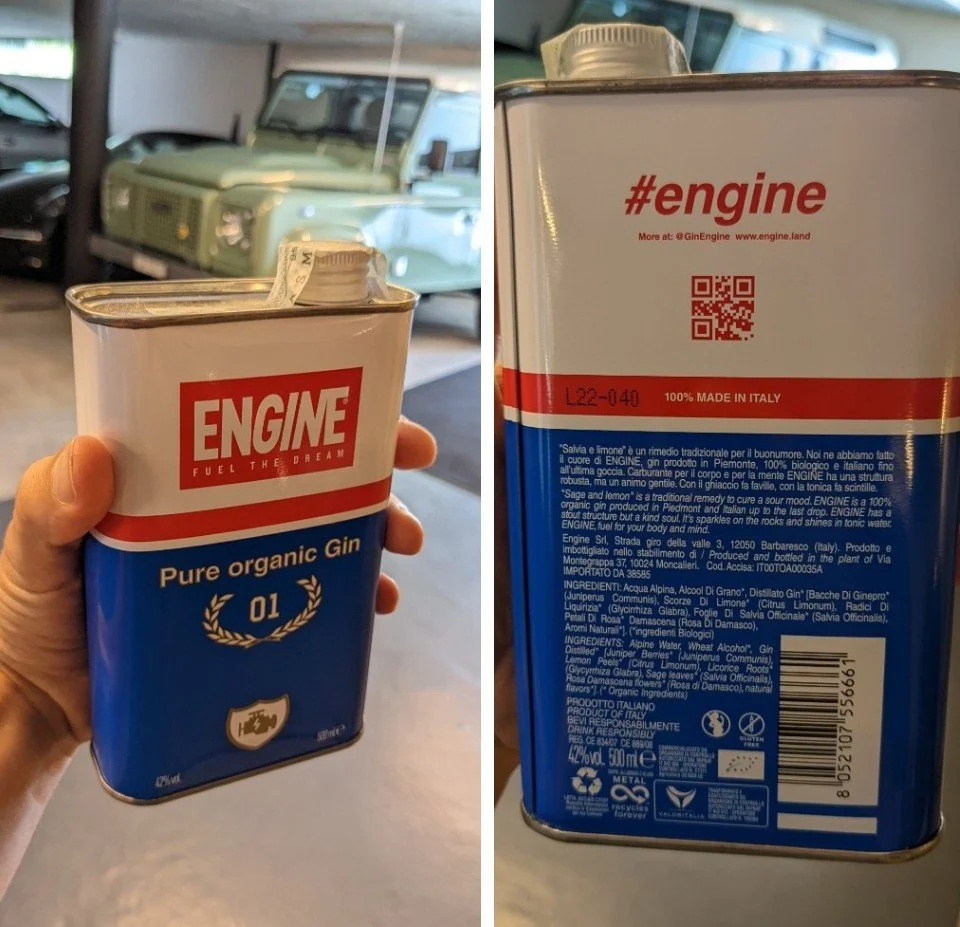
ENGINE Gin is a pure organic gin from Piedmont in Italy. The bottle is a vintage-style motor oil can. It carries an ENGINE logo, a screw cap, and the strapline “Fuel the Dream.”
The product sits in a garage setting and photographs like automotive memorabilia. So gin buyers and car enthusiasts both respond to it. That crossover appeal drives social sharing automatically. So ENGINE has become one of the best-known examples of Chaos Packaging.
See also