

Practical Sales Training™ > How To Keep Your Clients Happy > Experiential Packaging
Experiential Packaging
Most deliveries arrive in a plain brown box. The product inside might be excellent. But the moment of receiving it feels like nothing. That is a missed chance to delight your buyer and reinforce that they made the right call.
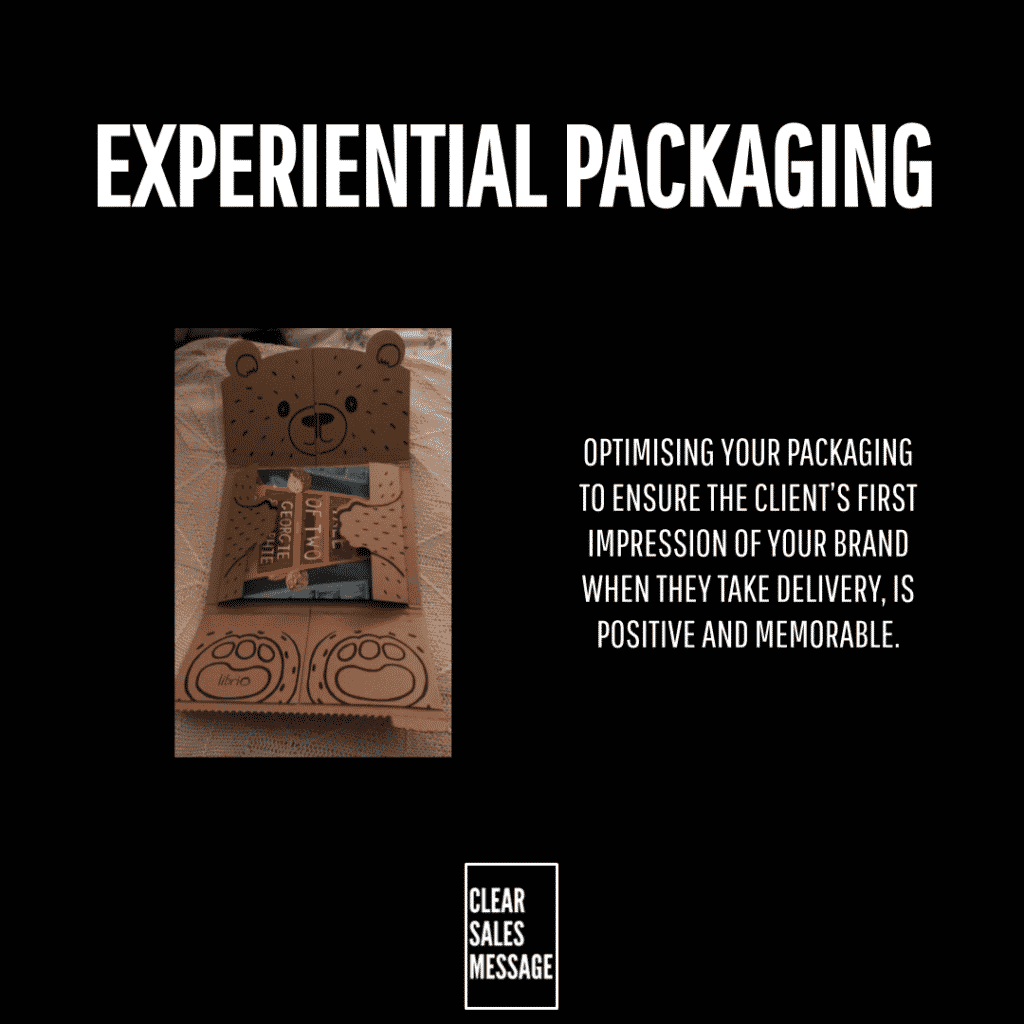
Experiential Packaging is the practice of making the physical delivery of your product feel like part of the product itself. Apple did not just make good devices. They made opening the box feel like an event. That feeling is part of why people stay loyal.
You do not need an Apple budget to do this. Even small, thoughtful touches can turn a routine delivery into a moment the buyer remembers and talks about.
What Is Experiential Packaging?
Experiential Packaging is when a business designs the packaging and delivery of a product to be enjoyable, reassuring, and memorable. Every element is thought through as part of the buyer’s experience. The outer box, the tissue paper, the card inside.
Most businesses treat packaging as a function: keep the product safe and get it there. Experiential Packaging treats it as an opportunity. The moment a buyer receives something is a powerful touchpoint. It is the first physical interaction they have with your brand after the purchase decision.
Get it right and the buyer feels validated. The buyer feels they made the right call. They are more likely to open it on the spot, share it, and tell someone else about it. Get it wrong and a great product can still leave a flat impression.
Why Does Experiential Packaging Work?
It works because the experience of receiving something creates an emotional response before the product itself is even used. That first impression shapes how the buyer feels about everything that follows. A dull unboxing sets a transactional tone. Delight them instead and you prime them for loyalty.
It also works because most packaging is an afterthought. When you treat it with care, you stand out immediately. The bar is low. A magnetic lid, a handwritten note, or a small unexpected extra stands out simply because so few businesses bother.
There is also a social dimension. People share unboxing experiences. When your packaging is worth photographing, your buyers become unpaid advocates. So Experiential Packaging is not just a retention tool. It is also a marketing channel.
How Can You Use Experiential Packaging In Sales?
Map out every physical touchpoint
Start by listing everything a buyer receives when they order from you. The outer packaging, any wrapping inside, the product itself, any inserts or extras. Then ask yourself honestly: how does each of these feel? Does any of it feel considered and deliberate, or is it purely functional? The gaps are where your opportunity lives.
Add a moment of surprise or delight
A small, unexpected extra does more than its cost suggests. Think of a handwritten note, a sample the buyer has not tried, or a small gift tied to your brand. The surprise element is what triggers the emotional response. It signals that someone thought about this buyer specifically, not just the order in general.
Reinforce the buying decision
Buyer’s remorse is real. The moment after a purchase is when doubt can creep in. A well-designed card or a confident welcome message can reassure the buyer before they have even opened the product. Packaging that feels premium sends a clear signal: you made the right call.
Make it shareable
Think about what your packaging looks like through a phone camera. If it would make a good photo, that is free marketing every time a buyer shares it. So use colour, texture, and detail deliberately. Add something worth capturing. Buyers who share your packaging do your marketing for you, and they do it with their own credibility behind it.
When Experiential Packaging Works Best
It works best for physical products where the delivery moment matters. Gifts, luxury goods, subscription boxes, and high-value items all benefit enormously. But it also applies to any physical deliverable in your service: documents, samples, welcome packs, and branded materials.
It is particularly powerful for repeat purchases. When a buyer opens their second or third order and it still feels considered, the loyalty compounds. They begin to associate your brand with that feeling and look forward to receiving from you. That is a very different relationship from one where delivery is just logistics.
It also works well for businesses that want to reduce returns and buyer’s remorse. When it feels premium before they have even seen the product, buyers are far less likely to question the purchase. The experience itself becomes part of the justification.
When Experiential Packaging Becomes Dangerous
The risk is overspending relative to the value of the order. If the packaging costs more than it generates in loyalty and referrals, it is a poor trade. So match the investment to the margin. High-ticket products can justify a premium unboxing, but low-margin, high-volume items probably cannot.
There is also a consistency risk. If the first order is exceptional but the second slips, the drop feels worse than ordinary packaging throughout. Buyers notice the change. So whatever standard you set, keep it. Inconsistency can undo the goodwill the first experience built.
Finally, do not let the packaging overshadow the product. If the box is beautiful but the product inside disappoints, the contrast makes the letdown sharper. Experiential Packaging amplifies what is already good. It does not rescue what is not.
Common Experiential Packaging Mistakes
Treating packaging as an afterthought
Most businesses choose the cheapest packaging that keeps the product safe. But that mindset misses the point entirely. Packaging is a touchpoint. It is the first physical thing your buyer holds. So give it the same thought you give your product. Even small improvements, made deliberately, can shift how the buyer feels about the whole experience.
Making it look good but feel cheap
A box that photographs well but feels flimsy in the hand undermines the experience. So consider the tactile elements as much as the visual ones. Weight, texture, resistance, and the sound a package makes when opened all contribute to how premium it feels. Great Experiential Packaging engages more than one sense.
Adding extras that feel generic
A printed card that reads “thank you for your order” adds nothing. Something handwritten, personal, or chosen for this buyer creates a very different response. So think about what would make the buyer feel seen as an individual, not processed as an order number.
Experiential Packaging – An Example
The skincare brand that turned delivery into a gift
A luxury skincare brand decides to rethink its packaging. Each order comes in a magnetic-lid gift box with tissue, a handwritten note, and a small sample of something new.
Opening it feels like receiving a gift rather than an order. Buyers share the unboxing on social media. Returns drop. And repeat purchase rates go up. The product itself has not changed. But the experience of receiving it creates a loyalty that the product alone never could.
The coffee subscription that made the bag feel personal
A coffee subscription company redesigns its delivery. Each delivery includes a card about the beans and a QR code linking to a farm video. The first bag arrives with the buyer’s name on the label. None of these things cost much. But together they signal that someone thought about this buyer, not just this order. That feeling is what builds the habit of staying subscribed.
See Also