Practical Sales Training™ > How To Get Attention > Subvertising

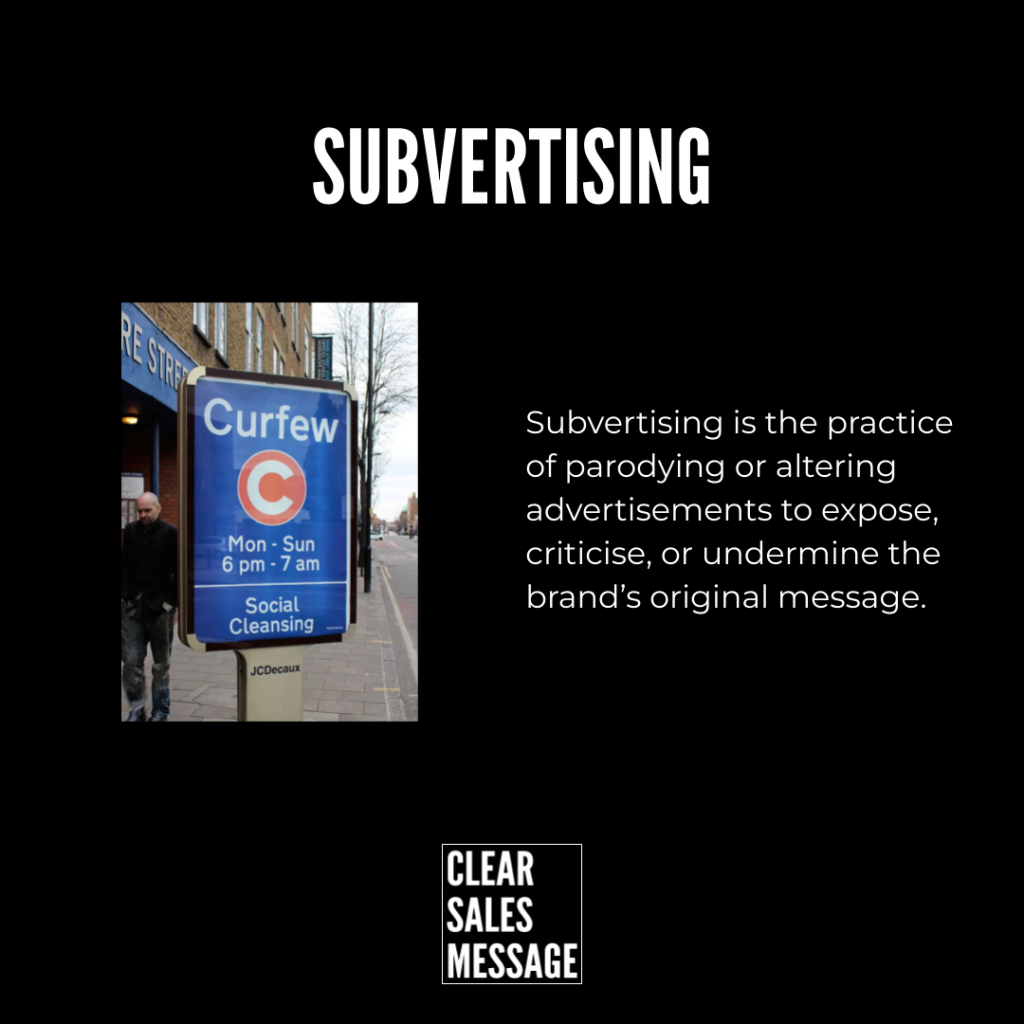
Subvertising
The most powerful shortcut in advertising is recognition. When someone already knows a brand, a slogan, or a format, their brain processes it faster. So when you twist that familiar thing into something unexpected, the contrast hits hard.
That’s subvertising. It borrows the recognition built by someone else and redirects it. The result is attention that’s earned cheaply but lands with real force.
It’s been used by activists, rival brands, and clever marketers for decades. And the principles behind it apply well beyond advertising campaigns.
What Is Subvertising?
Subvertising is the practice of flipping, parodying, or hijacking an advert to create a new message. It takes a familiar ad format, brand, or slogan and twists it into something unexpected.
It’s often used by activists to expose flaws in big brands. But it also works as a commercial tool. A brand can parody industry clichés to show they think differently. A rival can use a competitor’s fame to make their own point. A business can mock the tired language of their sector to signal they’re not like the rest.
In each case, the mechanic is the same. Take something the audience already knows. Subvert it. Let the contrast do the work.
Why Does Subvertising Work?
Subvertising works because it hijacks existing memory. The viewer doesn’t need to learn who you are or what you stand for from scratch. They already have a frame of reference. So when you twist that frame, the brain notices immediately.
Three things happen at once. First, familiarity. The viewer recognises the format or brand instantly, so their attention is already engaged. Second, surprise. The twist makes them stop because it doesn’t match what they expected. Third, engagement. People share subverted ads because they’re clever and a little provocative. As a result, the message travels further than a straight campaign would.
The combination of recognition and surprise is hard to manufacture from nothing. But subvertising borrows both at the same time.
How Can You Use Subvertising In Sales?
You can apply subvertising in ethical and creative ways to stand out. Here’s where it works in practice.
Social Content
Create posts that parody common industry ads or clichés. Most sectors have tired phrases and stock imagery that everyone uses. Subvert them. Show your audience that you’ve noticed what they’ve noticed. That kind of self-awareness builds trust and gets shared.
Sales Decks and Proposals
Use a flipped version of a well-known slogan to highlight your difference. A single slide that takes a familiar phrase and turns it on its head can reframe how a buyer sees the market. It’s memorable in a way that a bullet point list simply isn’t.
Advertising Campaigns
Reference familiar campaigns in a tongue-in-cheek way to make your point stick. This works especially well when your brand is smaller than a competitor. You borrow their fame, redirect the attention, and make yourself the punchline people remember.
Internal Training
Use subverted ads to challenge how your team thinks about buyers and messaging. Showing a well-known ad and then flipping it is a quick way to spark a conversation about what your market expects and how to surprise them. It’s also a lot more engaging than a slide of bullet points.
When Subvertising Works Best
It works best when your audience already knows the original. The more famous the ad, brand, or slogan you’re riffing on, the more powerful the subversion. Because the contrast only lands if the viewer has a strong enough memory of the thing you’re flipping.
It also works well when you’re the smaller player in a market. Big brands have spent years and large budgets building recognition. Subvertising lets you borrow that recognition and point it in a new direction. As a result, you get attention that would normally cost far more to earn.
Similarly, it works when your audience is savvy enough to appreciate the joke. The best subvertising makes people feel clever for getting it. That feeling creates a connection with the brand that straightforward advertising rarely does.
When Subvertising Becomes Dangerous
It can backfire when the original brand pushes back. Large companies have legal teams, and some subvertising crosses into trademark or copyright territory. So the line between parody and infringement is worth understanding before you publish anything.
It also fails when the audience doesn’t know the original well enough. The whole mechanism depends on recognition. Without it, the twist has nothing to land against and the message just looks odd.
And it misfires when the tone is wrong. Subvertising that feels mean-spirited or punches down tends to put people off. The best examples are cheeky, not cruel. The moment it tips into genuine hostility, it stops being clever and starts being a liability.
Common Subvertising Mistakes
Subverting Something Too Obscure
If the original isn’t well known, the subversion won’t land. You need a strong shared reference point. So before you flip something, ask whether your audience will recognise it immediately. If they have to think about it, you’ve already lost the moment.
Making It Too Aggressive
Going directly at a competitor by name is a high-risk move. It can look petty, invite a response, and put off buyers who don’t like conflict. Instead, aim for wit over aggression. The goal is to make your audience smile and think, not to start a fight.
Forgetting to Make Your Own Point
Subvertising gets attention, but attention isn’t the end goal. You still need to say something meaningful about yourself. The flip is the hook. However, if there’s no clear message behind it, the audience remembers the joke and forgets who made it.
Ignoring the Legal Risk
Parody has legal protection in many places, but it’s not unlimited. Using a brand’s logo, imagery, or trademarked slogan without care can create problems. Check what’s protected and what falls within fair use before you publish. The best subvertising is clever enough not to need to cross the line.
Subvertising – An Example
Burger King ran a campaign that hijacked McDonald’s locations. Anyone who opened the Burger King app near a McDonald’s got an offer for a Whopper for just one cent. The creative mocked McDonald’s slogans and used their competitor’s stores as the setup for the joke.
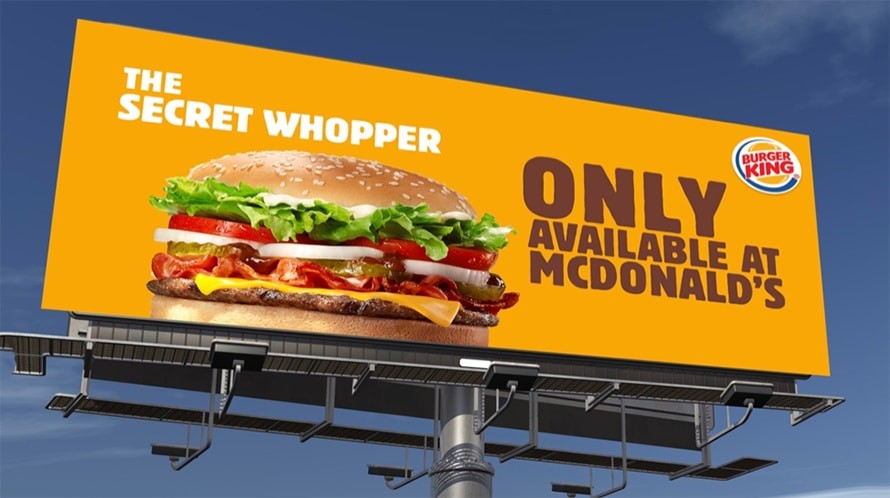
The billboard shown above takes it even further. “The Secret Whopper. Only available at McDonald’s.” It’s cheeky, clear, and completely built on borrowed recognition. Burger King didn’t need to explain who they were. They let McDonald’s fame do the heavy lifting, then flipped the story in their own favour.
That’s subvertising at its best. As a result, it got shared, talked about, and remembered far beyond what a straight ad campaign would have achieved.
See also