Practical Sales Training™ > How To Get Attention > Directional Typography
Directional Typography
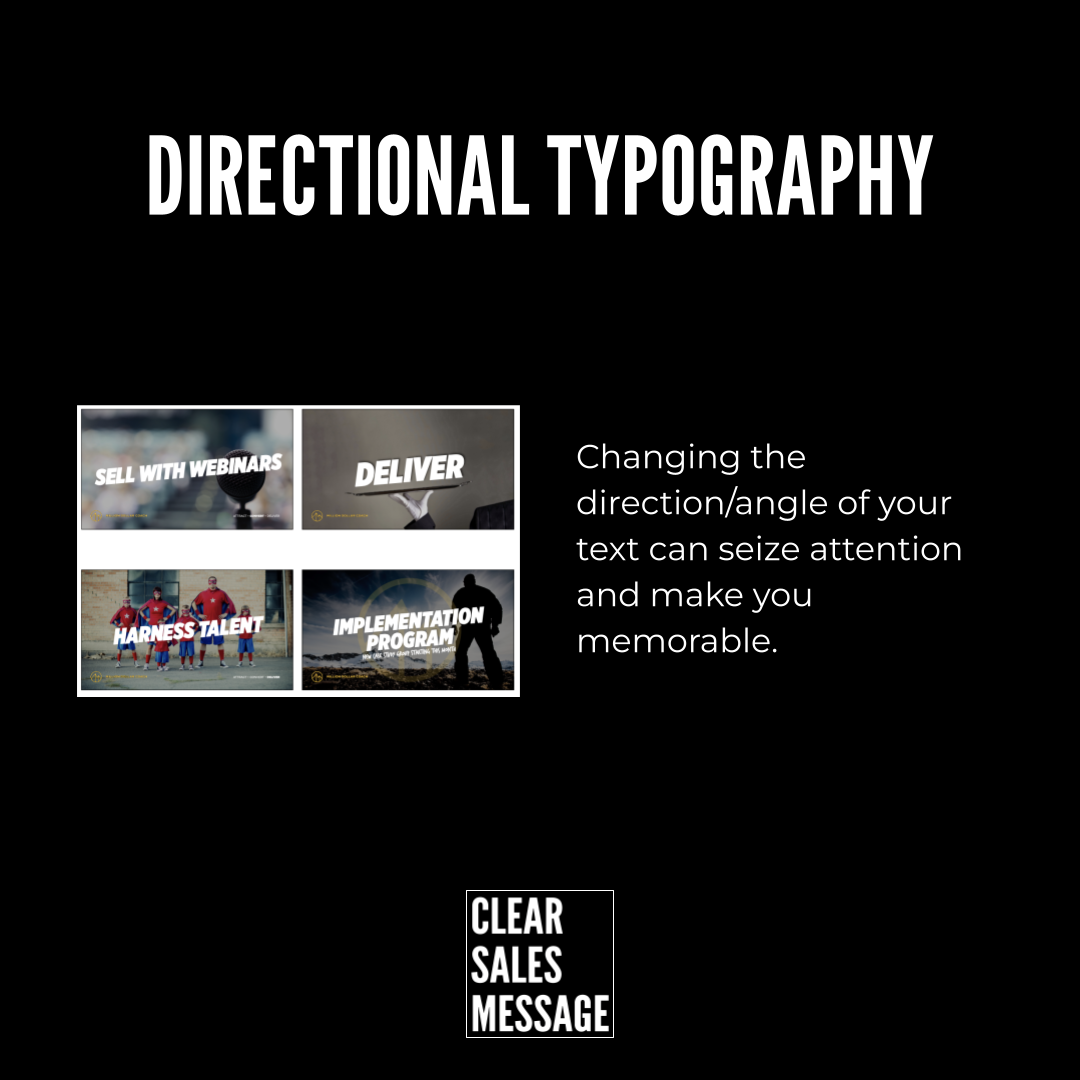
Most text sits flat on a page. It’s neat, predictable and easy to ignore. Directional Typography breaks that pattern by tilting, curving or repositioning words so they feel like they’re moving.
That sense of motion stops the eye. When everything else on a page is static, a single word that leans or rises stands out immediately. As a result, whichever word you apply it to becomes the focal point before the reader has even decided where to look.
Used well, Directional Typography doesn’t just decorate words. It drives them. So movement creates attention, and attention creates engagement.
What Is Directional Typography?
Directional Typography is the use of angled, curved or repositioned text to grab attention. Instead of keeping lines horizontal, you tilt, stretch or shape the words so they move. This small shift breaks the expected visual pattern and adds energy to the design.
Our eyes are wired to notice difference. When one element breaks the flat pattern of a layout, the brain registers it as important and goes to it first. So that element gets seen before the rest of the page has been processed.
The direction you choose also shapes the emotional tone. Text that leans forward feels fast and urgent. Text that rises feels positive. However, text that drops creates drama or weight. Each direction carries its own feeling, and used well, that feeling reinforces what the words say.
Why Does Directional Typography Work?
1. Movement attracts the eye
Human vision is wired to notice change. When the rest of a layout is flat, a directional element creates a visual jolt that pulls attention toward it. As a result, whichever word you apply it to becomes the focus of the design, even before the reader has consciously chosen where to look.
2. Direction carries emotional meaning
The angle of text communicates mood before the reader has processed the words. A forward tilt signals urgency and energy. However, an upward diagonal suggests growth and optimism, while a downward angle creates drama or weight. So the direction you choose should always match the emotion behind the message, not work against it.
3. It controls how readers move through the layout
The eye naturally follows the direction of text. Because of this, angled or curved words can guide the reader toward the next element on the page. This is useful in ads and landing pages where you want to lead someone toward a call to action rather than let them wander off the key message.
4. It signals that a deliberate choice was made
Flat text is neutral. Directional text signals care and intention. That visible choice makes the design feel more considered and the brand feel more confident. Even a small angle on a single word tells the reader that someone thought carefully about how the message should feel, and buyers respond to that kind of care.
How Can You Use Directional Typography In Sales?
Use it to highlight key words, guide reading flow or add personality to your visuals. Here are five ways to apply it with intention rather than decoration.
1. Slant for speed and urgency
A forward tilt makes words feel fast and energetic, so it works well for action-driven messages like “Go,” “Now” or “Accelerate.” When you want a buyer to feel momentum, leaning the text forward creates it visually. The angle tells the eye to keep moving, which is exactly the feeling you want before a call to action.
2. Curve for curiosity and motion
Wrapping text around an image or along a curved path creates a sense of flow and discovery. Because the eye follows the curve, the reader feels drawn through the message rather than pushed. This works well in visual content where the experience of reading should feel as engaging as the content itself.
3. Rise for optimism and growth
Diagonal text that rises from left to right suggests progress and positive change. For brands that want to show momentum, this directional cue reinforces the message before the reader has absorbed the words. In fact, it acts as a visual shorthand for “things are moving in the right direction.”
4. Drop for drama and emphasis
A downward angle creates tension, weight and emphasis, so it’s useful for bold statements or warnings where you want the reader to stop and take notice. However, use it carefully. The downward direction can feel negative or heavy if it isn’t balanced by the tone of the surrounding copy.
5. Contrast for focus
Mixing one directional element with straight text immediately spotlights the word that matters most. Because everything else sits flat, the angled element draws the eye automatically. This is also one of the most restrained ways to use Directional Typography, since the contrast does the work without the design feeling overdone.
When Directional Typography Works Best
Directional Typography works best in visual-first contexts: ads, social graphics, slides, packaging and brand identity. Readers in these settings make fast decisions about whether to engage, so a directional element can tip that decision before a single word is read.
It also works well for brands that want to feel modern and distinct. In a category where most competitors use flat layouts, a directional choice signals confidence and creativity. Buyers sense that difference even when they can’t name it, and that feeling makes the brand more memorable.
When Directional Typography Becomes Dangerous
Directional Typography becomes a problem when it makes text harder to read. The technique only works when it adds energy to a message that is already clear. If the angle makes the reader work to decode the words, the attention you’ve captured turns into frustration instead of engagement.
Overuse also kills the effect. When every word is tilted or curved, there is no contrast and therefore no focal point. The technique works because of difference, so the more flat text surrounds a directional element, the more it stands out. Remove that contrast and you remove the effect entirely.
Common Directional Typography Mistakes
1. Sacrificing readability for effect
If someone has to tilt their head to read a word, the design has gone too far. Directional Typography should enhance the message, so always test whether the text is still easy to read at a glance. Attention that leads to confusion is worse than no attention at all.
2. Using direction without meaning
Tilting text for visual reasons alone is a wasted opportunity. Because direction carries emotional meaning, every angle should reinforce the tone of the message. When direction and words point the same way emotionally, the effect is powerful. When they conflict, the result just looks like a design accident.
3. Overloading the layout
Multiple directional elements competing for attention create noise rather than interest. One strong directional choice per layout is usually enough. More than that and the eye doesn’t know where to go, so the technique defeats itself entirely.
4. Applying it to body copy
Directional Typography works on headlines, single words and short phrases. Applied to longer text blocks, however, it becomes a problem because the reader has to work too hard to follow the line. Keep it to key moments and let the body copy sit flat around it so the contrast remains clear.
Directional Typography – An Example
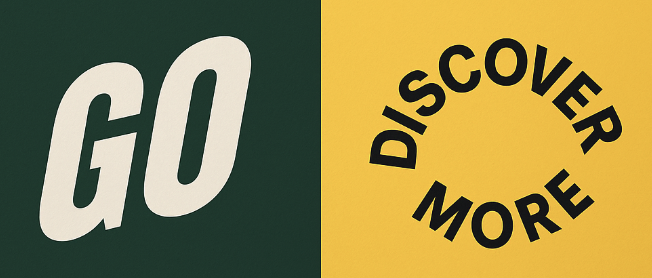
“GO” and “Discover More”
This example shows two directional techniques side by side. On the left, the word “GO” leans forward at a sharp angle. The slant makes the word feel fast before the reader has even processed what it says. It’s a perfect use of slanting for speed and urgency.
On the right, “DISCOVER MORE” curves into a full circle. The words wrap around an empty centre, drawing the eye in a continuous loop. That circular motion creates a feeling of exploration and curiosity, which suits the message perfectly. The reader’s eye has to travel to read it, and that small journey mirrors the idea of discovery itself.
Neither example sacrifices readability. Both words are still instantly legible, but the direction adds a layer of meaning that flat text never could. “GO” feels urgent because it leans urgently. “Discover More” feels exploratory because it moves in a circle. The direction and the message say the same thing twice, once in words and once in shape.
See also