Pretexting
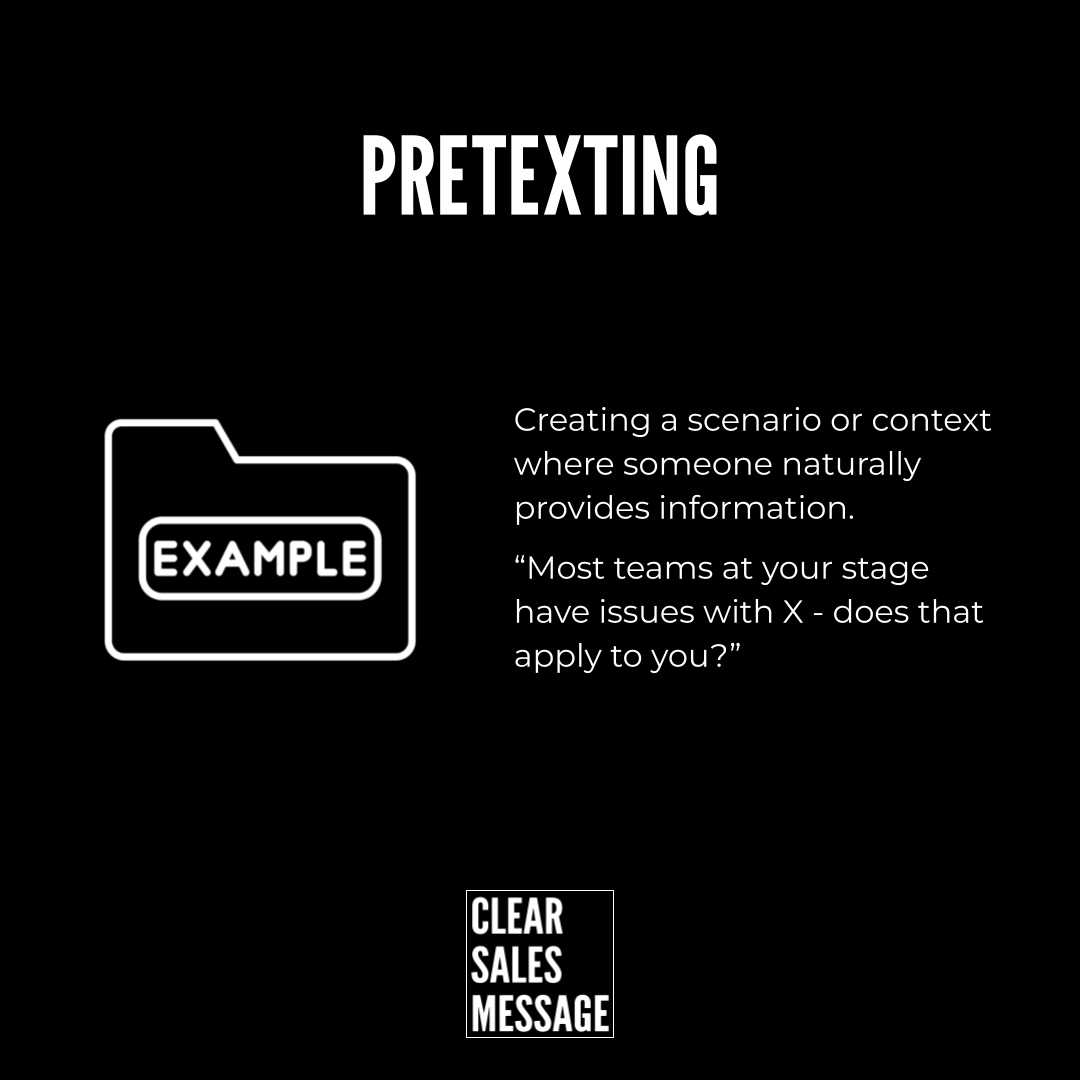
Pretexting is the skill of creating a scenario where someone naturally gives you the information you need.
Instead of asking directly, you create a context that makes their answer feel normal and inevitable.
What is it?
Pretexting is when you set up a believable situation or statement that encourages the other person to volunteer information.
Examples:
-
“Most teams at your stage struggle with lead quality. Does that apply to you?”
-
“I normally see budgets around ten thousand for this type of project. Is that similar to your setup?”
-
“People usually sign within two weeks once they see the figures. Is that your timeline as well?”
The pretext creates the frame and the person fills in the details.
In sales, it is a powerful way to uncover needs, budgets, timelines and obstacles without creating pressure.
How does it work?
1. You normalise the behaviour
By describing what other people do, you make the buyer feel that sharing the same information is completely normal.
This lowers their guard.
2. You reduce the fear of being judged
Direct questions can feel exposing.
A scenario removes the spotlight, so sharing feels safe.
3. You anchor the conversation
When you give an example, you set a reference point.
The buyer responds relative to that point, which often reveals more than they intended.
4. You encourage quick decisions
Pretexting speeds up the conversation because you give people something to react to.
They do not have to think from scratch.
How can you use it?
1. Use common scenarios to uncover pain
Examples:
“Founders usually hit a wall with follow up when they reach this stage. Is that happening for you?”
This gets them talking about their actual challenges.
2. Use typical ranges to uncover budgets
Examples:
“Clients normally invest between five and twelve thousand for this. Are you in that range?”
People will correct you and reveal their real number.
3. Use shared experience to uncover timelines
Examples:
“Most teams need about two weeks to make a decision once they see the proposal. Are you on a similar timeline?”
This gives you clarity without asking directly.
4. Use behaviour patterns to uncover decision makers
Examples:
“In companies your size, it is usually the founder and one senior lead who sign off. Is that the same for you?”
They will tell you exactly who is involved.
5. Use expectations to overcome silence
Examples:
“People usually have a few questions at this point. What would you like me to clear up?”
This turns silence into a productive conversation.
The result
Using pretexting helps you:
-
Get honest information
-
Avoid awkward direct questions
-
Make the buyer feel understood
-
Speed up the sales conversation
-
Reveal timelines, budgets and blockers
-
Reduce friction and build trust
It creates a natural environment where the other person ends up telling you exactly what you need to know.