Practical Sales Training™ > How To Convert > Quality Check
Quality Check
“Fully checked.” Two words that mean almost nothing on their own. But show the actual 128 points someone checked, and the same claim suddenly feels real.
That’s the Quality Check. Instead of just saying something is high quality, you show the process that made it that way.
This page covers what the Quality Check is, why showing the process beats just claiming quality, and how to use it to justify your price.
What Is The Quality Check?
The Quality Check is the practice of openly sharing a detailed quality assurance process with buyers, so they can see how standards are kept before anything reaches them.
Rather than simply claiming something is high quality, the Quality Check shows the thinking, care, and scrutiny sitting behind the finished result. So it turns quality from an abstract promise into something tangible and visible.
Buyers don’t just want to hear someone call a product “checked” or “approved.” Instead, they want to know that someone took the time to look closely, follow a process, and sign off with real intent.
Why Does The Quality Check Work?
The Quality Check works by replacing uncertainty with structure. When buyers see a clearly defined inspection or review process, it removes the feeling that quality is subjective or inconsistent.
This is why you often see phrases like “120-point inspection” or “multi-stage review” in sales messaging. The exact number isn’t always the point. What matters is that the process feels thorough, repeatable, and deliberate, because that signals nobody rushed it and nothing slipped through by chance.
By sharing the process itself, you reduce the need for trust leaps. The buyer doesn’t have to assume someone checked things properly. Instead, they can see that a system exists, built to catch issues before they become real problems.
How Can You Use The Quality Check In Sales?
Use It Where Risk Feels High
The Quality Check works best when buyers worry about risk, inconsistency, or hidden flaws. So it works especially well when people compare similar options and want reassurance, rather than something genuinely new.
Let The Process Do The Convincing
You can use it to justify pricing, reduce hesitation, and slow down snap judgements. So instead of pushing harder on persuasion, you let the process itself do the convincing. The more complex or expensive the decision, the more valuable this becomes.
Used well, the Quality Check doesn’t feel like marketing. Instead, it feels like professionalism, reassuring buyers that someone took care on their behalf, even before they’ve committed to anything.
The Quality Check isn’t about impressing people with detail. It’s about making quality feel inevitable.
When The Quality Check Works Best
It works best for big, infrequent purchases where buyers feel genuinely anxious about hidden faults, like cars, property, or expensive equipment. So the bigger the risk, the more a visible process actually reassures.
But it also works well in markets full of near-identical competitors, since a detailed, named process gives buyers a concrete reason to choose you, beyond just price or appearance.
When The Quality Check Becomes Dangerous
It backfires the moment the checks turn out to be exaggerated or applied inconsistently. So a buyer who later discovers a “128-point check” missed something obvious will trust the next claim far less.
It also risks feeling like empty marketing if a business emphasises the number itself more than what the checks actually cover, because a big figure with no real substance behind it invites scepticism rather than confidence.
Common Quality Check Mistakes
Inflating The Number For Effect
A check count that doesn’t reflect genuine, meaningful steps invites suspicion the moment a buyer asks for detail. So make sure every point in the count is real and worth listing.
Hiding The Process Behind The Number
Quoting a big figure with no breakdown leaves buyers guessing at what actually happened during the check. So show the categories or stages, not just the total count.
Letting Standards Slip Behind The Marketing
Promoting a thorough process while quietly cutting corners in practice damages trust badly once buyers discover the gap. So keep the real process as strong as the one you advertise.
Quality Check – An Example
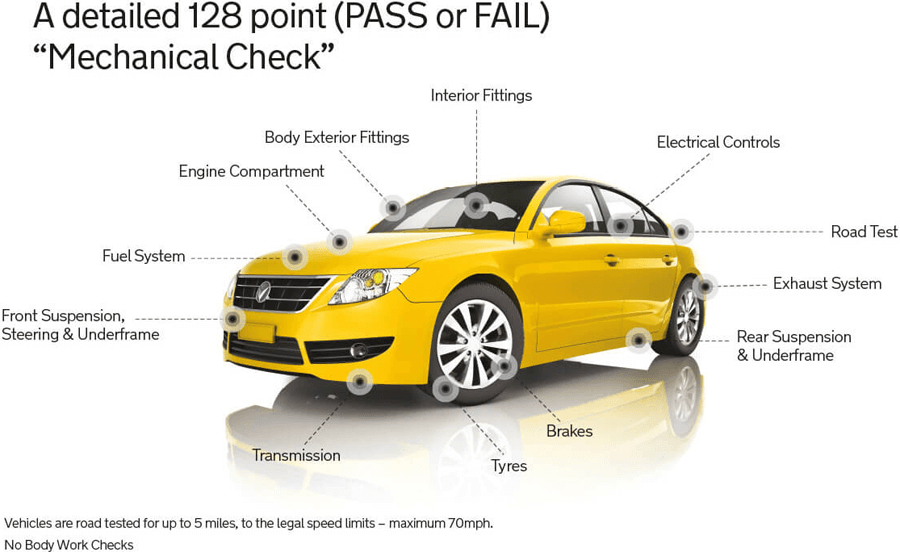
One used car dealer advertises a detailed 128-point “Mechanical Check,” shown as a labelled diagram of the car itself. The diagram calls out every area individually, covering the engine compartment, suspension, brakes, tyres, electrical controls, fuel system, and a road test. Each one carries its own pass or fail mark.
A buyer browsing used cars doesn’t just see the word “checked.” Instead, they see exactly what got checked, area by area, with a clear pass or fail result attached to each one. So that visible structure reassures far more than a vague quality promise ever could.
That’s the Quality Check working exactly as intended. The dealer isn’t just claiming the car is safe. Instead, they’re showing precisely how they know it is.
See also