Practical Sales Training™ > How People Work > Drip Spending

Drip Spending
£9 here. £19 there. None of it feels like a real decision. But add it all up after a year, and the total often comes as a genuine shock.
That’s drip spending. Each small cost slips past the part of the brain that normally questions a purchase, because no single payment ever feels big enough to stop and think about.
This page covers what drip spending is, why it works so smoothly, and how to use it without it turning into resentment later.
What Is Drip Spending?
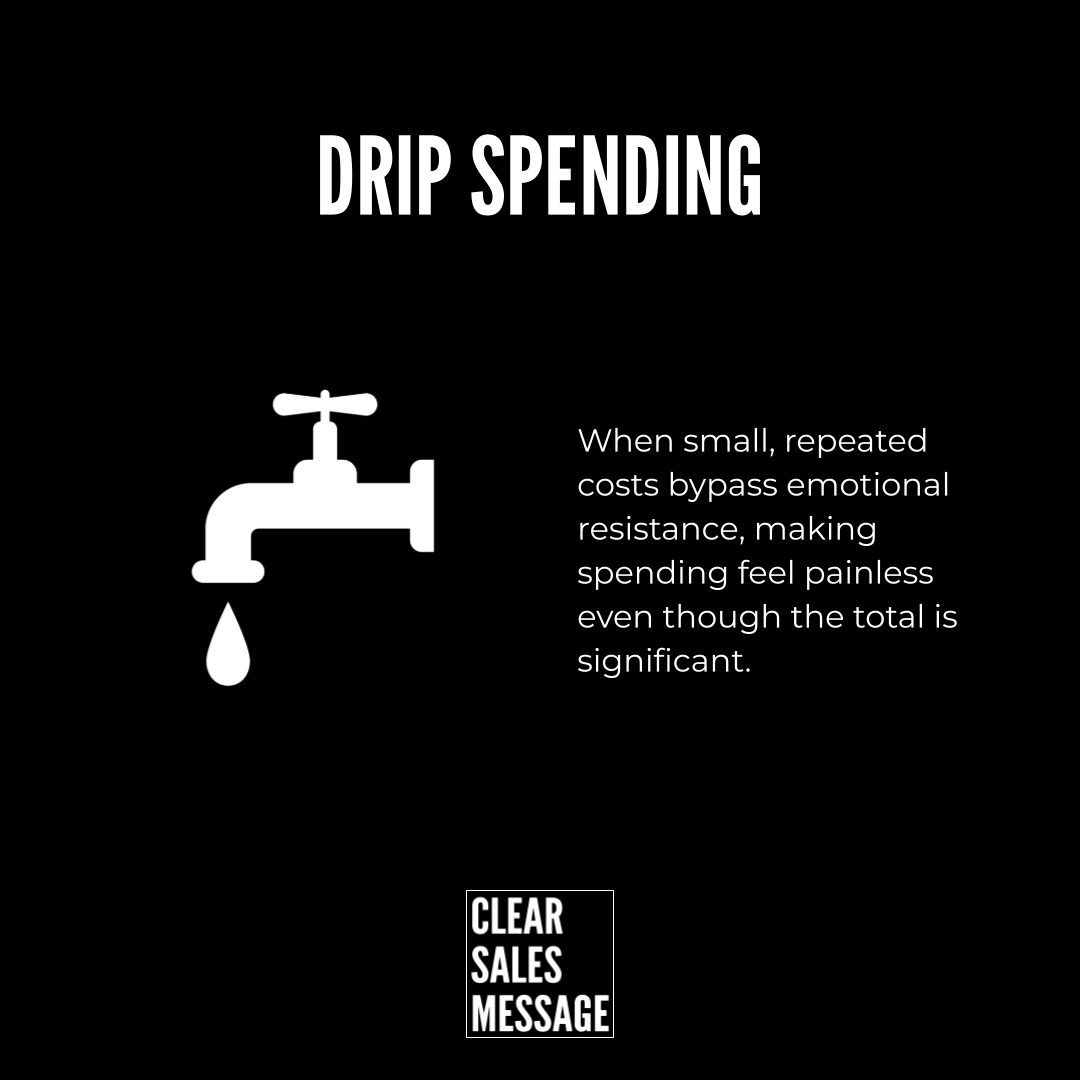
Drip spending is when small, repeated costs feel easy to accept one at a time, even though they add up to a real total over time.
Each payment feels minor and manageable. So it skips past the emotional resistance that usually shows up with bigger, one-off purchases. The spend doesn’t feel like a decision. It feels like background noise.
Why Does Drip Spending Work?
The brain reacts far more strongly to one big loss than to a string of small ones. So when a cost gets broken into smaller amounts, each payment falls below the level that normally triggers worry or scrutiny.
Over time, those small amounts build up, but the buyer rarely totals them in their head. Instead of asking “is this worth £500?”, the buyer keeps asking “is this worth £9?” or “is this worth £19 today?”
Because the answer is usually yes, the spending carries on without friction. The real total only becomes visible much later, often after the habit has already taken hold.
This is exactly why drip spending feels painless in the moment, even when the long term cost is significant.
How Can You Use Drip Spending In Sales?
Lower The Weight Of Each Decision
By lowering the emotional weight of each individual payment, buyers become far more willing to start. Once they’re engaged, momentum and habit often carry the relationship forward without you needing to keep persuading them.
Let Buyers Judge Value In Small Steps
Drip spending also changes how buyers judge value. Instead of weighing up the full outcome all at once, they assess value continuously, in small increments. As long as each step feels reasonable, the overall spend feels justified too.
Keep It Honest
The responsibility here matters. Drip spending builds trust when the ongoing value stays clear and consistent. When it doesn’t, it creates resentment the moment the total finally becomes visible. Used well, it doesn’t trick people into buying. It just helps them say yes without fear.
When Drip Spending Works Best
It works best when each small payment genuinely delivers value on its own, like a subscription the buyer actually uses or a habit they’re glad they built. The buyer should feel like each individual cost was worth it, not just tolerable.
It also works well for products or services with low individual friction, where the buyer can start without a big upfront commitment standing in the way.
When Drip Spending Becomes Dangerous
It backfires the moment the buyer finally adds everything up and feels misled by how much it actually cost. A slow leak that should have been obvious from the start damages trust far more than one honest big number ever would.
It also creates resentment when the small payments outlast the value they deliver, like a forgotten subscription quietly renewing long after anyone’s using it. The difference between drip spending and a slow trap comes down to transparency and intent.
Common Drip Spending Mistakes
Hiding The Running Total
Making it hard for buyers to see their cumulative spend feels deliberate the moment they finally work it out. Make the running total easy to find, not buried.
Letting Value Quietly Fade
A small recurring cost that stops delivering real value turns from a habit into a trap. Keep checking that each payment still earns its place.
Making It Hard To Stop
If cancelling feels deliberately difficult, the goodwill built by small, easy payments disappears the moment someone tries to leave. Keep the exit as simple as the entry.
Drip Spending – An Example
Someone adds a £4.99 app subscription, then a £7.99 streaming add-on a few weeks later, then a £9.99 cloud storage upgrade after that. Each one felt small enough to barely register at the time.
None of those decisions ever got compared to each other, because they happened weeks apart and never appeared together on the same screen. A year later, the same person checks their bank statement and finds over £260 quietly spent on small recurring charges they’d mostly forgotten existed.
That’s drip spending in its purest form. No single payment ever felt like a real decision, yet the total tells a completely different story.
See also