Practical Sales Training™ > How To Lose The Sale > Drip Pricing

Drip Pricing
You see a ticket for £50. You click through, choose your seat, add the booking fee, the service charge, the handling fee. Suddenly it’s £72. You feel annoyed. You might still buy, but something has shifted.
That shift is the damage drip pricing does. The sale might complete, but the trust takes a hit. And trust, once damaged, is hard to rebuild before the next purchase decision comes around.
Drip pricing is common because it works in the short term. The low headline price gets the click. But the long-term cost in loyalty and reputation is much higher than most businesses realise.
What Is Drip Pricing?
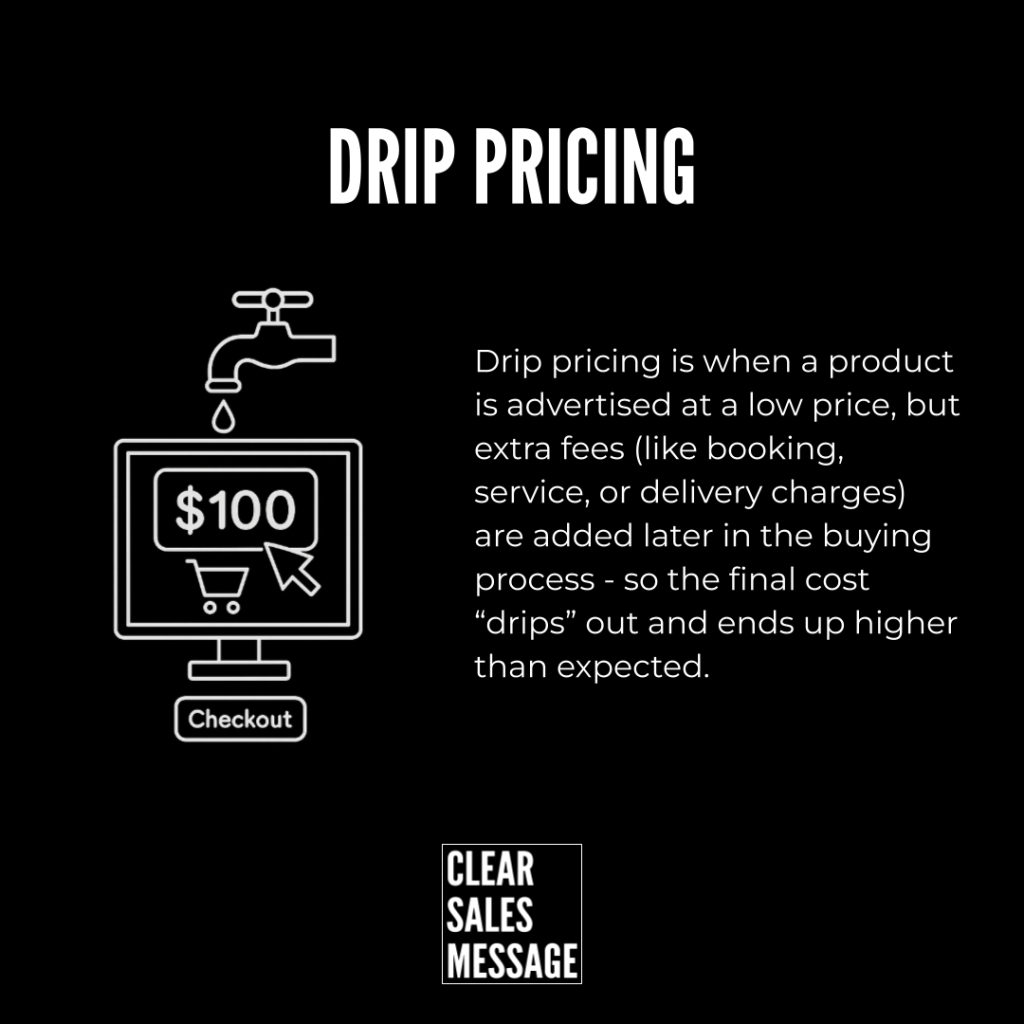
Drip pricing is a tactic where the full cost of a product or service gets revealed gradually throughout the buying process rather than shown upfront. The buyer sees an attractive base price first, then watches fees, charges, and extras get added as they move toward checkout.
By the time the real total appears, the buyer has already invested time and mental energy in the purchase. The hope is that they’ll complete it anyway rather than start over somewhere else. Sometimes they do. Often they don’t.
Common forms include booking fees, service charges, handling fees, compulsory insurance, and delivery costs that only appear at the final step. Each one feels reasonable in isolation, but together they create a final price that bears little resemblance to the one that caught the buyer’s eye.
Why Does Drip Pricing Lose You the Sale?
Buyers feel misled when the price keeps rising. Even if every fee is technically disclosed, the experience of watching a price climb creates a feeling of being manipulated. That feeling sticks, and it colours every future interaction with the brand.
Cart abandonment is also a direct result. Research consistently shows that unexpected costs at checkout are the leading cause of abandoned purchases. The buyer who drops out at that point rarely comes back, because they now associate your brand with a bad experience.
And the reputational damage spreads. Hidden fees generate some of the most common complaints in online reviews. One frustrated buyer can reach thousands of potential buyers before you’ve had a chance to respond.
How Can You Avoid Drip Pricing In Your Sales Process?
Show the full price as early as possible
The closer your advertised price is to the final total, the more trust you build. If fees must be added, show them before the buyer commits time to the process. Transparency early removes the shock later.
Bundle unavoidable fees into the headline price
If a service charge or booking fee applies to every transaction, include it in the price you advertise. Buyers respond far better to one honest number than a low number followed by a string of additions.
Be clear about what is and isn’t included
If extras exist, label them clearly as optional rather than letting them appear as surprises. Buyers who understand the structure feel in control. Buyers who feel ambushed feel cheated, even when the total is the same.
Test your own checkout process
Go through your own buying journey as a customer would. Note every point where the price changes or a new charge appears. If you feel any friction or surprise, your buyers feel it too. Fix it before it costs you sales.
When Drip Pricing Feels Tempting
A low headline price drives more clicks. More clicks mean more people entering the funnel. Some of those people will complete the purchase even when the price rises, so the revenue numbers can look fine in the short term.
For high-volume, low-relationship sales, the argument gets stronger. If buyers are unlikely to return anyway, the reputational damage feels less acute. The maths seems to work.
But buyers talk. Review platforms, social media, and comparison sites all amplify the experience of feeling tricked. The businesses that win long-term are the ones buyers trust enough to recommend, and drip pricing makes that almost impossible to earn.
When Drip Pricing Becomes a Legal Risk
Regulators in several countries have moved against drip pricing in recent years. In the UK, the Competition and Markets Authority has targeted businesses that advertise prices without mandatory fees included. Similar action has followed in Canada, Australia, and the US.
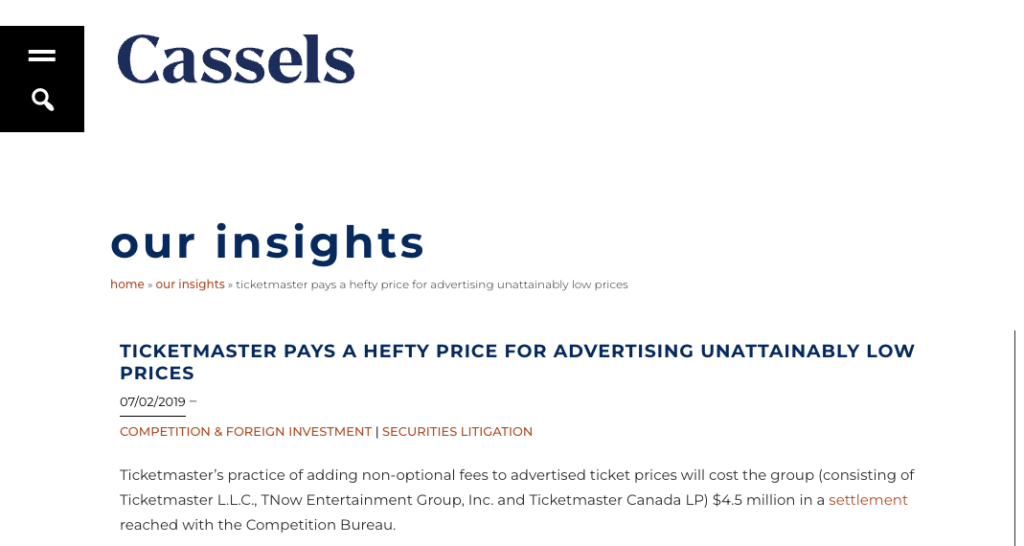
The risk isn’t just reputational. Businesses that systematically use drip pricing face fines, legal settlements, and enforced changes to their pricing practices. Ticketmaster’s settlement with the Canadian Competition Bureau over exactly this issue cost millions and generated significant negative press.
So beyond the buyer trust argument, there is a growing legal case for pricing honestly. The question is no longer just whether it’s good practice. In some markets, it’s also a matter of compliance.
Common Drip Pricing Mistakes
Assuming buyers will complete anyway
The data says otherwise. Unexpected fees at checkout are consistently the top reason buyers abandon a purchase. Most do not come back. The short-term conversion gain from a low headline price rarely offsets the abandonment cost.
Treating fees as separate from the price
Buyers don’t distinguish between a fee and a price rise. They see a total and judge it against their expectation. If the total is higher than what was implied at the start, the method of getting there doesn’t change how they feel about it.
Ignoring the review trail
Hidden fees generate reviews. Those reviews sit online for years and influence buyers who haven’t experienced your pricing yet. The long-term cost of a pattern of drip pricing shows up in your reputation long after the individual transactions have closed.
Not checking the legal position
Pricing transparency rules vary by market and sector, but enforcement is increasing. If you operate in regulated sectors or sell across borders, review your pricing practices against current rules before a regulator does it for you.
Drip Pricing – An Example
Ticketmaster listed concert tickets at a low advertised price, then added service charges, handling fees, and delivery costs at checkout, pushing the final price significantly higher. The practice led to a $4.5 million settlement with the Canadian Competition Bureau for advertising prices buyers could not actually achieve.
The case became a public example of what drip pricing costs when it gets scrutinised. The settlement figure was large, but the reputational damage and loss of buyer trust ran far deeper than any single fine.
See also