Practical Sales Training™ > How To Lose The Sale > Deceptive Packaging

Deceptive Packaging
The box looks generous. The product inside isn’t. That gap is exactly what deceptive packaging means. Buyers always notice it eventually.
It rarely starts as an outright lie. Most of the time, it comes from trying to sound impressive or confident, without being specific about what’s inside.
This page covers what deceptive packaging means and why it causes so much damage. It also looks at what to avoid, so your own packaging never falls into the same trap.
What Is Deceptive Packaging?
Deceptive packaging happens when something’s look suggests more value or substance than the buyer actually gets. It promises a better outcome than what’s real.
This isn’t always deliberate. In many cases, it comes from trying to sound impressive, competitive, or confident. Instead of being specific about the real thing on offer, the message stays vague.
It shows up the moment the outside promise feels bigger or more polished than what’s inside. Buyers form ideas based on what they see and read. So when those ideas turn out wrong, disappointment follows fast. Even a perfectly good product can feel negative if the expectation going in was wrong.
How Does Deceptive Packaging Happen?
It usually happens when a business chooses presentation over accuracy.
Language turns vague instead of clear. The copy hints at outcomes instead of explaining them. The design suggests a scale or depth that simply isn’t there. Important details slip to the back, because they feel awkward to mention.
Nothing has to be an outright lie for packaging to count as deceptive. Most of the damage comes from what’s left out or softened, not from anything false.
Once a buyer spots the gap between what they thought they were buying and what they got, trust drops fast. That loss of trust is far harder to win back than one lost sale.
Why Is Deceptive Packaging A Problem?
Deceptive packaging creates friction after the purchase, instead of building confidence before it.
Buyers start questioning their own choice. They second guess you, and become defensive rather than open. The relationship already feels strained, even before you’ve had a real conversation. So they’re also far less forgiving of small issues they’d normally let go.
This affects refunds, complaints, retention, and referrals. It also affects how confidently someone recommends you to other people. People are far more likely to warn a friend off than praise you, once they feel misled.
Over time, deceptive packaging attracts the wrong buyers and pushes away the right ones. It creates short term attention, but long term trouble that costs far more than it ever earned.
What Not To Do
Don’t make your offer sound bigger than it is. Don’t rely on hints instead of a clear explanation. And don’t hide constraints, effort, or limits just because you’re worried they’ll put people off.
Don’t assume buyers will figure it out later and simply be fine with it. They will figure it out, and they will not be fine with it.
Don’t confuse confidence with exaggeration either. Real confidence is clarity, not a bigger-sounding claim.
When Deceptive Packaging Becomes Dangerous
It does the most damage on repeat-purchase products. Buyers spot the same gap, again and again. A one-off disappointment stings, but a pattern of it actively drives buyers toward a competitor.
It’s also riskier in categories where buyers compare side by side, like food, retail, or subscription boxes. A smaller-than-expected product next to a competitor’s honest one makes the gap impossible to miss.
Common Deceptive Packaging Mistakes
Letting Design Imply More Than The Product Delivers
A box, photo, or layout that suggests more substance than what’s inside sets an expectation the product can’t meet. Match the visual promise to the real thing.
Hiding Limitations In Small Print
Burying a constraint where nobody reads it still counts as deceptive, even if you’ve disclosed it somewhere. Put the important details where buyers will actually see them.
Assuming Buyers Won’t Compare
In a world of side-by-side photos and reviews, buyers compare constantly. So assume every claim will face a check against the real product, because it usually will.
Deceptive Packaging – An Example
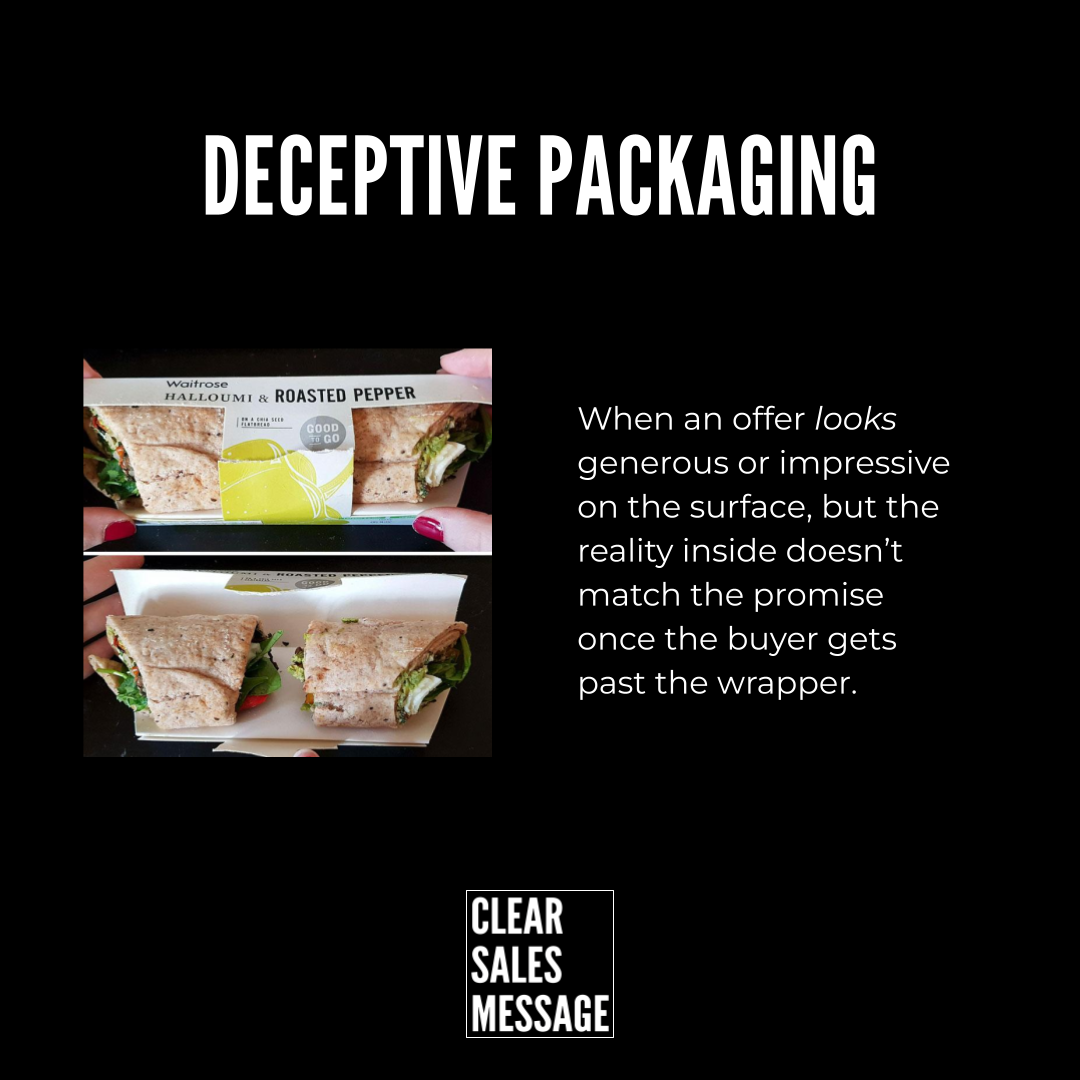
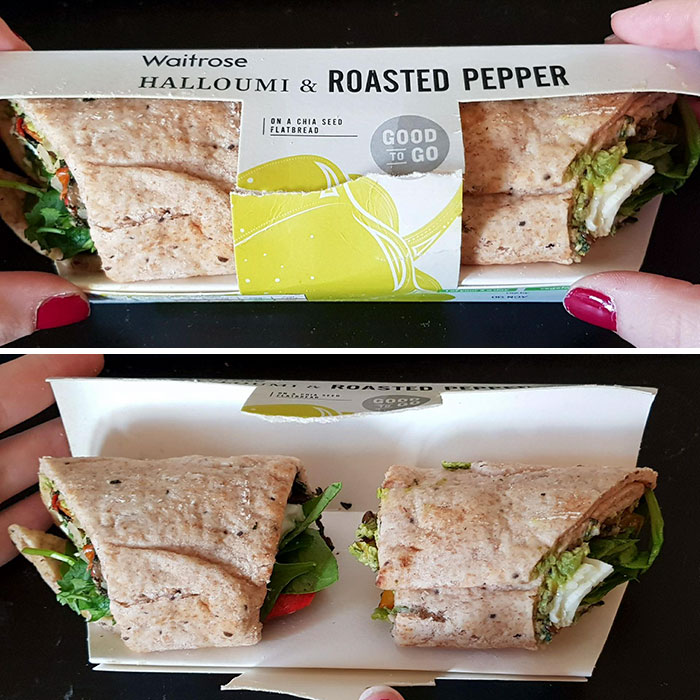
A Waitrose Halloumi and Roasted Pepper wrap shows two generous halves on the front of the box. It sits on a clean white background that makes it look big.
Once unwrapped, the actual wraps look noticeably smaller and less full than the packaging suggested. The bread looks the same, but the overall portion feels thinner than the box image implied.
That gap between the photo and the product is exactly what deceptive packaging means in practice. Nothing on the box is false. The image simply shows the product at its best angle. That angle sets an expectation the real thing doesn’t quite match.
See also