Practical Sales Training™ > How To Get Attention > The GIF Effect

The GIF Effect
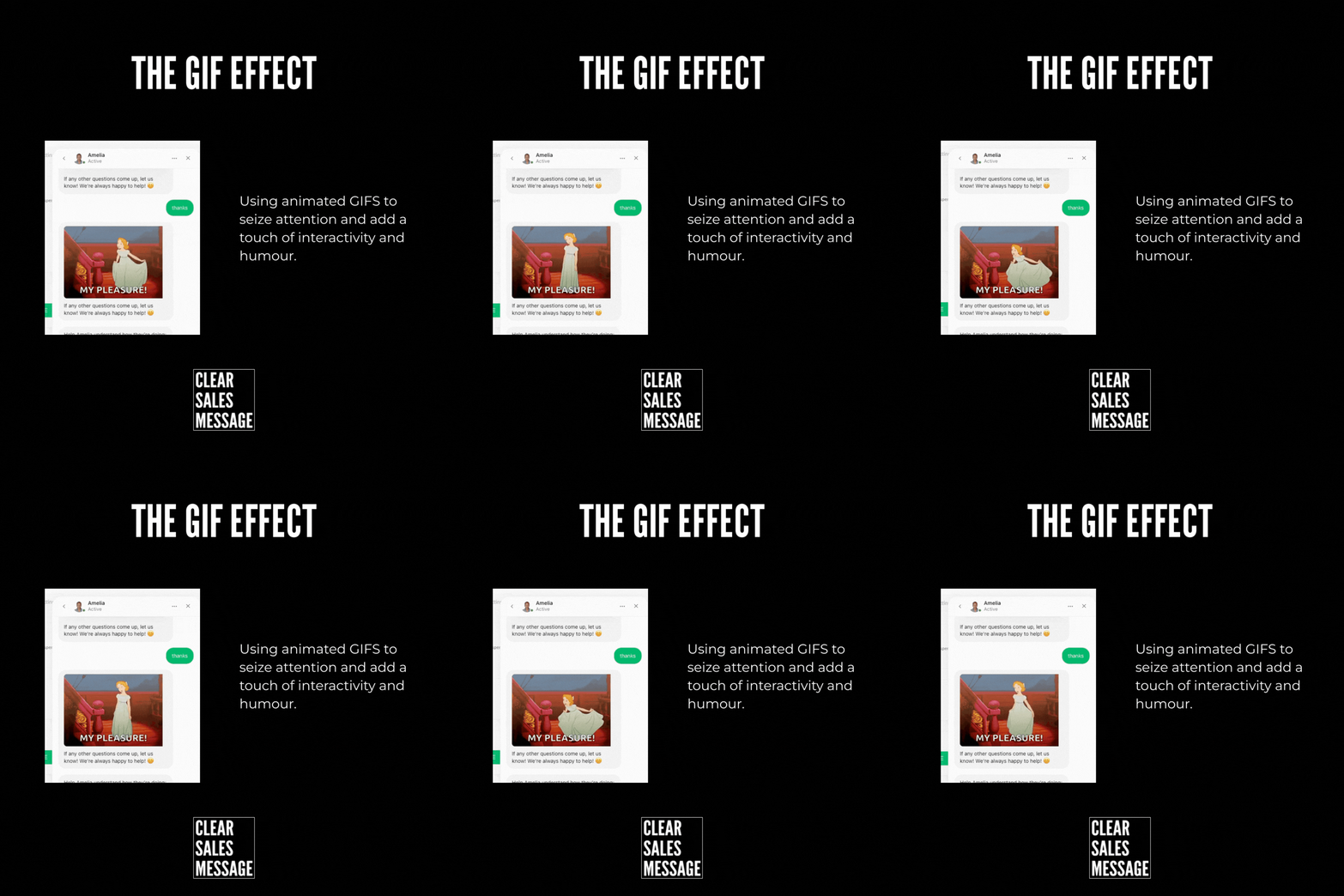
A flat “thanks for your message” gets ignored. A short clip of someone twirling and saying “MY PLEASURE!” gets remembered. Same meaning, completely different impact.
That’s The GIF Effect. It’s not about being silly or random, but about using movement and emotion to break the pattern of flat, predictable text.
This page covers what The GIF Effect is, why it works so well, and how to use it without it feeling forced.
What Is The GIF Effect?
The GIF Effect is the deliberate use of animated GIFs to grab attention, add personality, and make sales communication feel more human.
It isn’t about being random or childish. Instead, it’s about using movement and emotion to break the pattern and create real connection.
In a world full of flat text and predictable messages, motion stands out. A well chosen GIF can communicate tone in seconds. It can soften a request, celebrate a win, acknowledge a delay, or add humour to a follow up, often faster than a whole paragraph could manage.
Why Does The GIF Effect Work?
Most sales communication is heavy on text and flat on emotion. So it’s easy to ignore.
A GIF introduces movement, and movement catches the eye. The brain is wired to notice change, so the moment something animates in an inbox, a LinkedIn message, or a support chat, it interrupts autopilot.
But the real power isn’t the animation itself. It’s the emotion behind it. A short looping clip can show excitement, relief, gratitude, humour, or reassurance instantly. Instead of telling someone you’re pleased to help, you show it. Instead of saying you’re excited, you demonstrate it visually.
This cuts down friction in the conversation, because it makes the whole interaction feel lighter and more human. And when communication feels human, trust goes up with it.
Used well, a GIF becomes a tone amplifier. It backs up what you’re already saying, instead of distracting from it.
How Can You Use The GIF Effect In Sales?
Find The Moments Where Tone Matters
Start by spotting the points in your sales journey where tone genuinely matters. After someone books a call. After a deal closes. When you’re chasing a reply, nudging a stalled conversation, or welcoming someone new. These are emotional touchpoints, and they’re chances to stand out without being pushy.
Pick Something Simple And Recognisable
Choose GIFs that are easy to read at a glance. Avoid anything obscure, controversial, or distracting, because the goal here is clarity and warmth, not confusion.
Keep It Tied To The Message
If a GIF needs explaining, it’s the wrong one. It should support the sentence it sits under, not sit there as a random decoration. For example, a subtle celebratory GIF after a client signs reinforces momentum. A lighthearted one on a proposal follow up can soften the nudge and ease the pressure.
Use It Sparingly
If every single message contains movement, nothing stands out anymore. So the effect relies entirely on contrast, which means restraint matters just as much as the GIF itself.
When The GIF Effect Works Best
It works best at emotional touchpoints, the moments where tone matters more than information. A thank you, a celebration, or a gentle nudge all benefit far more from a GIF than a routine status update would.
It also works especially well in informal channels like chat, social media, and direct messages, where a more relaxed tone already fits naturally.
When The GIF Effect Becomes Dangerous
It backfires the moment it feels mismatched to the message, like a playful GIF attached to a serious complaint or a formal contract issue. The wrong tone at the wrong time damages trust instead of building it.
Overuse causes the same problem from a different angle. If every message includes a GIF, the contrast that makes it effective disappears completely, and it starts to feel like a tic rather than a deliberate choice.
Common GIF Effect Mistakes
Choosing An Unclear Reference
A GIF only the sender understands does nothing for the receiver. So stick to widely recognisable clips that don’t need any explaining.
Using It On Serious Or Formal Messages
A GIF dropped into a serious conversation, like a pricing dispute or a delivery failure, reads as dismissive rather than warm. Save it for lighter moments instead.
Overusing It Until It Loses Impact
A GIF in every message stops feeling intentional and starts feeling automatic. Save it for the moments that genuinely call for it.
The GIF Effect – An Example
A customer support chat ends with a simple “thanks” from the customer. Instead of a flat reply, the response comes back as a Cinderella GIF twirling down a staircase, captioned “MY PLEASURE!”
It’s a tiny moment, but it lands. On LinkedIn, someone commenting on a related post wrote, “I do love your Gifs,” tagging the business owner directly and adding a heart. That’s a genuine reaction to a tone choice, not the actual offer being sold.
That’s the effect doing its job. The GIF didn’t replace the message. It just made an ordinary “you’re welcome” memorable enough that someone mentioned it publicly, days later.
See also