Practical Sales Training™ > Wordplay > Alliterative Dichotomy

Alliterative Dichotomy
Most buyers don’t struggle to choose. They struggle to understand what they’re choosing between. So when the difference between two options feels vague, they stall – or they walk away.
Alliterative Dichotomy is a way to fix that. It takes a contrast and sharpens it, using sound and structure to make the gap between two ideas feel obvious. The result is a phrase that’s easy to process and easy to repeat.
This isn’t about being clever. It’s about being clear – because clear buyers commit, and confused buyers don’t.
What Is Alliterative Dichotomy?
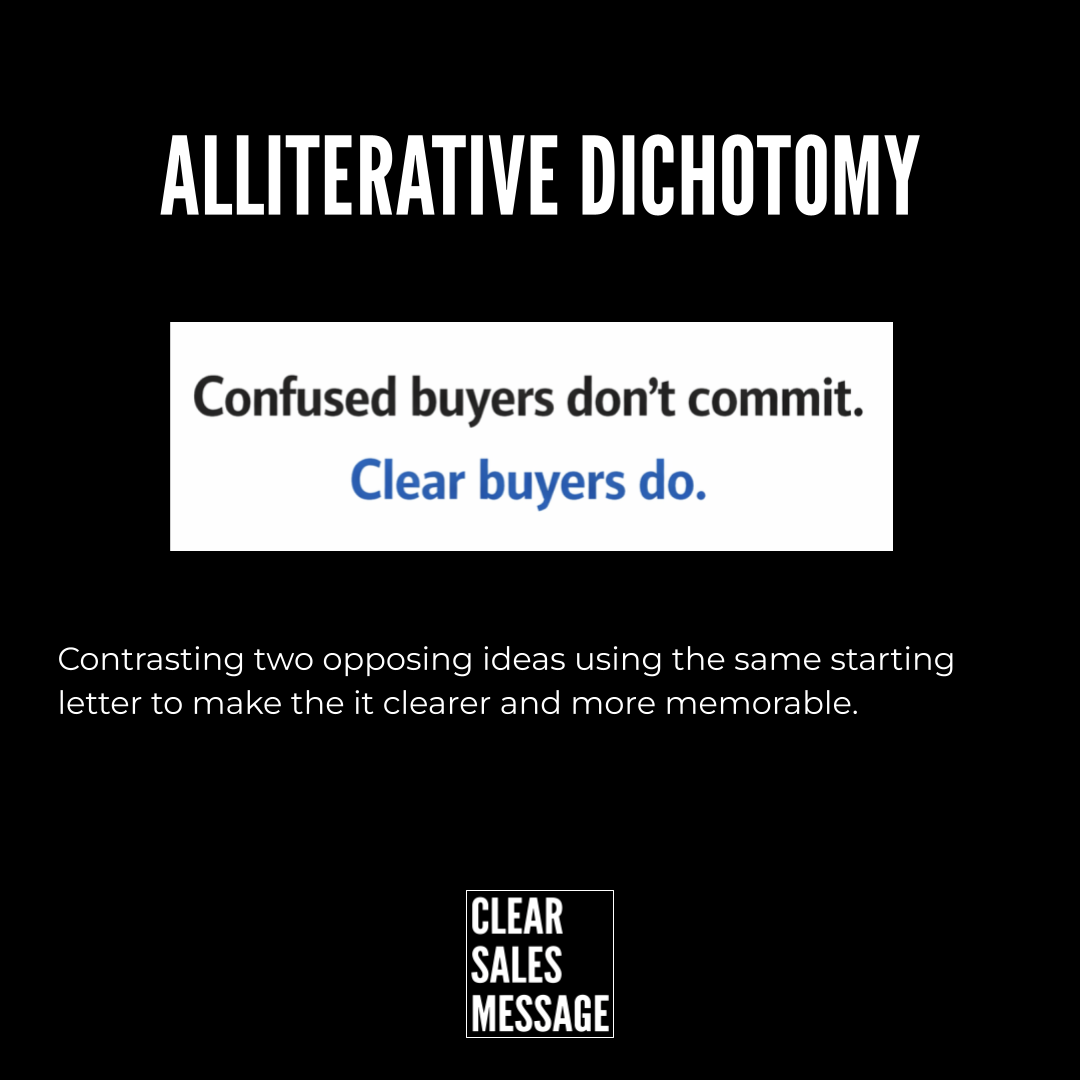
Alliterative Dichotomy is a messaging technique where two opposing ideas share the same starting letter. The alliteration creates a pattern, and the pattern makes the contrast easier to hold in your head.
For example: “Confused buyers don’t commit. Clear buyers do.” Both sides start with C. The contrast lands fast. However, remove the alliteration and the same idea becomes harder to remember – and harder to repeat.
The technique works because of how the brain handles information. Simple patterns are easier to process. And because the structure feels clean, the message feels more true. In fact, research into cognitive fluency shows that ideas which are easy to process are more likely to be trusted.
Why Does Alliterative Dichotomy Work?
Two things happen at once. First, the contrast helps buyers sort their thinking – they can see the difference clearly. Second, the alliteration makes the phrase stick, so they can recall it later.
Together, these effects do something most messaging fails to do. They make a comparison feel instant. Buyers don’t need to work it out. The structure does the work for them.
This matters because buyers rarely compare everything. They compare what’s easy to understand. So if your contrast is simple and well-framed, you shape the way they think about the decision – before they even start weighing it up.
How Can You Use Alliterative Dichotomy In Sales?
The technique works best when you need to show a difference fast. So look for moments where a buyer is comparing options, sitting with a problem, or trying to understand why your way is better.
Use it in headlines and openers
A strong contrast at the top of a page or slide sets the frame for everything that follows. For example: “Random marketing creates risk. Repeatable marketing creates revenue.” The buyer knows exactly what world you’re describing – and which one they want.
Use it to position against the alternative
Instead of describing your offer in isolation, contrast it with what the buyer is currently doing. “Slow decisions stall growth. Simple decisions scale it.” This works because it names the problem and the fix in a single breath.
Use it in sales presentations
Slide decks often drown in detail. A well-placed contrast phrase cuts through. It also gives buyers something to take away – a phrase they can repeat when they’re selling your idea internally. That alone makes it worth building in.
Use it to frame product comparisons
When buyers are weighing options side by side, a sharp contrast phrase tips the scales. It makes one path feel obvious – not through pressure, but because the distinction is so clear it answers the question before they ask it.
When Alliterative Dichotomy Works Best
This technique is most useful in competitive markets, where small differences have to land fast. Because buyers there are already comparing – so you’re not creating the contrast, you’re shaping how they see one that already exists.
It also works well when your offer solves a specific, named frustration. The more clearly you can label the problem on one side of the contrast, the stronger the pull toward your solution on the other. In fact, the best examples feel less like wordplay and more like the buyer’s own thoughts – just tidied up.
When Alliterative Dichotomy Becomes Dangerous
The technique fails when the alliteration becomes the goal. If you’re forcing words to fit the same letter at the expense of meaning, the phrase will feel hollow – and buyers will sense it even if they can’t explain why.
Similarly, a weak contrast won’t be saved by strong structure. The two sides have to describe a real difference that the buyer actually cares about. However good the phrasing sounds, if the underlying contrast isn’t meaningful, it won’t move anyone.
It’s also not a replacement for explanation. A contrast phrase opens the door – but you still need to walk the buyer through it. So use Alliterative Dichotomy to introduce an idea, not to close one off.
Common Alliterative Dichotomy Mistakes
Prioritising the letter over the meaning
This is the most common trap. The alliteration catches your attention, so you keep tweaking the words to make it fit – and slowly the meaning gets watered down. However, clarity always beats symmetry. If the phrase sounds good but means less, start again with the contrast and build the sound around it.
Using it too many times
One strong contrast lands hard. Three average ones cancel each other out. As a result, the technique loses its edge when it shows up too often in the same piece of copy. Use it at the moment where the contrast matters most – then let the rest of your message breathe.
Making it too long
The power of the technique is in its brevity. So if the phrase runs to three or four words on each side, it starts to feel laboured. Short is sharp. For example, “Complex chaos, clear confidence” lands faster than a full sentence trying to do the same job.
Testing it on yourself instead of on buyers
You know what you mean, so the phrase will always make sense to you. But the real test is whether a buyer – with no context – can grasp the contrast in under three seconds. Therefore, share it cold. If they have to ask what you mean, it needs work.
Alliterative Dichotomy – An Example
A marketing firm wants to position itself against guesswork-based approaches. Instead of a long explanation, they use one line:
“Hope marketing hopes something works. System marketing shows what works.”
Both sides start with the same letter. However, more importantly, both sides name something real – a state the buyer has been in, and a state they want to reach. The phrase does the work of a paragraph in a single breath.
Most companies describe what they do. But the ones that get remembered show buyers what the alternative looks like – and make it feel like the obvious wrong choice. That’s what a well-built contrast does. And alliteration is simply the tool that makes it stick.
See also