Practical Sales Training™ > Wordplay > Oronym

Oronym
Some words grab attention because of what they mean. Others grab attention because the brain hears them two ways at once.
That moment of double-take creates a good kind of mental friction. The buyer pauses, replays the phrase, and becomes more engaged with the message. And that is where oronyms become useful in sales.
What Is an Oronym?
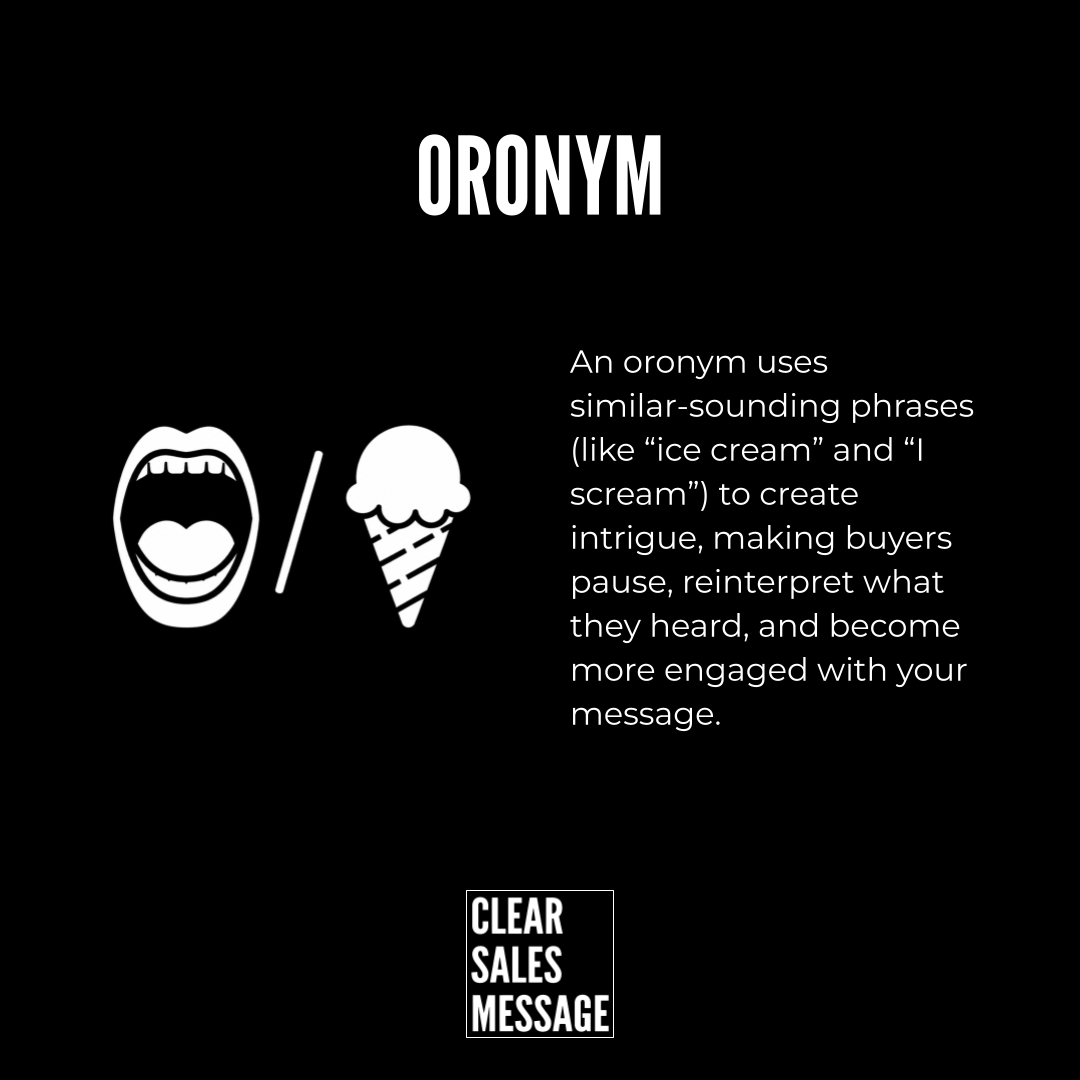
An oronym is a phrase that sounds the same or very close to another phrase when spoken out loud. For example, “ice cream” and “I scream.” Or the classic “four candles” and “fork handles.” The brain hears one thing, then realises it may have heard something else. That moment of reinterpretation is where the magic happens.
The humour, intrigue, or stickiness comes from that brief mental confusion. So the buyer does not just receive the message – they take part in decoding it.
How Do Oronyms Work?
The brain processes language fast and tries to predict meaning ahead of time. When a phrase sounds like two different things, the listener pauses to work out which one was meant. That extra mental step tends to increase attention and make the message stick.
In short, buyers pay more attention when the brain has to do a little more work. But only when the confusion feels fun rather than frustrating. That balance matters a lot.
How Can You Use Oronyms In Sales and Marketing?
Oronyms work best in headlines, campaign names, slogans, and any copy where being memorable matters. The goal is not confusion for its own sake. The goal is a brief mental pause that pulls the buyer back into the message and makes it harder to forget.
Create memorable wordplay
The brain tends to hold on to language that needed a second look. So oronyms are useful for ad campaigns, podcast names, social hooks, and slogans. The slight pause becomes part of the engagement. And because the buyer had to think, they are more likely to remember it later.
Build curiosity and attention
Language that sounds slightly odd creates curiosity because the brain wants to resolve it. That curiosity drives attention – especially when buyers are scanning lots of content fast. Most people do not even know why something caught their eye. They just feel the pull and stop to look.
When Oronyms Work Best
Oronyms work best when the goal is to be memorable, funny, or engaging. For example, brand campaigns, creative ads, social content, and event names all benefit from this kind of wordplay. The more the language itself becomes part of the experience, the more useful an oronym can be.
When Oronyms Become Risky
They become a problem when clarity matters more than creativity. If the buyer ends up genuinely confused about what is on offer, the wordplay has done more harm than good. And that is the risk with all clever language. If buyers do not get it, they cannot buy it. So be clear first, clever second.
Common Oronym Mistakes
Most mistakes come from putting the wordplay ahead of the message. However, the two things should work together – not compete with each other.
Making the wordplay too obscure
Some businesses create language that is so clever or niche that most buyers miss it. If the joke needs explaining, it did not land. So keep the double meaning close to the surface. The buyer should feel the reinterpretation fast – not have to hunt for it.
Losing the commercial point
Another common mistake is getting so focused on being creative that the actual message gets lost. Attention alone is not enough. The buyer still needs to understand what is on offer and why it matters to them. So the wordplay should support the message – not replace it.
Oronym – An Example
An optician runs a promotion called “Eye Deal.” The buyer first hears “ideal” – then spots the second meaning linked to eyes. That small moment of reinterpretation makes the phrase stick. Because the buyer took part in decoding it, they are far more likely to remember it than a plain headline ever would.
See also