Practical Sales Training™ > Wordplay > Anadrome

Anadrome
Words are tools. And some tools are sharper than others. Most sales copy uses plain, flat language that does a job but leaves no mark. Wordplay changes that. It creates a moment of surprise, a small mental reward, and something worth repeating.
Anadromes are one of the rarest forms of wordplay because they work on two levels at once. The word means something. But backwards, it means something else. That tension is what makes them stick.
So if you sell something stressful to fix, or something sweet to enjoy, or anything that has a flipside, an anadrome might be the most precise tool in your kit.
What Is an Anadrome?
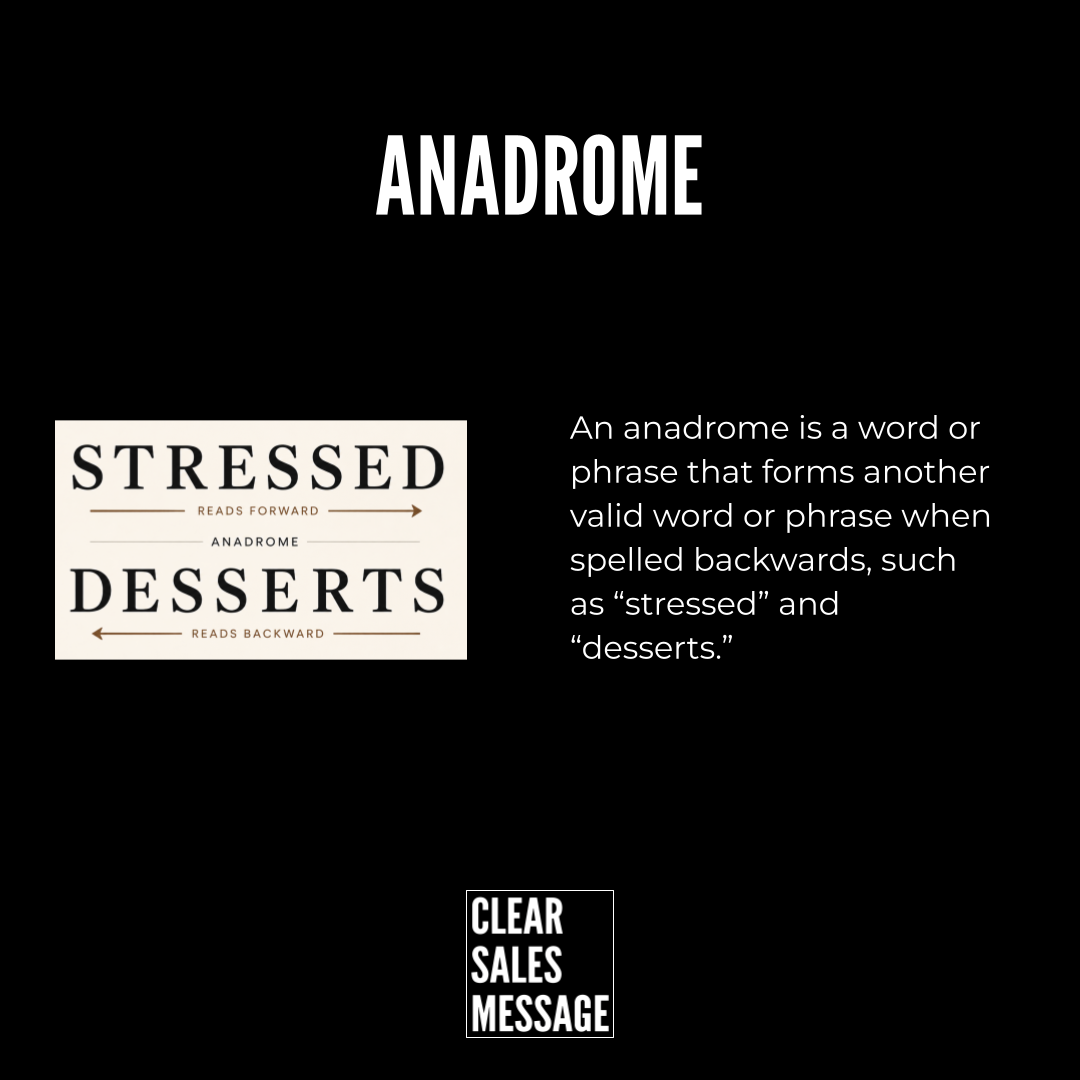
An anadrome is a word or phrase that forms another valid word when spelled backwards. The classic example is stressed, which spells desserts in reverse. Both are real words. Both mean something. And the contrast between them does a lot of quiet work.
It is not the same as a palindrome, which reads the same both ways. An anadrome produces a different word, so there is a relationship between the two meanings to explore. That relationship is where the sales opportunity lives.
Other well-known examples include live and evil, stop and pots, and repaid and diaper. But for sales messaging, the most useful ones are those where both words carry meaning that connects to what you do and who you help.
Why Does an Anadrome Work?
Buyers remember things that surprise them. A clever turn of phrase creates a small moment of delight, and that delight gets attached to you and your brand. It also signals intelligence without being showy about it, which builds trust fast.
But there is something deeper going on too. An anadrome hints at transformation. The word flips, and so does the meaning. For buyers, that can mirror the journey they are on. They are stressed. You offer desserts. They feel trapped. You offer a way out. The word does the emotional work before you have even explained your solution.
Words that carry surprise also get shared. If a buyer repeats your tagline to a colleague because it made them smile, you have just got free word of mouth. That is the commercial value of a well-placed anadrome.
How Can You Use an Anadrome in Sales?
Most sellers will never find an anadrome that fits perfectly. But when one does fit, it is worth building around. Here are the main ways to use them.
As a Tagline or Strapline
If the two words capture a before-and-after state that matches your buyer’s journey, you have the bones of a powerful tagline. Something like “From stressed to desserts” works because it is playful, visual, and true. It does not need explaining. A good tagline should not need explaining.
As a Hook in a Pitch or Presentation
Opening with an anadrome grabs attention and frames the problem you solve in a way that feels fresh. You are not just saying “we reduce stress.” You are showing it. That difference matters because buyers hear dozens of claims a week. But they remember the one that made them look twice.
In Written Sales Content
Emails, landing pages, and proposals can all benefit from a single well-chosen anadrome near the top. It signals that care has gone into the words, and buyers notice that. However, it only works once per piece. Use it as a hook, not a habit.
When an Anadrome Works Best
Anadromes work best when the two words tell a story that mirrors your buyer’s situation. If you help people move from a bad state to a good one, and you can find two reversed words that reflect that, the wordplay becomes more than clever. It becomes meaningful. The more relevant the pair of words, the harder the message lands. Relevance turns a party trick into a proper sales tool.
When an Anadrome Becomes Dangerous
If the two words feel forced or have no real connection to what you sell, the anadrome draws attention to itself for the wrong reasons. Buyers will notice the effort before they notice the message, and that is the opposite of what you want.
Similarly, if you overuse wordplay throughout your sales content, the overall tone can feel lightweight or untrustworthy. Use an anadrome once, in the right place, and let it do its job quietly.
Common Anadrome Mistakes
Wordplay only helps when it serves the message. These are the two mistakes that get in the way.
Choosing the Pair Before Checking the Fit
It is tempting to find a clever anadrome and then work backwards to justify using it. But if your buyer cannot see themselves in both words, the wordplay is just decoration. Start with your buyer’s problem and work forwards. The anadrome should feel like it was always there, not bolted on.
Explaining the Joke
If you find yourself adding a note that says “that’s desserts backwards!”, stop. A good anadrome does not need a footnote. If you have to explain it, it has not worked. Trust the reader to see it, or choose a different pair that lands without help.
Anadrome – An Example
A therapist who helps clients with chronic stress wants a tagline for their practice. They land on: “We turn stressed into desserts.” It is warm, surprising, and accurate. It captures the problem (stress) and the reward of doing something about it (pleasure, relief, sweetness).
Because the two words are a genuine anadrome, the phrase rewards anyone who spots it. And for the ones who do not spot it straight away, it still reads as a nice, human promise. It works on both levels, so it earns its place.
See also