Practical Sales Training™ > How To Get Attention > Insider Information

Insider Information
People ignore most of what they see. But tell them you know something others do not, and they stop. They listen. They lean in.
Insider Information works on a simple idea. Humans pay attention to things that feel exclusive. When something seems hidden or scarce, it feels more valuable. And valuable things get shared and remembered.
It is one of the strongest attention tools in sales. It works with how buyers think, not against it.
What Is Insider Information?
Insider Information is the use of exclusive or little-known knowledge to grab attention and build trust. You share what most people do not. And you frame it that way.
It can be data others ignore. A behind-the-scenes look at how something really works. A contrarian view. Or knowledge your buyers simply have not heard before.
Used well, it puts you on the inside. You know how things actually work, not just how they are supposed to. That builds authority fast.
Why Does Insider Information Work?
Exclusivity triggers attention. When something feels scarce, the brain treats it as more valuable. This works for knowledge just as it does for products.
There is also a trust effect. Sharing what others would rather keep quiet signals honesty. It says you are not hiding behind a polished pitch. Buyers respond to that.
Most marketing sounds the same. So contrast matters. A headline that promises to expose something hidden stands out fast. Curiosity pulls harder than a feature list ever could.
How Can You Use Insider Information In Sales?
Expose what the industry hides
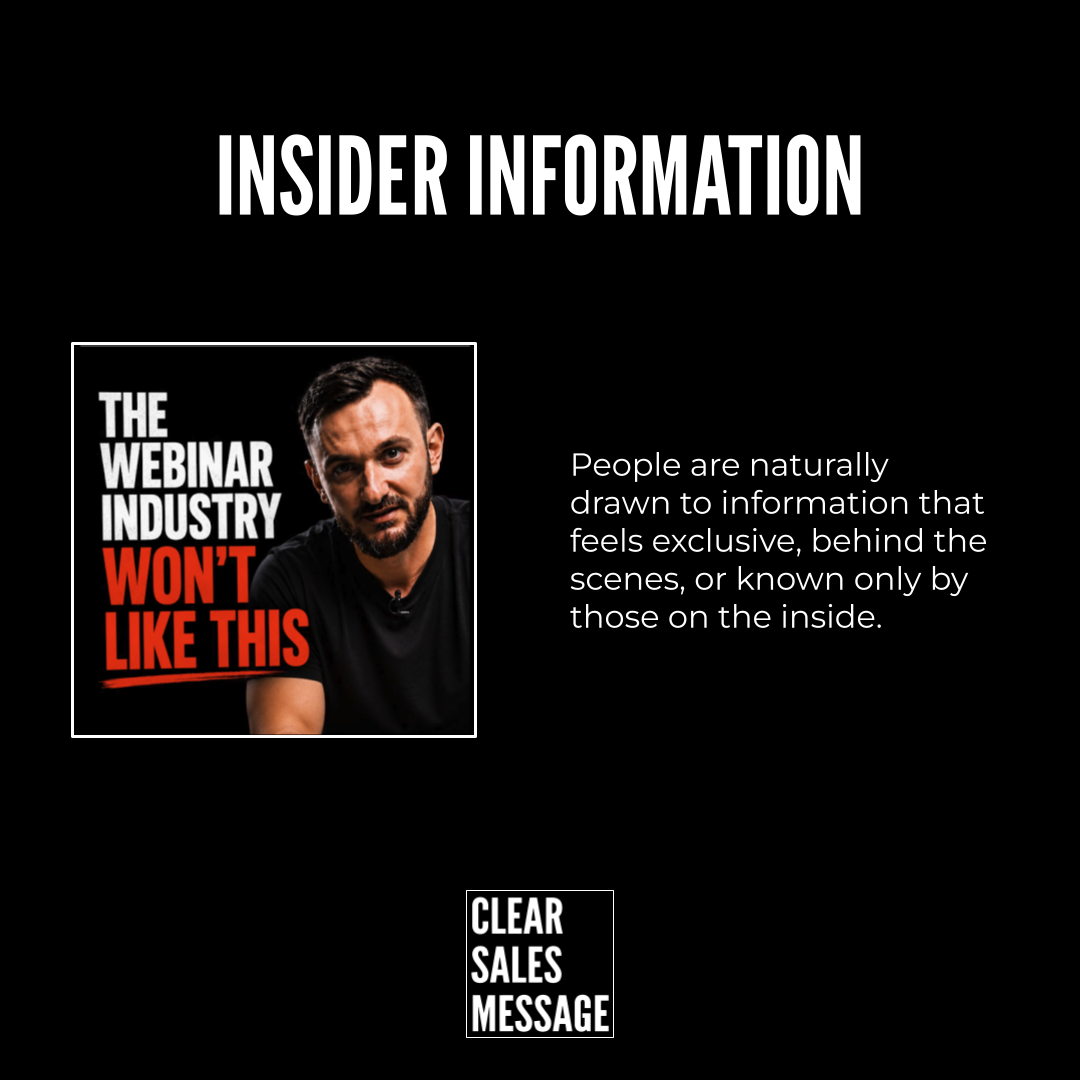
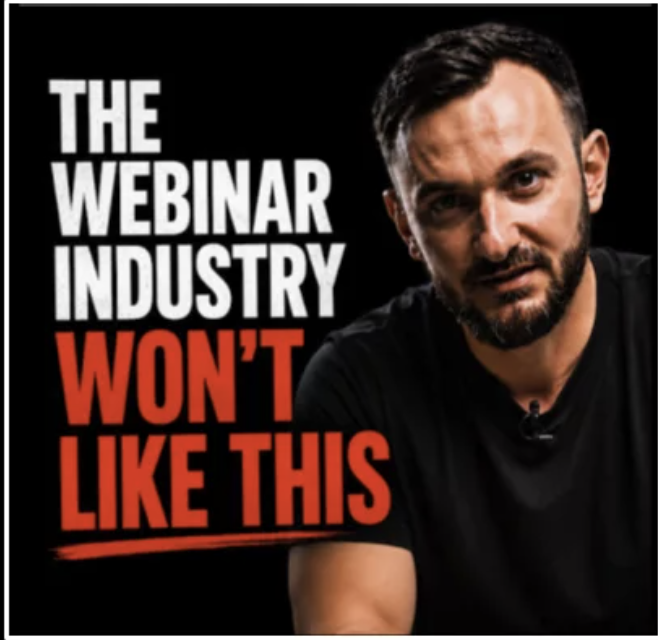
“The webinar industry won’t like this” earns attention before a word is read. It signals that insiders know something others do not. That framing is compelling on its own. So the content starts working before it even begins.
Share behind-the-scenes knowledge
Show buyers how things actually work. Not how you market them. Behind-the-scenes content feels like access, not advertising. It builds trust because you are showing rather than selling.
Use a contrarian take
“Everyone says do X – here is why that is wrong.” This frame positions you as someone who has seen beyond the standard advice. Ground it in real experience and it builds credibility fast.
Lead with overlooked data
Numbers that challenge common beliefs earn attention before you make your case. Frame them as “what the research actually shows” rather than “here are some stats.” It feels like a reveal, not a presentation.
Open a pitch with it
Start with something the buyer probably does not know about their own market. It earns attention in the first minute. It also shows you have thought carefully about their world, not just your pitch.
When Insider Information Works Best
It works best when the information genuinely surprises. Frame something as insider knowledge and then deliver something obvious, and you lose trust rather than build it. The reveal has to earn the build-up.
Social media and content marketing suit this technique well. A post that starts with “what most people in this industry get wrong” will beat a feature-led post every time. Curiosity is a stronger hook than information.
In crowded markets, it also helps you stand out. When every competitor sounds the same, one voice that sounds different gets remembered. Insider Information can be that voice.
When Insider Information Becomes Dangerous
The main risk is overpromising. If the framing raises expectations and the content falls flat, buyers feel misled. That feeling does more damage than never claiming exclusivity at all.
Credibility matters too. Insider Information only works when you genuinely have something worth sharing. If there is no real experience or data behind it, buyers sense it. Authority does not survive on bluff for long.
Sensationalism is also a danger. Clickbait framing attracts the wrong kind of attention. And it does not last. Keep the tone measured and the substance real. Lasting trust beats a short spike in clicks every time.
Common Insider Information Mistakes
The reveal is not actually insider
If the information is already widely known, framing it as exclusive looks out of touch. Before using this technique, ask honestly – would someone in this market find this surprising? If not, find something that is.
Using it too often
When the exclusive framing appears on every post and email, it stops feeling exclusive. It becomes a formula. Reserve Insider Information for moments when the content genuinely warrants it. Overuse kills the effect.
Not connecting it to your offer
Insider Information earns attention. But attention alone does not convert. Always connect the reveal to what you do and how you help. The knowledge should open a door. Ask: what does knowing this make the buyer want to do next?
Insider Information – An Example
“The webinar industry won’t like this” earns a click before the content does any work. It signals that what follows is something insiders know but keep quiet. That framing beats any feature headline. Curiosity about a secret pulls harder than information about a benefit.
See Also