Practical Sales Training™ > How To Connect > The Workforce Effect

The Workforce Effect
Most businesses talk about their product. Their price. Their process. But there’s a quieter signal buyers pick up on, and it’s the people standing behind the counter or answering the phone.
Who you employ tells a story before you’ve said a word. So a business that hires a specific type of person on purpose, rather than just whoever’s available, sends a message most rivals never think to send.
This is the Workforce Effect. It’s easy to miss because it lives in the background, but it shapes buyer confidence more than most businesses realise.
What Is The Workforce Effect?
The Workforce Effect happens when the specific type of people a business hires becomes part of how buyers judge that business. It’s not about skill alone. It’s about identity, background and what that says about the standard of care or attention to come.
A business that builds its hiring around a particular group sends a different message to one that hires anyone available. The product might be identical. But the buyer’s expectation isn’t, because the workforce itself has become part of the offer.
Why Does The Workforce Effect Work?
Buyers can’t usually judge a business directly before they walk in. So they look for proxies instead, and who a company employs is one of the strongest proxies available. It feels like solid evidence, even when it’s really just a clue.
There’s also a story angle. Humans remember stories far better than features. A normal fried chicken shop is forgettable. One staffed entirely by deaf employees is not, because it gives the buyer something specific and human to picture and talk about.
And it builds warmth, not just trust. A workforce choice like this doesn’t just say “we’re competent.” It says “we stand for something,” and buyers respond to that even when they can’t fully explain why.
How Can You Use The Workforce Effect In Sales?
Make your hiring policy part of your message
If you’re selective about who you bring in, say so clearly. Don’t bury it in an about page. Put it where buyers will actually see it, because it’s doing real persuasive work.
Give your team a backstory
Vague claims like “experienced staff” don’t land. Specifics do. A restaurant staffed entirely by deaf employees, or a tech firm built from former customers, gives buyers something concrete to remember and trust.
Use it to explain your price or your difference
If you’re not the cheapest or the biggest, your workforce can be the reason someone still picks you. A team built around a clear, deliberate hiring choice becomes a reason to talk about you instead of a competitor.
When The Workforce Effect Works Best
It works best when the hiring choice is genuinely unusual and the business commits to it fully, rather than treating it as a gimmick. Customers can tell the difference between a real policy and a marketing stunt, so the commitment has to be real.
It also works well when the story spreads on its own. A deaf-staffed KFC didn’t need a big ad campaign in any of the countries it operates in. Customers told other customers, because the story was interesting enough to repeat without any prompting.
When The Workforce Effect Becomes Dangerous
It becomes dangerous when the claim isn’t true, or when it’s used as a token gesture rather than a genuine choice. Buyers are quick to spot a hiring story used purely for PR, and once they do, the goodwill turns into suspicion.
It can also backfire if the story overshadows the basics. A great hiring story won’t save a business if the food, service or product underneath it falls short. The workforce earns attention. The delivery has to earn the repeat visit.
Common Workforce Effect Mistakes
Being vague about who you hire
“Friendly, experienced team” says almost nothing. Buyers need a detail they can hold onto, such as a background, a cause, or a specific group the business is built around.
Hiding the hiring story instead of using it
Many businesses have a genuinely interesting hiring policy and never mention it. If your workforce gives you an edge, treat it like one. Put it in your messaging, not just your induction handbook.
Treating it as a stunt instead of a standard
A hiring choice used once for a press story falls flat fast. So keep the commitment consistent, because buyers can tell the difference between a real policy and a one-off photo opportunity.
The Workforce Effect – An Example
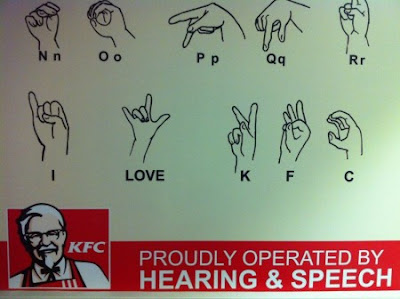
KFC branches across Asia and the Middle East staffed entirely by deaf employees
KFC runs deaf-operated outlets across several countries, including Egypt, India, Malaysia, Pakistan, Singapore and Thailand. In Pakistan alone, more than 100 deaf staff work across seven branches, taking orders using sign language and simple visual menus.
Customers didn’t just notice the difference. They talked about it, because it was unusual, human and easy to repeat to someone else. The workforce itself became the reason people visited, shared the story, and remembered the branch long after the meal was finished.
See also: