Practical Sales Training™ > How To Get Attention > High Vis Effect
High Vis Effect
What Is It
Picture a road worker at night. You don’t see the person first. You see the vest. That flash of yellow reaches your eyes before anything else does, and it works the same way in business. The High Vis Effect means using colour, contrast, light or reflective elements so strong that a buyer spots your message before they’ve even decided to look.
Most sellers rely on hoping someone notices them. This approach removes the hope. You build the message so it physically demands attention, using visual force instead of luck.
Why Does It Work
Human eyes are wired to catch sudden contrast before they catch detail. It’s an old survival habit. Bright colour, sharp edges and strong light used to mean danger, so your brain still flags them first, even now. You’re not fighting that instinct. You’re using it.
This matters because most buyers scan rather than read. They skim a street, a page, a feed, deciding in a split second what deserves a second look. If your message blends in with everything around it, it never gets that second look at all. High visibility buys you the first glance. Everything else in your pitch depends on getting that glance.
How Can You Use It
Break The Colour Pattern Of Your Category
Look at what your competitors already use. Most industries settle into the same two or three colours without noticing. Law firms go navy. Cafes go earthy green. Once you know the pattern, breaking it becomes your shortcut to attention. You don’t need a louder version of what everyone else does. You need a different colour entirely, one nobody else in your space has claimed.
Use Light As A Signal, Not Decoration
Light works best when it points at something specific. A glowing sign that just sits there is decoration. A glowing sign aimed at your offer, your price or your call to action becomes a signal. Think about where the eye lands after it’s caught by the light. That’s the spot doing the actual selling.
Save Full Force For One Moment
Here’s the part most people miss. High vis loses its power the second everything on the page is high vis. If every heading is bold, every button is yellow and every line shouts, nothing stands out anymore because nothing has contrast against anything else. Pick one element and give it everything. Let the rest of the page stay calm around it.
Anchor It To A Single Action
Attention on its own doesn’t pay your bills. A buyer can notice you and still walk straight past. So tie the bright element directly to one action: call now, click here, come in today. The contrast gets the glance. The anchor turns that glance into a step forward.
When It Works Best
This works best in crowded, low attention environments. A busy high street. A packed inbox. A feed full of similar looking competitors. Anywhere the buyer has dozens of options fighting for the same half second of focus, strong visual contrast earns you a disproportionate share of it.
It also works well for urgent or time sensitive messages, since bright colour and sharp contrast naturally read as important. Use it when you genuinely have something worth stopping for. That’s when the effect earns its keep.
When It Becomes Dangerous
High visibility can start to look like desperation if it’s not backed by substance. A buyer who feels tricked into looking, only to find nothing worth their attention behind it, remembers that feeling. Trust drops fast once someone feels played.
It also clashes badly with sectors built on quiet authority, like finance, legal or healthcare. A neon sign outside a solicitor’s office raises questions rather than answers them. Match the intensity of your visibility to what your buyer actually expects from someone in your position.
Common Mistakes
Using Bright Colour Without A Reason
Colour without direction is just noise. A bright banner that doesn’t lead anywhere or say anything specific gets noticed and forgotten in the same second. The contrast has to carry a message, not just a mood.
Fighting Your Own Signage
Some businesses stack three or four high vis elements onto one page or one shopfront, so each one cancels the others out. The eye can’t tell which element matters most, so it settles on none of them. Pick your one loud element and let everything else go quiet around it.
Copying What Everyone Else Is Doing
If your whole street or your whole market has already gone bright yellow, bright yellow stops being high vis. It becomes the norm, and the norm is invisible. Check what’s already loud around you before you decide how loud to be.
High Vis Effect – A Hypothetical Example
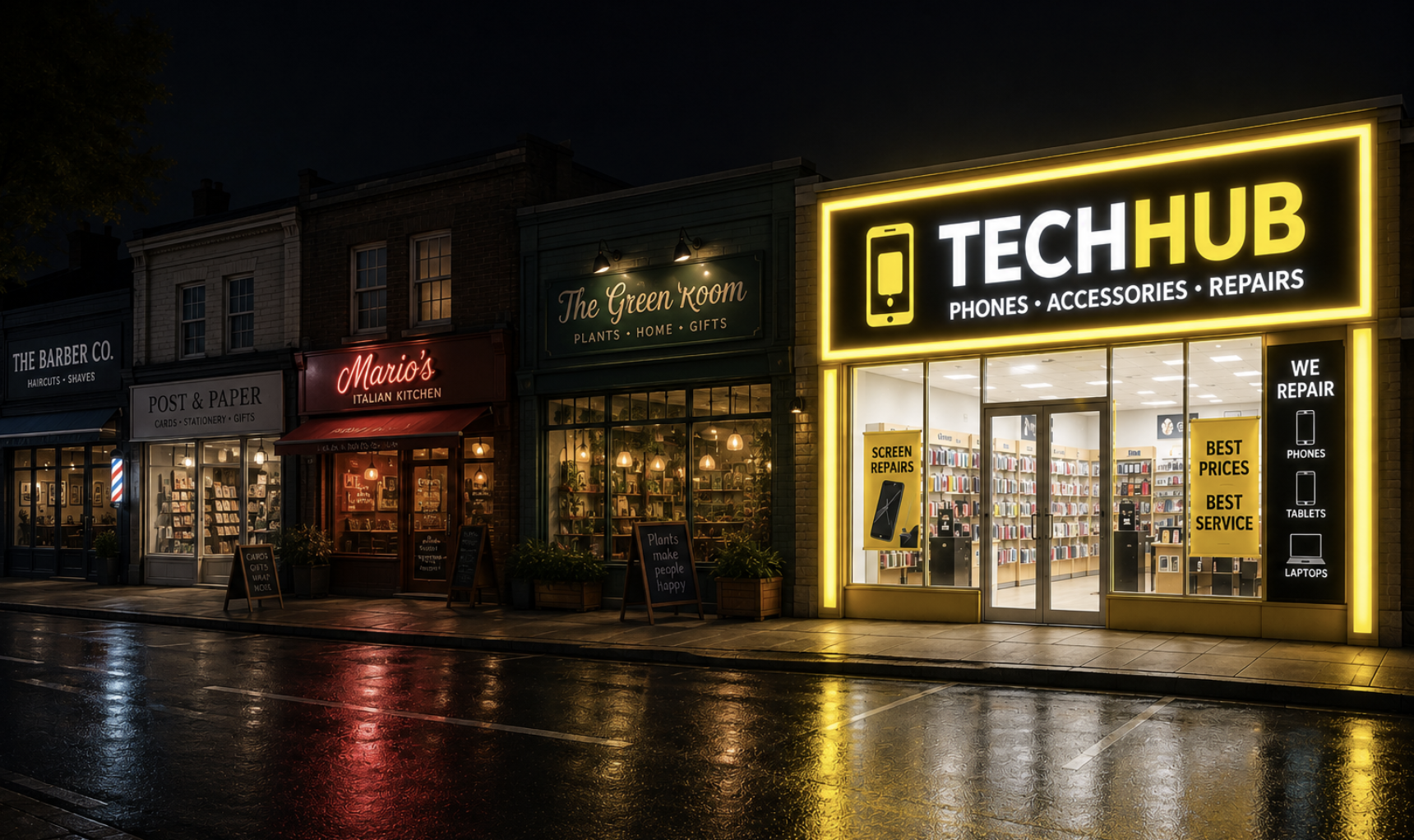
Picture a row of shopfronts on a quiet, rainy street at night. A barber, a card shop, a small Italian place, a plant store, all lit softly, all easy to walk straight past. Then, at the end of the row, one shopfront breaks the pattern completely. Bold colour, sharp lettering, a glow that reaches halfway across the wet road.
You don’t need to read the sign to know something’s different there. Your eyes go to it before your brain even asks why. That’s the whole point. The other shops might sell something just as good, but this one gets seen first, and getting seen first is often the only advantage that matters.
See Also
- 100+ ways to seize buyer attention
- The Bizarreness Effect
- The Von Restorff Effect
- The Mis-Read Effect