Practical Sales Training™ > How To Lose The Sale > The Misread Effect
The Misread Effect
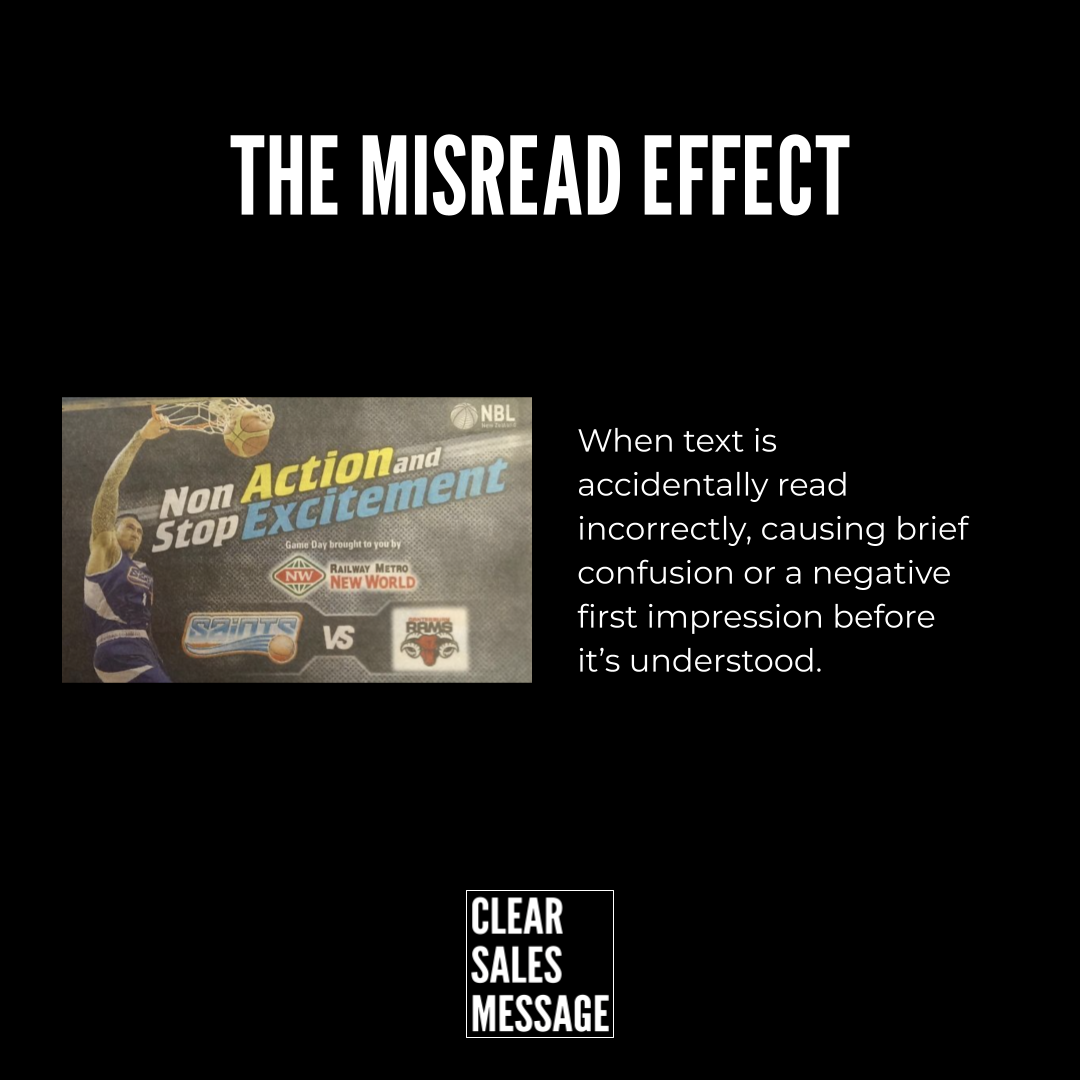
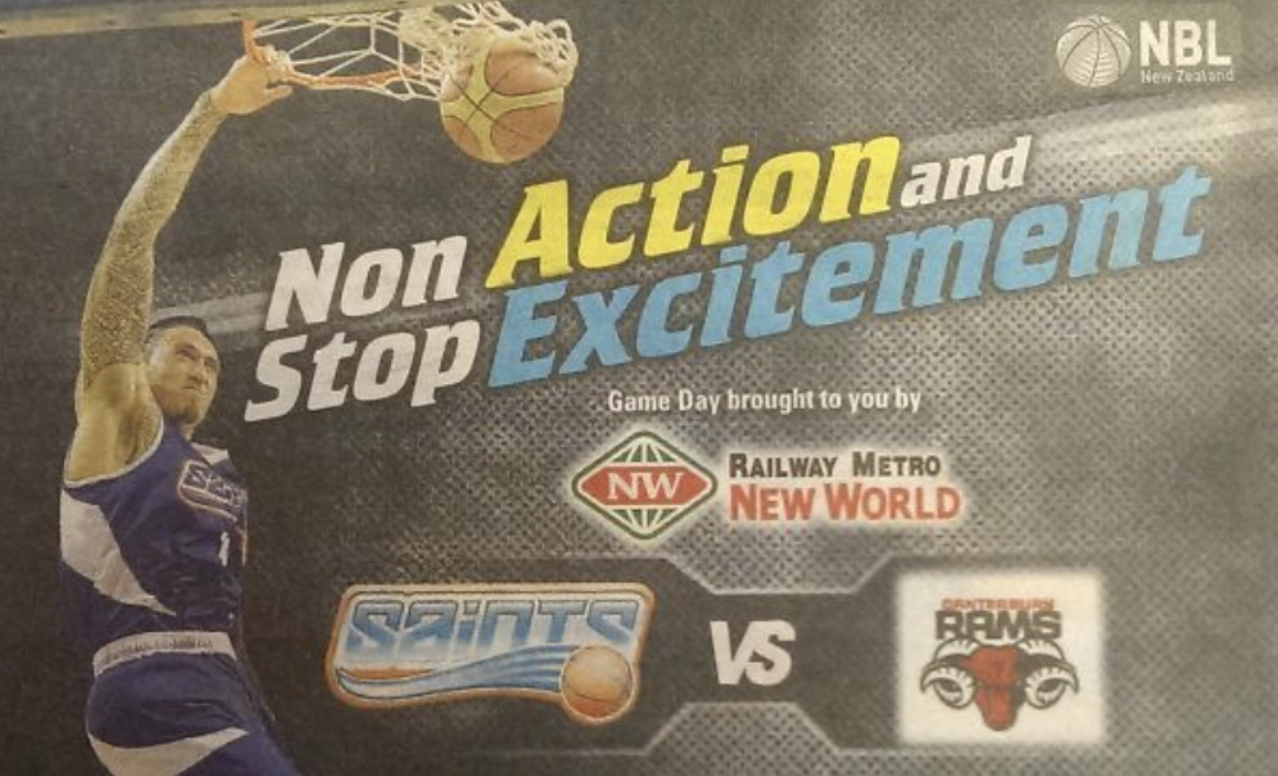
A poster meant to say “Non-Stop Action and Excitement” ends up reading “Non Action” on one line and “Stop Excitement” on the next. Same words, completely different meaning, just because of where the line breaks.
That’s The Misread Effect. It has nothing to do with bad writing. It’s about layout, spacing, or emphasis tricking the eye before the brain catches up.
This page covers what causes The Misread Effect, why it damages trust so fast, and how to catch it before it costs you a sale.
What Is The Misread Effect?
The Misread Effect happens when text gets read incorrectly on first glance. Not because the reader is careless, but because the layout, spacing, emphasis, or word order tricks the eye.
For a split second, the message lands wrong. And that moment is often enough to lose trust, create confusion, or trigger a negative reaction.
Even if the meaning becomes clear a moment later, the damage is already done.
Why Does The Misread Effect Happen?
It happens because the brain doesn’t read carefully first. It scans.
The eye groups words too quickly, based on proximity, size, colour, and alignment, rather than actual sentence structure. So the brain fills in the gaps automatically, guessing at meaning before it has fully processed the sentence.
By the time the reader realises what was actually meant, the correction comes too late. They’ve already felt confusion, friction, or doubt, even if just for a second.
First impressions aren’t logical. They’re instant, and that’s exactly what makes this effect so dangerous.
How Can You Avoid The Misread Effect?
Most of the time, this effect is accidental and harmful. But you can prevent it once you know what causes it.
Check Headlines At A Glance
Read your headline the way a stranger would, in one quick glance, not word by word. If it could land wrong in that first second, it needs a rewrite.
Watch Line Breaks Carefully
An unintended word pairing across a line break can flip the entire meaning. So always check where each line ends, not just what the sentence says as a whole.
Be Careful With Bold And Colour
Bolding or colouring the wrong word can change what a sentence appears to say, even if the actual text is correct. Make sure emphasis lines up with meaning, not just visual rhythm.
Test On Mobile, Not Just Desktop
A layout that reads fine on a wide screen can break apart completely once it wraps onto a phone. So always test the real layout people will actually see.
Read It Fast And Out Of Context
Anything that makes someone stop and think “what did that just say?” is quietly costing you attention and confidence. Clear messages don’t need rereading, so if yours does, it’s losing sales somewhere along the way.
When The Misread Effect Causes The Most Damage
It hurts most on headlines, signage, and anything designed to be read in under a second, like an advert, a poster, or a hero banner. There’s no time for the reader to slow down and reread, so the first impression is the only one that counts.
It’s also riskier on anything mass-printed or broadcast, like posters, packaging, or TV graphics, because a misread mistake there reaches far more people before anyone has the chance to fix it.
When Layout Choices Become Dangerous
A layout choice becomes risky the moment it prioritises visual rhythm over actual meaning. A headline split purely because it “looks balanced” on two lines can quietly say something completely different from what was intended.
It’s also dangerous because nobody usually notices the mistake internally. The team that wrote it already knows what it’s supposed to say, so they read past the error every single time, right up until a stranger sees it cold.
Common Misread Effect Mistakes
Breaking Lines For Looks, Not Sense
Splitting a sentence to make it look neat on the page can accidentally group the wrong words together. Always check the line break against the actual meaning.
Only Proofreading Internally
A team that already knows the intended meaning will read past a misread almost every time. Get a fresh pair of eyes on it before it goes live.
Designing For Desktop Only
A layout that wraps differently on mobile can create word pairings nobody planned for. Check every common screen size before publishing.
The Misread Effect – An Example
A basketball game day poster reads “Non-Stop Action and Excitement,” at least that’s the intended message. But the layout splits “Non” and “Stop” onto separate lines, with “Action” and “Excitement” picked out in colour on each one.
At a glance, it reads as “Non Action” followed by “Stop Excitement,” which says the exact opposite of what the poster is trying to promote. The words are all correct. The line break and colour grouping are what cause the damage.
That’s The Misread Effect in its clearest form. Nobody on the design team likely noticed, because they already knew what the poster was supposed to say. A first-time reader doesn’t have that advantage.
See also
- 25+ wordplay techniques that work (and sell)
- 25+ Selling communication basics
- Read, Write, Speak, Spell