Practical Sales Training™ > How To Lose The Sale > Engagement Pods
Engagement Pods
You see a LinkedIn post with 300 likes and 80 comments. Impressive. Then you read the comments. “Great insight!” “So true!” “Thanks for sharing!” And the same faces pop up under every post they write.
That’s often an engagement pod at work. It looks like popularity. But look closer, and it’s just a group of people doing each other favours.
What Are Engagement Pods?
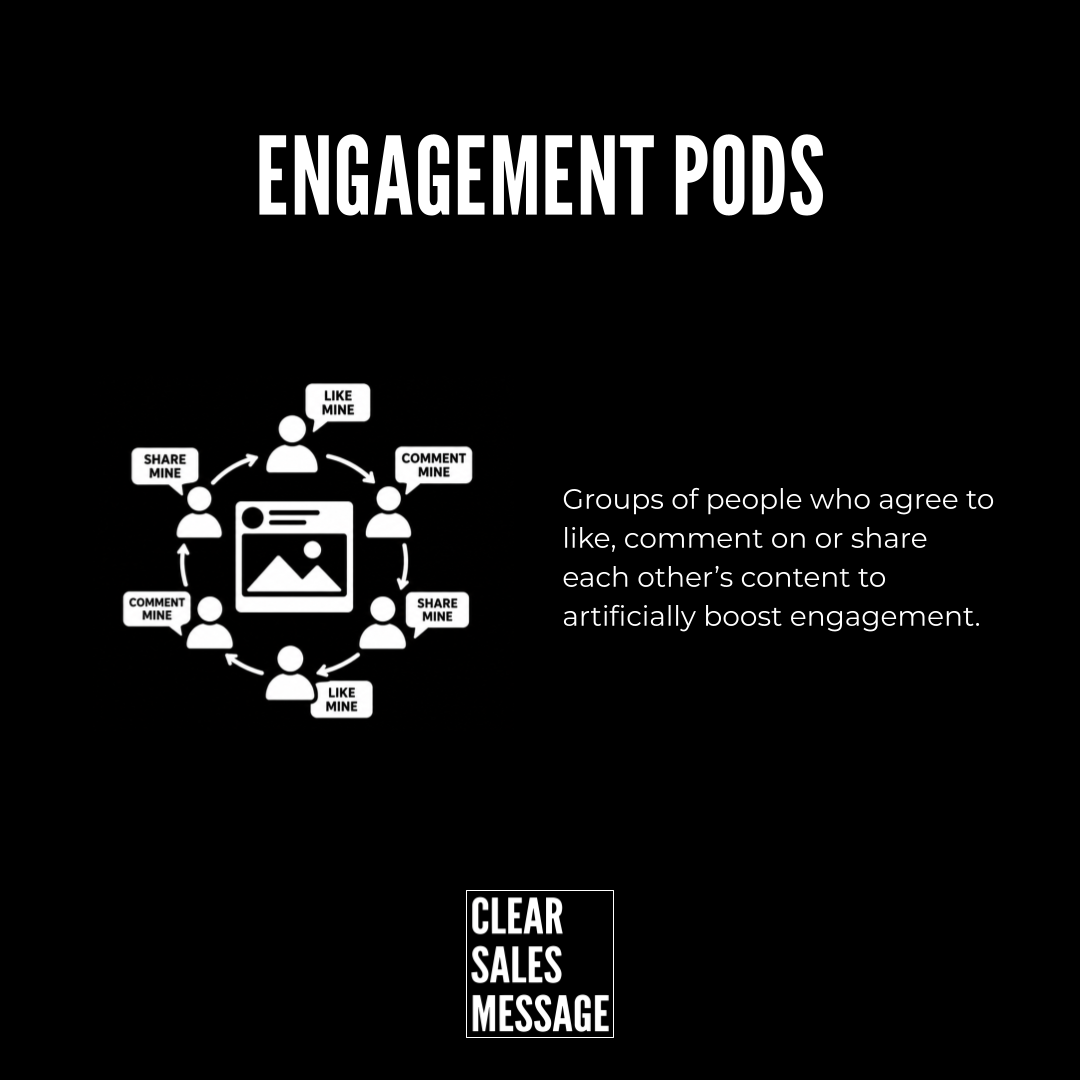
An engagement pod is a group that agrees to like and comment on each other’s posts. They meet in WhatsApp or Telegram groups. Then someone drops a link, and everyone jumps on it.
The aim is to trick the platform. Posts that get early likes and comments tend to reach more people. So pods try to fake that early buzz.
Most pods have rules. For example, you must engage with everyone else before you share your own post. The group kicks out anyone who takes without giving.
Why Do Engagement Pods Lose the Sale?
Buyers use likes and comments as a quick sign of trust. Lots of engagement suggests your ideas are worth listening to. So when that engagement turns out to be fake, the trust goes with it.
And pods are easy to spot. You see the same names every time. The comments are vague, because nobody read the post. In fact, “Great post!” under a long, detailed article is a giveaway.
Worse, it reaches the wrong people. Your pod is full of other sellers chasing reach. So even when the numbers look great, they rarely turn into sales.
How Can You Get Real Engagement Instead?
You still want your posts seen. So here’s how I’d build reach that actually leads somewhere.
Write for One Buyer
Picture one real buyer as you write. Talk about their problem, in their words. Posts that feel personal get real comments from real buyers. And one of those is worth fifty pod likes.
Comment Properly on Buyers’ Posts
Instead of a pod, go where your buyers already post. Leave a useful comment with a real point of view. Buyers soon notice who adds value. As a result, they start to notice your posts too.
End With a Real Question
Ask something your buyers can answer from experience. For example, “What’s the one objection you hear most?” That gets thoughtful replies. And thoughtful replies start conversations that lead to sales.
Build a Small, Honest Circle
There’s nothing wrong with friends supporting your work. The difference is honesty. So share with people who truly care about the topic, and only comment when you have something to add. That keeps it real.
Measure Conversations Over Likes
Track how many posts lead to a DM, a call or a meeting. That’s the number that matters. Likes feel good, but they don’t pay the bills.
When Engagement Pods Seem to Work
In the short term, pods can lift your numbers. A post with lots of early likes may reach more people. So for a while, it can feel like your profile is taking off.
They can also give a new creator some confidence. Seeing likes roll in feels good. Similarly, a busy post can catch the eye of a passing stranger.
But those gains are thin. And they vanish the moment someone looks closely.
When Engagement Pods Become Dangerous
The biggest risk is your reputation. If a buyer spots the pattern, they’ll wonder what else you fake. That doubt can follow you into every sales call.
Platforms don’t like fake engagement either. They keep getting better at spotting it. So a trick that works today may cost you reach tomorrow.
On top of that, pods eat your time. Liking and commenting on dozens of posts a day is hard work. Meanwhile, that time could go into talking to real buyers.
Common Engagement Pod Mistakes
Most of these come from chasing numbers rather than buyers. So here’s what I see most.
Mistaking Likes for Leads
A post with 500 likes and no enquiries has failed. But pods make it feel like a win. So people keep doing more of what doesn’t sell.
Leaving Lazy Comments
“Love this!” on a post you clearly didn’t read looks bad for you, too. After all, your name sits under it for everyone to see. Buyers read those comments. So every empty one chips away at your credibility.
Joining a Pod Outside Your Market
Many pods mix people from every industry. Your post about B2B software gets likes from dog groomers and crypto traders. So you miss your buyers. Worse, it confuses the platform about who should see your posts.
Forgetting Buyers Can See the Pattern
You might think nobody notices. However, buyers scroll past the same names under your posts week after week. They join the dots. So assume people will spot anything you do in public.
Engagement Pods – An Example
The Rules of a LinkedIn Pod
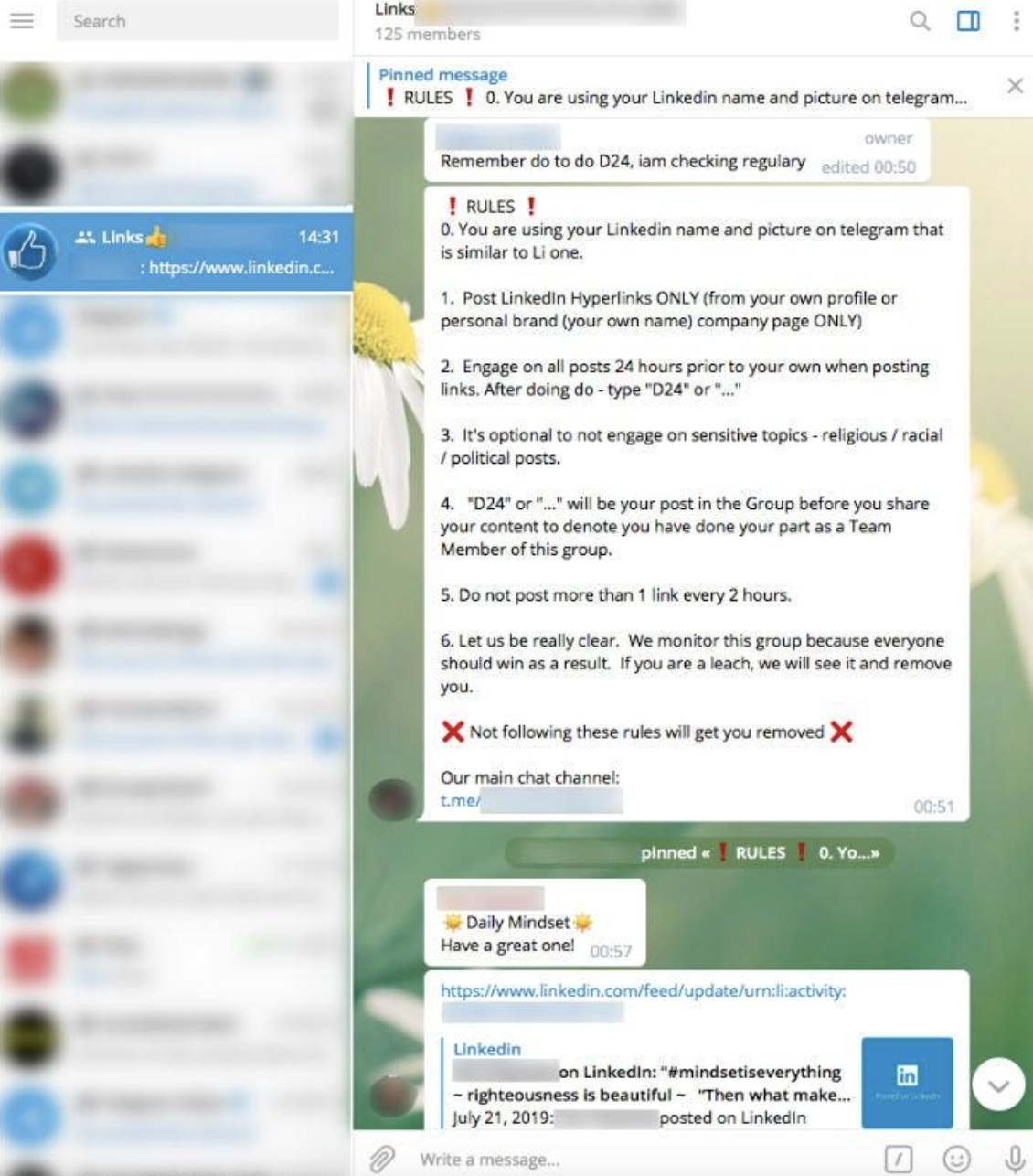
Here’s a real pod running on Telegram, with over a hundred members. The pinned message sets out the rules.
Members must engage with every post from the last 24 hours first. Then they type a code to prove they’ve done their part. There’s a limit on how often you can share a link. And the owner removes anyone who takes without giving.
Look at what that means for the buyer. Every like and comment on those posts came from someone following a rule. Nobody chose to engage because the post was useful. So the “popularity” a buyer sees is really a points system. It tells them nothing about the ideas in the post.
See Also