Practical Sales Training™ > Convert > The Early Bird Effect

The Early Bird Effect
Every launch has a handful of buyers ready to say yes on day one. Most sellers treat them the same as everyone else. That’s a missed opportunity.
The Early Bird Effect rewards speed. It gets people moving before they’ve had time to hesitate.
What Is It
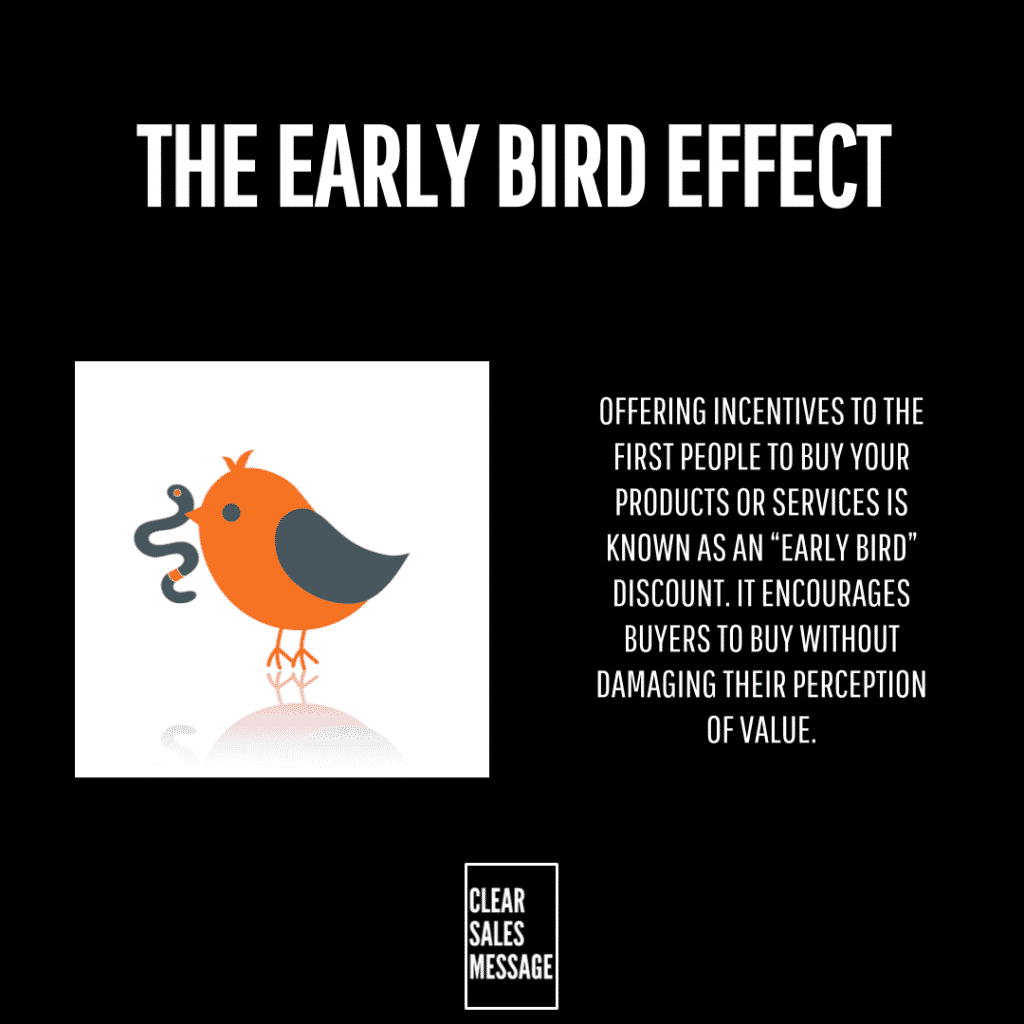
The Early Bird Effect means offering a discount to buyers who act early. You reward their speed with a better price.
Why Does It Work
It works because discounting is a strong way to get buyers moving. Add a deadline, and you borrow power from the Scarcity Effect too.
Once a buyer knows the price rises soon, waiting starts to feel risky. So they act now instead of putting it off.
This only works at launch. Offer an early bird price on something that’s already been on sale for months, and it just looks confusing. Buyers won’t know why now is any different from last week.
How Can You Use It
Next time you launch a new product, deal or service, offer early buyers a discount if they act within a set window.
Everyone wins here. You get commitment fast, they get a genuinely good deal, and your regular price still holds its value once the window closes.
When It Works Best
This works best at launch, when there’s no existing price to compare against. A fresh offer with a clear deadline gives people a real reason to move fast.
It also works well when you need early momentum. A handful of quick sign-ups builds proof that others are already on board, which makes the next wave of buyers more confident too.
When It Becomes Dangerous
This backfires if you run early bird pricing on something that isn’t actually new. Buyers get confused about what’s changed, and confusion kills conversion faster than a normal price would.
It also fails if your deadline isn’t real. Extend it once, and buyers stop believing the next one. From then on, they just wait you out every time.
Common Mistakes
Using It Outside A Launch
Early bird pricing only makes sense the first time something goes on sale. Use it later, and it just muddies your regular pricing instead of creating urgency.
Softening The Deadline
A deadline that quietly moves isn’t a deadline anymore. Buyers notice fast, and the next early bird offer you run will carry a lot less weight.
The Early Bird Effect – An Example
Say a business coach launches a new group program. They set an early bird price of £499 for the first 20 sign-ups, or until Friday at 5pm.
After that, the price rises to £699. Interested buyers now have a clear reason to act fast instead of sitting on the decision.
This rewards early commitment and helps the coach fill spots quickly. It also builds momentum before the full launch even begins.
See Also