
Practical Sales Training™ > How To Convert > The Scarcity Effect

The Scarcity Effect
What Is It
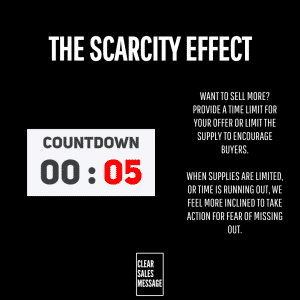
The Scarcity Effect is when we’re more inclined to take action, and to do so without delay, if there’s a lack of time or resource available. Less choice creates more urgency.
It flips the usual instinct to wait and think. When something might disappear, thinking too long becomes the risky option, not the safe one.
That shift in risk is what makes people act now, rather than deciding later.
Why Does It Work
It works because of FOMO, the Fear Of Missing Out. If there are limited supplies or a limited timescale to act, we have to make a decision, and make it quickly.
That decision focuses on not missing out wherever possible. So the fear of loss ends up doing more work than the appeal of the product itself.
There’s a deeper reason too. Humans generally weigh a potential loss more heavily than an equivalent gain. Scarcity puts that loss front and centre.
How Can You Use It
Put a genuine limit on time or supply
If you want to drive engagement, put time limits on your offers, or limit the supply of your products and services. This creates pent up demand, and ensures those who want to act do so with haste, since they don’t want to miss out.
For example, we have 3 spots remaining on our latest online training academy, click here to secure your spot!
Make the scarcity visible, not just implied
A vague “limited availability” convinces nobody. A specific number, three spots, twelve widgets, midnight tonight, gives the buyer something concrete to react to.
Examples Of Scarcity To Use
- Time sensitive pricing – The price goes up at midnight tonight.
- Event sensitive availability – Get your new kitchen fitted before Christmas.
- Volume sensitive pricing – The first 50 units are just £9.99 (see also first purchase discount)
- Bonuses – Sign up before xx to get yy bonus!
- Limited quantity – We only have 12 widgets left in stock.
- Limited access – We only have 5 spaces left this month.
When It Works Best
This works best when the scarcity is genuinely real. A real deadline or a real limited stock count carries far more weight than one buyers suspect is invented.
It also works best on products or offers people already want. Scarcity accelerates an existing decision, it rarely creates desire from nothing.
When It Becomes Dangerous
It backfires the moment buyers realise the scarcity is fake. A “limited time offer” that reappears every single week trains people to ignore your urgency entirely.
It also becomes risky if it pressures someone into a decision they later regret. Buyer’s remorse from a rushed purchase can cost you far more than the sale was worth.
Overusing scarcity dulls its effect too. Constant countdowns and low stock warnings eventually stop registering as urgent at all.
Common Mistakes
Faking scarcity that isn’t real
A countdown timer that resets after it hits zero gets noticed eventually. Once buyers spot the trick, they stop trusting any deadline you set.
Applying scarcity to everything you sell
If every single product is always “almost sold out,” the phrase loses all meaning. Save it for moments where it’s genuinely true.
Leaving the reason for scarcity unexplained
“Only 3 left” raises a question buyers want answered. A brief reason, limited batch, seasonal run, capacity limit, makes the scarcity feel credible rather than manufactured.
The Scarcity Effect – An Example
A Product Listing Page
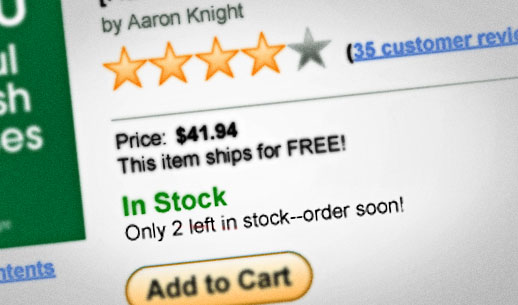
This product page shows the price, free shipping, and a star rating, all fairly standard. But right beneath “In Stock” sits the line that actually moves people to act: “Only 2 left in stock, order soon!”
That single line does more to trigger a decision than the price or the rating combined, since it turns a browsing moment into a ticking clock.
See also