
Practical Sales Training™ > How To Convert > The Checklist Effect

The Checklist Effect
What Is It
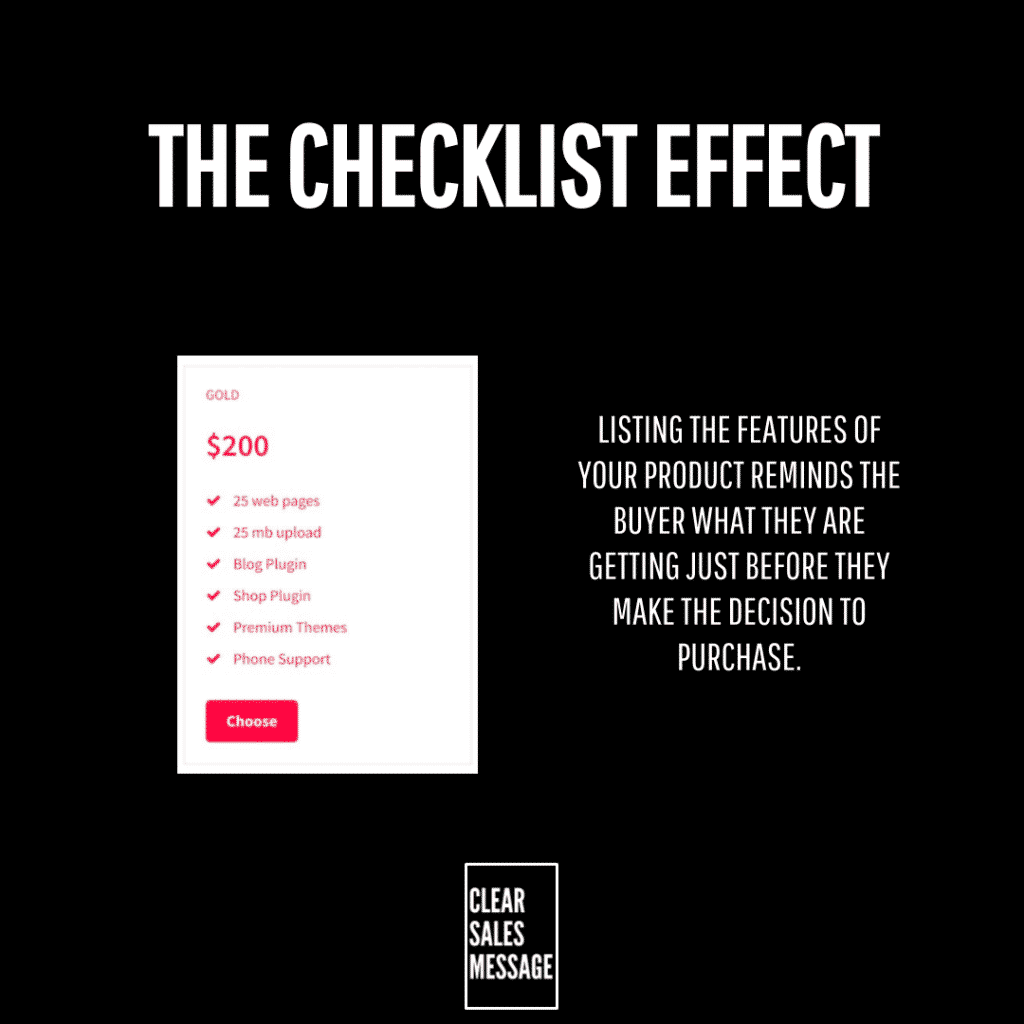
The Checklist Effect means highlighting, summarising, and repeating the most compelling parts of your offer. You place this right before purchase, so your buyer has everything they need to proceed.
Why Does It Work
It works because buyers want reassurance. We’re driven by a fear of loss, and we want to minimise risk wherever we can.
By summarising the key parts right at the moment of decision, you give buyers what they need to choose confidently. They’ve also likely forgotten some of what they get, so this is a timely reminder too.
How Can You Use It
Just before a client buys, online or offline, show a checklist of the benefits and extras they’ll get. This helps them decide, and it makes sure you’ve given them every reason to say yes.
When It Works Best
It works best right at the point of decision, not earlier in the journey. The closer it sits to checkout, the more it reassures rather than just informs.
When It Becomes Dangerous
It becomes dangerous if the checklist makes promises your product can’t actually keep. A buyer who feels misled by the summary loses trust fast, and that damage outlasts the sale itself.
It can also backfire if it’s too long. A checklist should reassure quickly, not turn into another wall of text to read through.
Common Mistakes
Placing It Too Early
A checklist buried earlier in the page loses its power. Buyers need it right before the decision, not somewhere they’ll forget by the time they reach checkout.
Listing Features Instead Of Value
A checklist of dry features doesn’t reassure anyone. Each line should remind the buyer what they actually get, not just describe a spec.
Overloading The List
Ten items might feel thorough, but it can overwhelm rather than reassure. Keep it tight, since a short list reads faster and lands harder.
The Checklist Effect – An Example
An Online Course Checkout
You’re about to buy access to an online sales training course. Just before checkout, the page shows a simple checklist:
- Lifetime access to 27 sales psychology courses
- 200+ real-world examples to copy and use
- Certificate of completion
- Bonus: Cold outreach script pack
- 30-day money-back guarantee
Seeing this summary at the moment of decision reassures you. It reminds you of everything included, and that’s what nudges you to confidently complete the purchase.
See also:

