
Practical Sales Training™ > How To Convert > The No Deposit Effect

The No Deposit Effect
Most buyers do not stall because the price is wrong. They stall because paying before they have seen any value feels uncomfortable. The deposit is often where momentum dies, not the deal itself.
And yet most sellers focus all their energy on the total price. They negotiate, discount, and justify the number. But the timing of that first payment can matter just as much as the amount.
The No Deposit Effect is simple. When you remove the upfront cost, the decision gets easier. The buyer still pays the same total. But because the first step costs them nothing, starting feels much less like a risk.
What Is The No Deposit Effect?
The No Deposit Effect is when a buyer can move forward without paying anything upfront. As a result, the first step feels easier to take and the deal is more likely to get started.
It works because of how people judge cost. Paying now feels painful in a way that paying later does not. So even when the full price is the same, removing the deposit changes how the decision feels. The cost has not gone away. It has just moved to a moment when it feels more acceptable.
This is backed by research on present bias, which shows that people tend to prefer delaying costs rather than paying them now. You can read more about that here: Behavioural research on present bias.
Why Does The No Deposit Effect Work?
Upfront payment often feels like the biggest risk in a deal. Even when the full price feels fair, handing over money before seeing any value can still feel uncomfortable. That discomfort is enough to slow or stop a sale.
When you remove the deposit, the buyer does not need to solve the money problem first. So the path into the sale becomes much easier. They can start, see the value, and pay later from a position of greater confidence.
Price usually gets most of the attention in sales conversations. However, payment timing often matters just as much. A buyer who is happy with your price can still hesitate at the deposit. Remove that moment and you remove a significant reason to delay.
How Can You Use The No Deposit Effect In Sales?
The key is to make starting feel as easy as possible. If the first step costs nothing, the buyer has far less to lose by saying yes. So look at where payment timing creates friction in your process and ask whether moving it later would increase conversion.
This approach works well online too. For example, providers such as SaleCycle help businesses reduce cart abandonment, which often happens when buyers are not ready to pay immediately. Tools such as follow up offers can also bring buyers back later, giving another chance to continue the decision. During a longer sales cycle, removing the deposit can help buyers move forward while they are still building confidence.
Common no deposit structures
There are several ways to apply this in practice. Monthly payments with no deposit up front, delayed first payment structures, pay as you go pricing, finance plans with no upfront cost, and staged payment agreements all follow the same principle. The aim is simple: make starting feel easier by removing the cost at the point of commitment.
Use it to reduce cart abandonment
Online businesses often see buyers drop off at checkout, not because the price is wrong but because paying right now feels like too big a step. Offering a no deposit or delayed payment option at that moment can recover a significant number of those lost sales. The buyer wanted the product. They just needed a gentler way in.
Pair it with clear payment terms
Removing the deposit works best when the buyer knows exactly what happens next. So always make the payment schedule clear and simple. If the first payment is in 30 days, say so plainly. Uncertainty about when money is due can create as much hesitation as the deposit itself. Clarity removes friction just as effectively as flexibility does.
When The No Deposit Effect Works Best
It works best when upfront cost is the main thing blocking progress. Higher value purchases benefit most, because the deposit amount feels more significant and therefore more risky. It also works well for services with long delivery timelines, B2B deals where budgets need approval, and any offer where trust already exists but the buyer just needs an easier way to begin. In these situations, the buyer usually wants the result. They just need a simpler first step.
When The No Deposit Effect Becomes Dangerous
It becomes a problem when you remove the deposit without managing the risk it was there to cover. In some deals, the deposit is not just about payment. It signals commitment. Without it, cancellation rates can rise, no-shows increase, and the buyer feels less invested in making the arrangement work. So for limited availability offers, low margin deals, or situations with high cancellation risk, think carefully before removing upfront payment entirely. More flexibility can improve conversion, but risk has to be managed somewhere else in the deal.
Common No Deposit Effect Mistakes
Most sellers either never offer it at all, leaving conversion on the table, or offer it without thinking through the consequences. Here are two mistakes worth avoiding.
Offering no deposit without adjusting anything else
The deposit exists for a reason. It reduces cancellation risk, filters out weak buyers, and gives the seller some security. If you remove it without replacing those functions, you take on more risk than you may realise. Clear terms, better screening, or staged payment structures can all help fill that gap. The goal is to remove friction at the start while still protecting the deal.
Not mentioning it clearly enough
Many businesses offer no deposit options but bury them in small print or only mention them when the buyer pushes back on price. That is a missed opportunity. If no deposit is available, lead with it. Put it in your proposal, your pitch, and your pricing page. Because buyers who do not know it is an option cannot be persuaded by it.
The No Deposit Effect – An Example
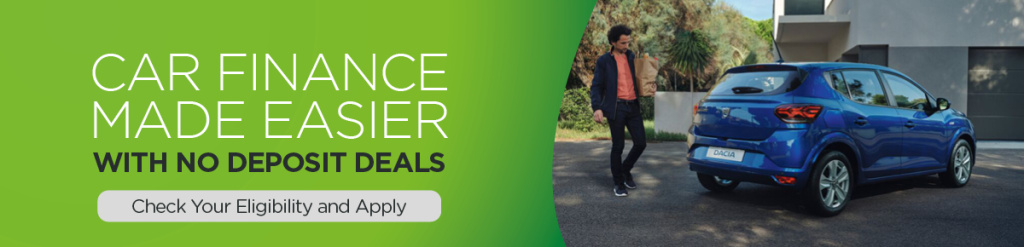
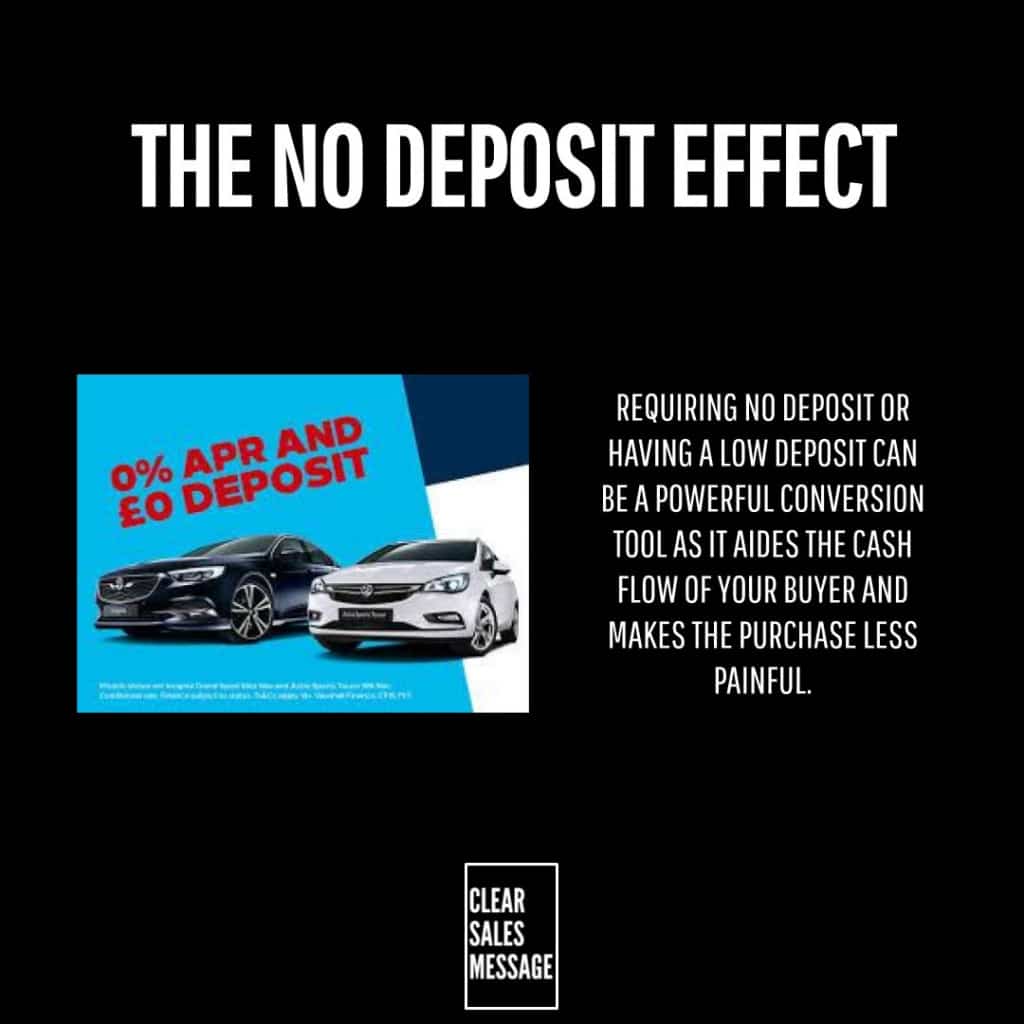
Car dealers use no deposit finance offers to remove the first barrier to purchase. Buyers can secure the vehicle without finding a lump sum first. As a result, the deal feels easier to begin. The total price stays the same, but the entry point feels much simpler.
See also