
Practical Sales Training™ > How People Work > Average Reading Age

Average Reading Age
Most salespeople write for themselves, not for their buyer. They use long words, complex sentences, and formal language – because it sounds professional. But to most readers, it just sounds hard.
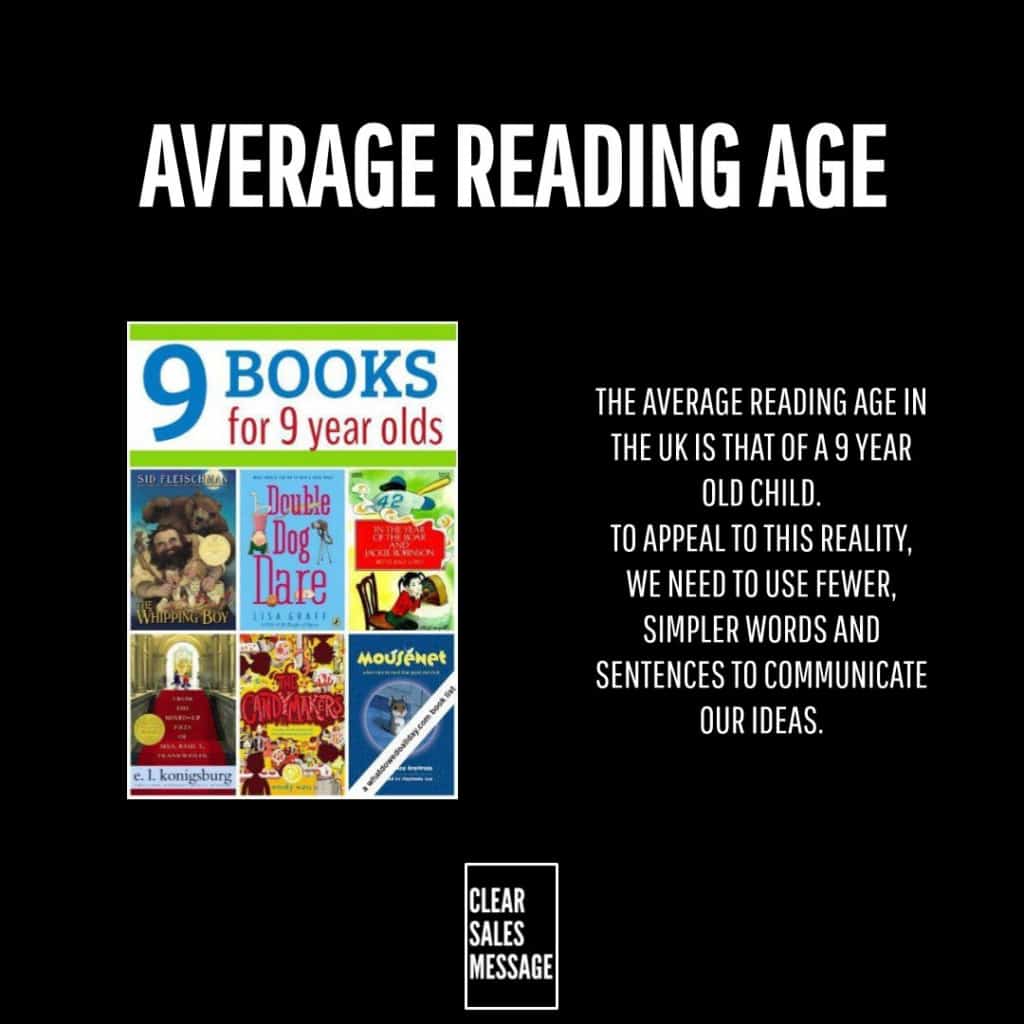
The average adult in the UK reads at the level of a 9-year-old. That is not an insult. It simply reflects how the brain works under normal conditions – skimming, distracted, processing at speed. When your message demands too much effort to read, buyers stop reading. They do not push through. Instead, they move on.
Simpler writing is not dumbing down. It is smart communication. The goal is to be understood, not to sound impressive.
What Is Average Reading Age?
Reading age is a measure of how complex a piece of writing is to read and understand. A reading age of 9 means the text suits someone who reads at the level of a typical 9-year-old – short words, clear sentences, and a simple structure.
The fact that the average UK adult reads at this level does not mean they are unintelligent. It reflects how people actually read in real life – quickly, under pressure, and often while doing something else. Under those conditions, even highly educated people default to skimming. Complex writing gets skipped, however smart the reader.
In sales, this matters enormously. Your buyer is not sitting quietly at a desk giving your proposal their full attention. Busy, distracted, and deciding within seconds whether your message is worth their time – that is the reality you are writing for.
Why Does Average Reading Age Matter In Sales?
Every extra layer of complexity in your writing creates cognitive load – the mental effort required to process what you have written. When that load gets too high, the buyer disengages. They do not always tell you. They just stop reading and move on to something easier.
Jargon is one of the biggest causes of this. Words that feel natural to you – because you live and breathe your industry – can feel opaque and off-putting to a buyer who does not. As a result, the very language you use to sound credible can make you harder to understand and therefore harder to trust.
Sentence length is another factor. Long sentences force the reader to hold more information in their head at once. Breaking a long sentence into two shorter ones almost always makes the meaning clearer – without losing anything important. The reader stays with you rather than losing the thread.
Finally, simple writing feels confident. It signals that you understand your subject well enough to explain it plainly. Complex writing often signals the opposite – that the writer is hiding behind language because the idea is not fully formed.
How Can You Use Average Reading Age In Sales?
Measure your writing with a readability tool
The Flesch-Kincaid Readability Score measures the reading age of your writing by analysing sentence length and syllable count. Paste any piece of sales copy in and it will tell you the reading age it targets. Aim for a score that reflects a reading age of around 9 to 11 for most sales communication. If your score comes back higher, start simplifying.
Swap long words for short ones
For almost every long word, there is a shorter one that means the same thing. Use instead of utilise, help instead of facilitate, show instead of demonstrate, and build instead of establish. These swaps cost nothing and make your writing faster to read. Go through your key messages and ask: is there a simpler word that works just as well?
Cut sentence length
If a sentence runs beyond 20 words, split it. Find the natural break – usually at “and,” “but,” or “which” – and make it two sentences. Each one becomes easier to follow. And because shorter sentences also read faster, the overall pace of your writing improves too.
Read it aloud before you send it
If you stumble over a sentence when reading it out loud, your buyer will stumble over it too. The spoken test is one of the simplest and most reliable checks for readability. Anything that sounds clunky, long, or hard to follow needs rewriting. When it flows spoken, it will land when read.
Write like you talk
Most people write more formally than they speak. But the language you use in a face-to-face conversation is usually far more readable than what ends up in an email or proposal. Close the gap. Write the way you would explain it to someone over a coffee. Contractions, short sentences, and plain words all make your writing feel more human – and easier to read.
When Average Reading Age Matters Most
Reading age matters most in written outreach – emails, LinkedIn messages, proposals, and web copy. These are the formats where buyers read alone, without you there to clarify or adjust. The writing has to do all the work on its own. If it is too complex, there is no recovery.
It also matters in marketing materials that need to reach a wide audience. The broader your audience, the more varied their backgrounds, education levels, and familiarity with your subject. Writing at a lower reading age does not exclude anyone – but writing at a high one excludes a lot of people.
Similarly, it matters in proposals and long-form documents where buyers may skim rather than read in full. Clear headings, short paragraphs, and plain language make it easier to extract the key points quickly. As a result, your proposal feels easier to evaluate – which makes it easier to say yes to.
When Reading Age Becomes A Problem
Some sellers worry that simple language will make them look less expert. But the opposite is usually true. Experts who can explain things simply come across as more credible, not less. Complexity often signals confusion – simplicity signals clarity and command of the subject.
However, there is a balance. Oversimplifying to the point of being patronising creates its own problem. The goal is plain language, not childish language. Short words and clear sentences can still carry sophisticated ideas – they just carry them in a way the reader can actually receive.
Also, reading age is not the only measure of good writing. Structure, flow, relevance, and tone all matter too. A piece of writing can score well on readability but still fail because it is poorly organised or talks about the wrong things entirely.
Common Average Reading Age Mistakes
Using jargon to sound credible
Industry terms feel natural to the person using them – but often confuse the buyer. Jargon creates distance rather than trust. Unless you are certain the buyer uses and understands the same language, replace technical terms with plain descriptions. If you must use a specialist word, explain it immediately in simple terms.
Writing long paragraphs
A wall of text signals effort before the reader has read a single word. Long paragraphs feel dense and slow. Short ones feel light and fast. Break your copy into smaller blocks – two or three sentences per paragraph at most. The white space alone makes the page easier to approach.
Assuming your buyer reads carefully
Most buyers skim. They scan for relevance before they commit to reading in full. Your most important points therefore need to appear early, in plain language, and in short sentences. If the key message is buried in the fourth paragraph of a dense block of text, most buyers will never reach it.
Not checking the reading age before sending
Most salespeople send copy without ever checking how readable it is. A quick paste into a readability tool takes thirty seconds and can reveal problems that are obvious once flagged – but invisible to the writer. Make it a habit for any piece of written communication that matters.
Average Reading Age – An Example
The book “Gangster Granny” by David Walliams targets readers aged 7 to 10. Look at any page and notice how many single-syllable words there are. The sentences are short. Nothing asks the reader to work hard – and yet the story lands with real force.
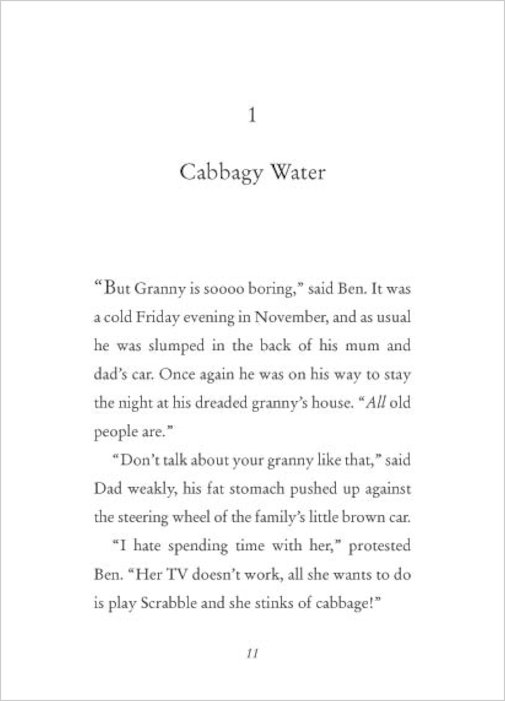
Now think about the last proposal or email you sent. How many long words did it contain? How many sentences ran to 25 words or more? How much jargon appeared without any explanation?
The gap between how Walliams writes and how most salespeople write is enormous. But the buyers reading both are often the same people – adults, under pressure, processing fast. The closer your sales writing gets to that level of clarity, the more of it actually gets read – and the more sales follow as a result.
See Also
- Attention Span
- Cognitive Load
- 50+ ways that people work & make decisions
- 140+ ways to be easier to buy from