Practical Sales Training™ > How To Lose The Sale > AI Content
AI Content
AI has made it faster and cheaper to produce content. But speed and cheapness are not the same as good. And buyers notice the difference.
An image with a third hand. A paragraph full of em dashes and generic phrasing. A blog post that says nothing a hundred others haven’t already said. These are the signs of AI content that went out without a human looking at it properly. As a result, the buyer’s confidence in the brand quietly drops.
AI is a tool. Like any tool, it produces good results in the right hands and poor results in the wrong ones. The problem isn’t using AI. The problem is using it without care.
What Is AI Content?
AI content is text, images, audio, or video created using artificial intelligence tools instead of humans. It includes blog posts, social media copy, product descriptions, photos, illustrations, voiceovers, and video. AI can produce all of these faster and more cheaply than a human working alone.
However, poor-quality AI output is off-putting to buyers. Common examples include AI-generated images with too many fingers or distorted hands, text filled with em dashes and unnatural phrasing, overly generic blog posts that lack any original thinking, and videos with robotic voices that feel hollow.
Each of these signals the same thing to a buyer: someone created this quickly and didn’t bother to check it. That signal damages the brand before the actual message has even registered.
Why Does Poor AI Content Lose the Sale?
It loses the sale because it changes how the buyer feels about the brand. They may not be able to name exactly what’s wrong. But they sense something is off. And that feeling attaches to everything else the brand says and sells.
There are four reasons poorly reviewed AI content damages conversion. First, it signals laziness. Buyers feel the brand is cutting corners rather than adding value. Second, it reduces trust. Mistakes like distorted images or clumsy phrasing create doubts about quality control. Third, it breaks focus. Instead of engaging with the message, the buyer notices the errors. Fourth, it feels soulless. Content created without human input often lacks the specific detail and personality that makes a brand worth listening to.
So the risk isn’t just poor content. It’s that poor AI content actively signals something negative about how the business operates. Because buyers generalise. If the content looks careless, the product or service probably is too.
How Can You Use AI Content Well In Sales?
You can use AI effectively by combining its speed with human judgement. Here’s how to apply that in practice.
Edit Everything Before It Goes Out
Never publish AI text without reviewing it for clarity, tone, and accuracy. AI drafts are starting points, not finished work. So read every sentence and ask whether a real person would say it that way. Because the sentences that pass that test are the ones worth keeping, and the ones that don’t need rewriting before they reach a buyer.
Remove AI Tell-Tale Signs
Certain patterns appear so often in AI-generated text that readers have learned to recognise them. Em dashes used in place of commas, phrases like “it’s important to note,” and sentences that build to a vague conclusion all signal AI origin. Replace them with plain, direct language. Because when the writing sounds like a person, the message lands like a person.
Check Every Visual Carefully
AI-generated images look convincing at first glance. But on closer inspection, hands often have too many fingers, backgrounds contain warped objects, and faces sometimes have subtle distortions. So zoom in before you publish. Check hands, edges, and text within images. Because a buyer who spots an error also notices that you didn’t.
Add Specific Human Detail
AI produces general content. Buyers trust specific content. So after AI has given you a draft, add the details that only you can provide. A real example. A specific number. A story from your experience. These are the elements that make content feel genuine. As a result, the buyer’s trust in the brand increases rather than stalls.
Use AI for Support, Not Replacement
AI works best as a starting point, not an endpoint. Use it to generate outlines, first drafts, variations, or repetitive content that would otherwise eat your time. However, keep human judgement in charge of what actually reaches the buyer. Because the content that converts is the content that sounds like it came from a real person who knows what they’re talking about.
When AI Content Causes the Most Damage
It causes the most damage in premium or high-trust contexts. When a buyer is considering an expensive purchase or a long-term relationship, they research carefully. So they spend more time with your content. The longer they spend, the more likely they are to spot something that feels off. As a result, poor AI content is far more costly in high-value sales than in low-ticket ones.
It also hits harder when it appears in your most visible content. A distorted AI image on your homepage or a hollow AI-written about page creates a first impression that’s difficult to recover from. Similarly, an email campaign that reads like it was generated in seconds and never checked signals to your entire list that you don’t value their attention.
And it causes real damage in sectors where expertise and authority matter. If you sell professional services, advice, or complex products, buyers need to believe you know what you’re talking about. Generic AI content without specific detail or genuine opinion suggests you don’t. So in those sectors, the standard for human review needs to be higher, not lower.
When AI Content Can Work Well
It works well for repetitive tasks that don’t require original thinking. Product descriptions, meta tags, email subject line variations, and social post drafts are all areas where AI can save significant time without meaningfully reducing quality. Because the bar for originality in these formats is lower, the gap between AI output and human output is smaller.
It also works well when you use it to speed up your own thinking rather than replace it. Asking AI to generate a structure, a list of angles, or a rough draft that you then rewrite gives you a faster starting point without sacrificing the human voice that makes the content worth reading.
Similarly, AI works well for tasks where volume matters more than nuance. If you need fifty product descriptions in a day, AI can produce drafts for all of them faster than any team. So use it for the heavy lifting and spend your human time on the review, the editing, and the specific details that turn a draft into something a buyer actually wants to read.
Common AI Content Mistakes
Publishing Without Any Review
The biggest mistake is treating AI output as finished work. It isn’t. It’s a draft. So build a review step into your process before anything goes live. Even a quick read-through catches the most obvious errors. However, a proper edit that checks tone, accuracy, and specificity will do far more to protect the brand than a surface-level skim.
Using AI Visuals Without Checking Them
AI images often look fine as thumbnails. The problems only appear when you look closely. So zoom in on every AI-generated image before you use it. Check hands, faces, text, and background details. Because the buyer who spots the error will also spot that you didn’t check. And that second observation does more damage than the first.
Leaving AI Phrasing Intact
AI has a recognisable style. Readers have been trained by exposure to spot it. Long sentences with em dashes, hollow transitions, and vague conclusions are all signals. So rewrite the phrases that sound like AI and replace them with language that sounds like a real person with a clear opinion. That rewrite is what turns a draft into something worth publishing.
Removing All Human Voice
AI content without human input is generic by definition. It can only produce what it has seen before. So the stories, opinions, specific examples, and contrarian views that make content distinctive have to come from you. Without them, the content is technically correct but entirely forgettable. As a result, it reaches buyers but doesn’t move them.
AI Content – An Example
The tell-tale signs of AI content are now so well known that they’ve become a source of humour. People recognise them on sight. And when a buyer spots one in your content, the reaction is rarely charitable. It’s not that they think less of AI. It’s that they think less of you for not catching it.
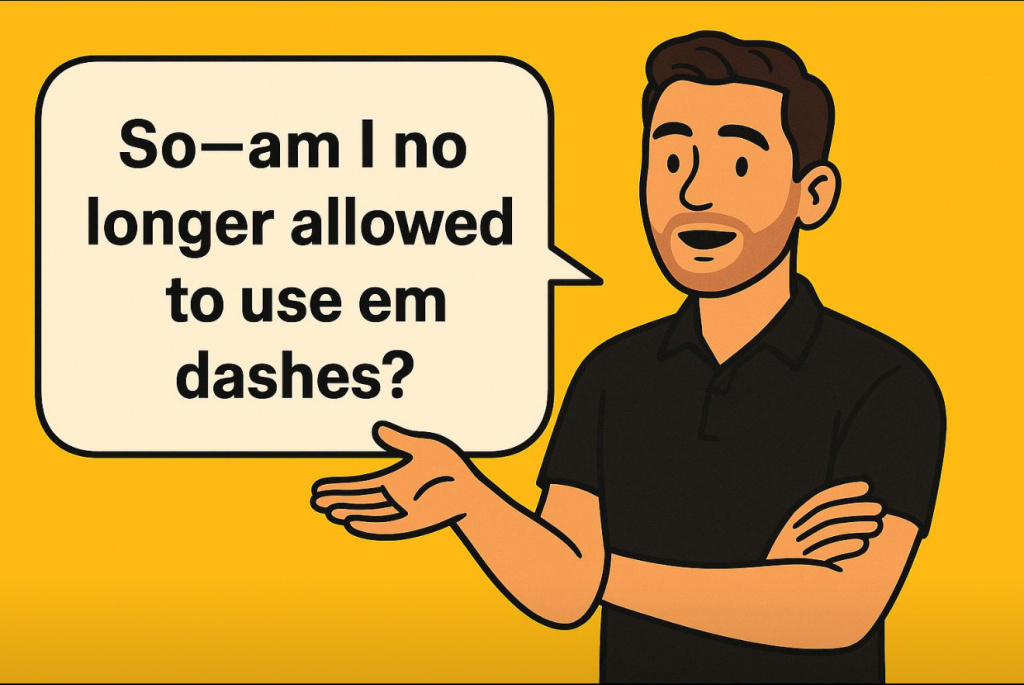
The example above captures exactly why this matters. Small stylistic signals carry more weight than most people expect. Buyers read body language in content the same way they read it in people. So when the writing sounds like a machine, they trust it a little less. And in sales, a little less trust is often enough to lose the deal. That’s the cost of AI content that skipped the human review.
See also