Practical Sales Training™ > Wordplay > Alliteration
Alliteration
Some phrases just stick. You hear them once and they replay in your head. Often, alliteration is why.
When words in a sentence share the same starting sound, the phrase feels smoother and more deliberate. It does not sound like an accident – because it never is. As a result, the listener pays more attention, even if they cannot explain why.
In sales, that extra half-second of attention can make all the difference. So if your tagline, pitch, or key message is not landing the way you want, alliteration is one of the simplest tools to try.
What Is Alliteration?
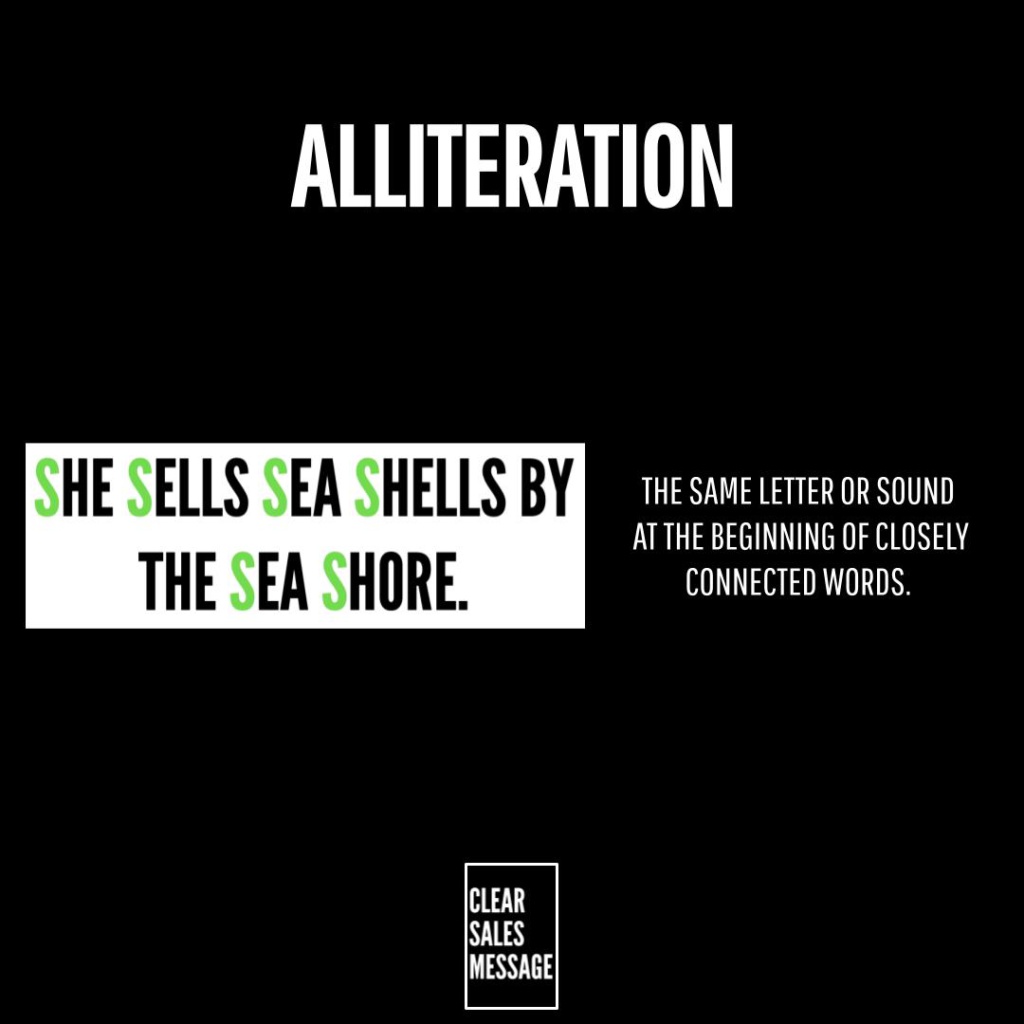
Alliteration is when two or more words close together share the same starting sound. For example: “Sell smarter, not slower” or “Clear, concise, compelling.” The repeated sound creates a rhythm that feels intentional and polished.
It does not have to be the same letter every time. What matters is the sound. “Knowledgeable negotiators” works as alliteration because both words start with the same “n” sound, even though one starts with a “k.”
You find alliteration everywhere – in brand names, slogans, headlines, and speeches. However, it is particularly useful in sales because it makes key phrases easier to say out loud and easier for buyers to repeat to others.
Why Does Alliteration Work?
Alliteration works because it makes language feel mellifluous – smooth and pleasant to say. And because it rarely happens by chance, it signals to the listener that care went into the words. That care builds credibility, even subconsciously.
It also helps with memory. Repeated sounds create a pattern, and our brains hold on to patterns. So a phrase built with alliteration is more likely to stay with someone long after the conversation ends. In sales, that matters – because buyers often make decisions later, not in the moment.
Similarly, alliteration works well in spoken sales because it creates a natural rhythm. When a phrase flows well out loud, the speaker sounds more confident and the listener finds it easier to follow. Both of those things help you land your message.
How Can You Use Alliteration In Sales?
Use it in your tagline or core message
Your tagline is the phrase people repeat when they describe what you do. So it needs to be easy to say and easy to remember. Alliteration helps with both. If your current tagline is flat, try rewriting it with a shared starting sound. For example, “we help businesses grow” becomes much stickier as “we build better businesses.”
Apply it to your key benefits
When you list what you offer, alliteration can make those points land harder. Instead of “fast, reliable, and affordable,” you might say “quick, quality, and cost-effective.” The sound pattern makes the list feel deliberate and therefore more credible.
Find your words with a simple search
You do not need to be a copywriter to use alliteration. Simply pick the key word in your message, then search for synonyms that start with the same letter or sound. Tools like a thesaurus or a quick Google search give you plenty of options to work with. From there, it is just about finding the combination that sounds best.
Use it in subject lines and headlines
Alliteration works well in email subject lines and proposal headings because it draws the eye and ear at the same time. A subject line like “Faster fixes for frustrated teams” stands out more than a plain alternative – and as a result, it gets opened more often.
When Alliteration Works Best
Alliteration works best when the message needs to travel. If you want a buyer to repeat your pitch to a colleague, remember your tagline, or quote your key benefit back to you, a well-crafted alliterative phrase makes that much more likely.
It also suits short, punchy formats – taglines, subject lines, bullet points, and spoken pitches. In longer copy, however, too much alliteration can start to feel forced. So use it at the moments that matter most rather than throughout an entire document.
Similarly, it suits brands and businesses that want to sound sharp and considered. Because alliteration signals craft, it works especially well when your positioning is built on quality, expertise, or attention to detail.
When Alliteration Becomes Dangerous
Forced alliteration is worse than none at all. If you twist a sentence just to get the right starting sound, the phrase feels awkward and the message gets lost. Buyers notice when language sounds strained, and it undermines rather than builds trust.
It can also tip into being too playful for the context. In highly formal or technical sectors, a catchy alliterative slogan might feel out of place. So always match the tone to the buyer and the setting before you reach for this tool.
Finally, alliteration does not fix a weak message. If your core offer is unclear, a clever-sounding phrase will not save it. Instead, get the substance right first – then use alliteration to make it land better.
Common Alliteration Mistakes
Forcing it at the expense of meaning
The sound should serve the message, not the other way around. If you have to use a weaker word just to keep the alliteration going, drop it. A clear sentence beats a clever but confusing one every time.
Overusing it across the whole page
When every line alliterates, the effect disappears. It stops feeling deliberate and starts feeling gimmicky. So save it for your most important phrases – the ones you most need people to remember.
Using it without saying it aloud
Alliteration is a spoken tool as much as a written one. Because of that, you should always read your phrase out loud before committing to it. Some combinations look great on paper but trip over themselves when spoken. If it does not flow out loud, it will not land in a pitch.
Ignoring the buyer’s language
The best alliterative phrases use words your buyer already uses. If your chosen words are unfamiliar or too formal for your audience, the phrase will not stick however well it sounds. Start with your buyer’s vocabulary, then build the alliteration around it.
Alliteration – An Example
A fitness coach wants a tagline that stands out. Their original line is “Lose weight and get healthy.” It is clear, but it is also forgettable. So they rewrite it using alliteration: “Burn fat, build focus, and boost fitness.”
The repeated “b” sound makes the phrase rhythmic and easy to say. As a result, clients repeat it, share it, and remember it far more than the original. The message is the same – but the delivery is sharper.
Similarly, a bakery uses “Perfect pastries, piping-hot pies” instead of “Fresh baked goods every day.” Both say the same thing. But one sounds crafted and the other sounds generic. Alliteration is often the only difference between a phrase that lands and one that just sits there.
See Also