Practical Sales Training™ > How To Convert > Ascending Loyalty Reward
Ascending Loyalty Reward
What Is It
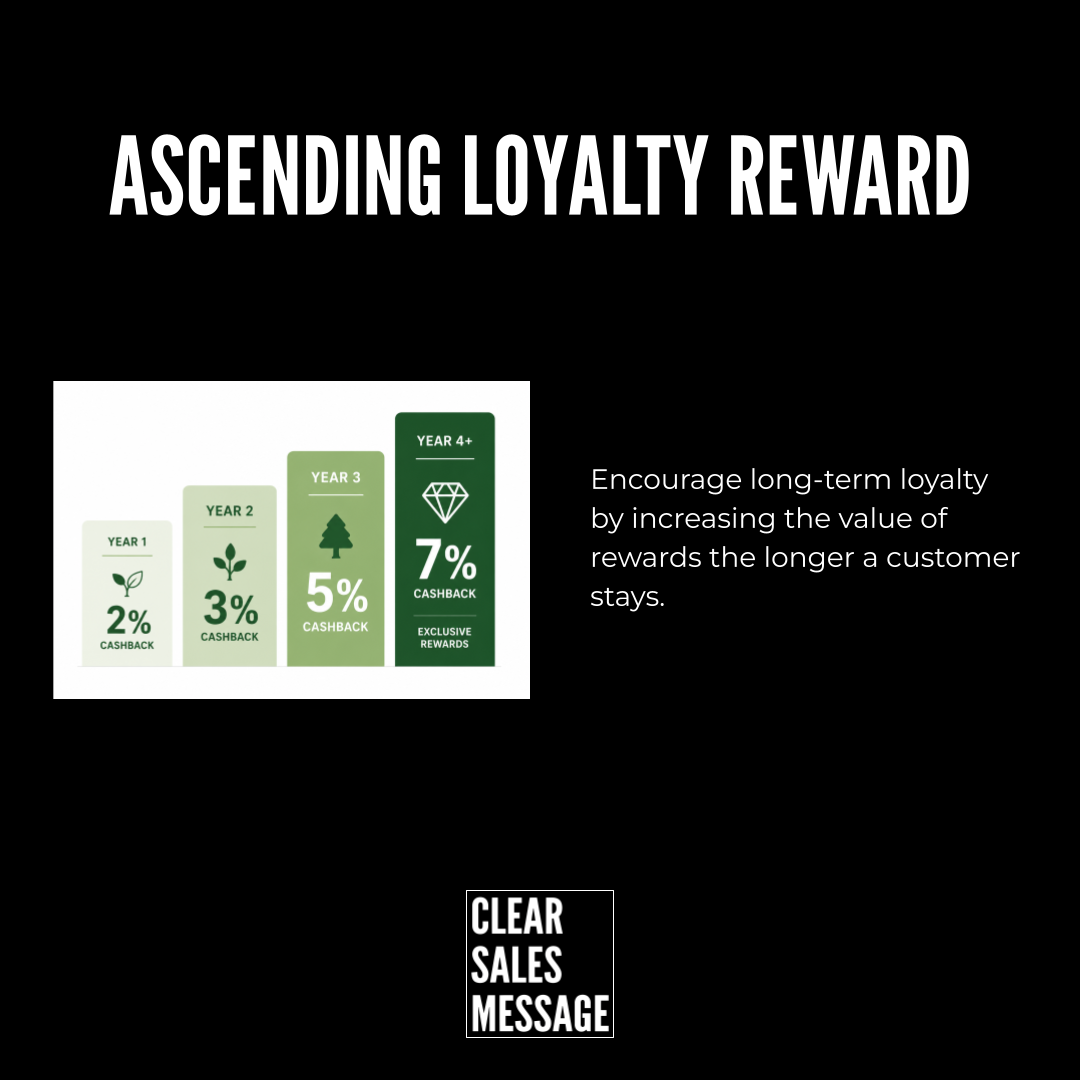
An Ascending Loyalty Reward is a discount or reward that grows over time, rather than staying flat. The longer someone stays a customer, the more they get back.
It flips the usual deal on its head. Most rewards shrink after the first offer. An Ascending Loyalty Reward does the opposite. This one builds.
Why Does It Work
Buyers hate losing something they’ve already earned. Once a reward is climbing, leaving means giving up not just this year’s benefit, but the bigger one still to come. That’s a much harder thing to walk away from than a flat ten percent off.
The Ascending Loyalty Reward also taps into a basic human need to feel recognised over time. A reward that grows says loyalty is noticed. A flat reward says nothing changes no matter how long someone stays.
How Can You Use It
Building your own Ascending Loyalty Reward comes down to three things: where you start, what you show, and what you protect.
Set The First Step Small
Your first year discount doesn’t need to be generous. It just needs to exist, so the ladder has a bottom rung. A small first reward with a clear path upward beats a big one-off discount that never grows again.
Show The Whole Ladder Up Front
Don’t hide the future rewards until someone gets there. Show the full climb from day one, so a new customer can see exactly what staying looks like in year three, five and beyond. That visibility is what makes people plan to stay.
Protect The Top Rung
Whatever your highest tier reward is, guard it carefully. It needs to feel genuinely worth waiting years for, not just a slightly bigger number. If your top tier barely beats your middle tier, the whole ladder loses its pull.
When It Works Best
An Ascending Loyalty Reward works best in relationships that are naturally long term anyway, insurance, subscriptions, memberships and anything renewed year after year. It also suits businesses where the cost of losing a long term customer is high, since the reward is cheap compared to what you’d spend replacing them.
When It Becomes Dangerous
An Ascending Loyalty Reward becomes a problem if the growth is too slow to notice or too generous to sustain. If year five looks almost identical to year one, buyers stop paying attention to the ladder at all. If the top tier costs you more than a loyal customer is actually worth, you’re rewarding loyalty at a loss.
Common Mistakes
Most Ascending Loyalty Reward programmes fail for one of three reasons.
Making The Increases Too Small To Notice
A jump from fifty seven to fifty nine percent barely registers as a reward. If each step up doesn’t feel like a genuine improvement, customers stop tracking it and the whole mechanism stops motivating anyone.
Capping The Reward Too Early
If the ladder stops climbing after year three, you’ve removed the reason to stay past year three. Keep at least one more rung above wherever most customers currently sit, so there’s always a next reason to stay.
Never Mentioning It Until Someone Tries To Leave
Some businesses only reveal the growing reward as a retention offer at the cancellation stage. By then it looks like a bribe, not a genuine reward for loyalty. Mention the ladder early, so it reads as a plan, not a panic move.
Ascending Loyalty Reward – An Example
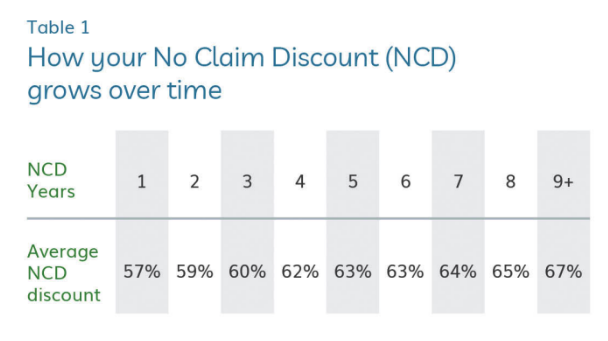
Car No Claims Bonus discounts are a great example of an Ascending Loyalty Reward in action. A typical discount starts around fifty seven percent in year one and climbs steadily each year, reaching roughly sixty three percent by year five and around sixty seven percent by year nine or beyond.
Nobody chases one enormous jump from year to year. It’s the steady, visible climb that keeps people renewing instead of shopping around for a better deal elsewhere.
See also:
- 180+ ways to improve conversion
- 30+ ways to keep buyers loyal to you
- The Loyalty Effect
- Retention discount