Practical Sales Training™ > How To Convert > At Table Ordering
At Table Ordering
You’re at a busy pub. Your glass is empty and you fancy another. But the bar is three deep and nobody has been to your table in ages. So you shrug and head home.
That’s a lost sale, and the venue never even knew it happened. At Table Ordering fixes it. It lets customers order and pay from their seat, using their own phone. As a result, the next drink or pudding is only ever a tap away.
What Is At Table Ordering?
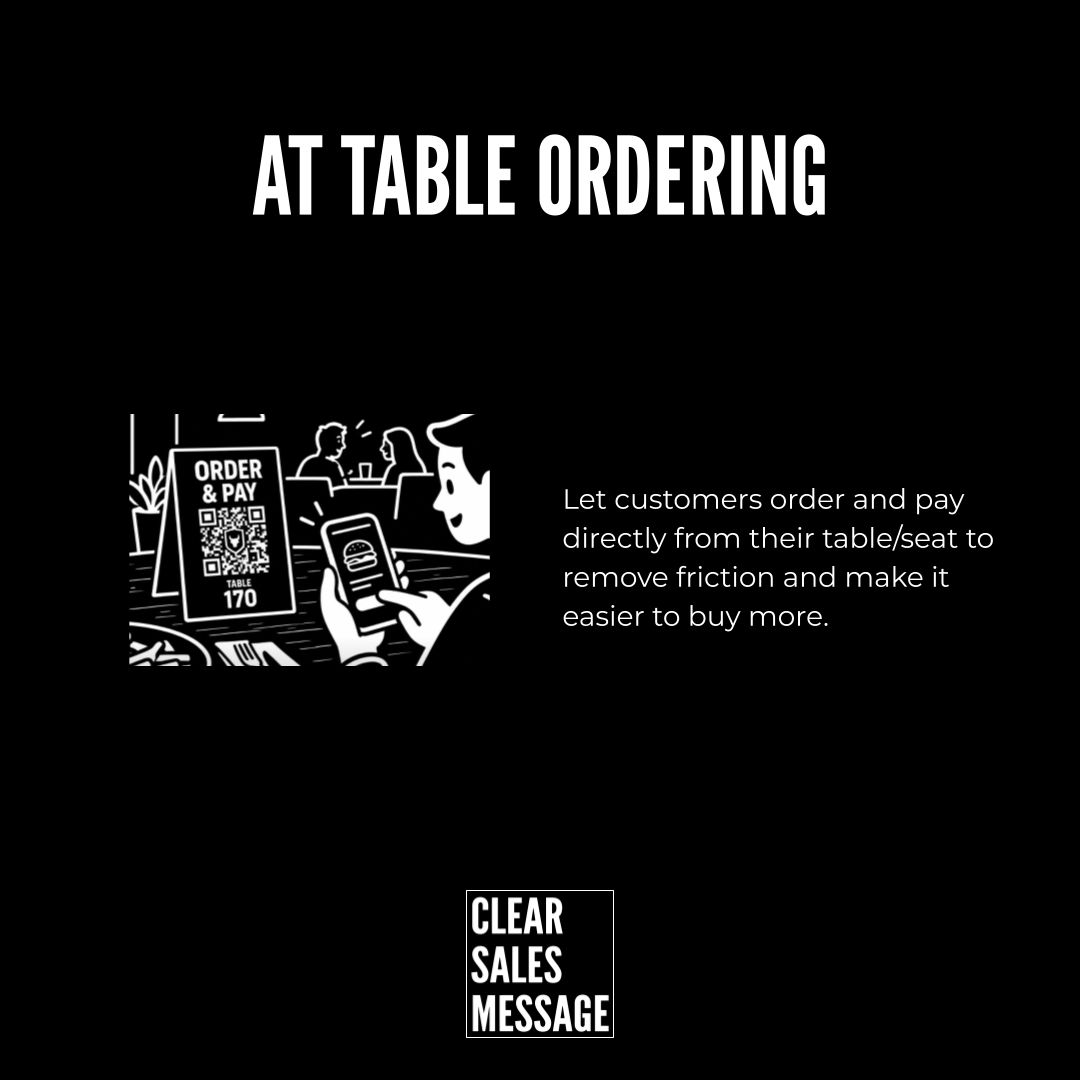
At Table Ordering is a simple set-up. Each table has its own code, usually a QR code. Customers scan it, browse the menu, order and pay. Then the food or drinks come straight to them.
You’ll find it in pubs, cafes, stadiums and cinemas. It works anywhere people sit for a while and might want more. Also, the table number tells staff where to bring the order. So nobody has to shout or wave.
The key idea is simple. You move the till to the customer, instead of making them walk to it.
Why Does At Table Ordering Work?
It works because it removes the queue. That queue kills a lot of extra sales. Each time a buyer has to get up, wait or catch a waiter’s eye, some give up. And they don’t tell you.
It also catches the impulse. The urge for dessert lasts a few seconds. If acting on it takes ten minutes, the urge fades. But with the menu in their hand, they can say yes while they still want it.
Then there’s comfort. Some people hate flagging staff down. Others feel judged for ordering a third drink. So a phone gives them a private, easy way to buy. In fact, the menu gets to do the selling too, with photos and add-ons at every step.
Finally, paying is part of the flow. Nobody sits waiting for the bill. As a result, tables turn faster and people leave happier.
How Can You Use At Table Ordering?
Here’s how to make it pay off.
Make The Code Easy To Spot
Your customer can only scan a code they can see. So put it on the table itself, where eyes land when seated. Then add a short line like “Order and pay here, no queue.” That tells them what it does and why they should care.
Keep The First Order Fast
First-time users are the quickest to quit. So skip the account sign-up. Let them order as a guest and pay with a tap. Then offer to save their details for next time, if they want.
Build The Add-On Into The Menu
This is where the extra spend comes from. When someone picks a burger, offer the fries and a drink right there. But keep it to one or two smart options. Too many prompts feel pushy and slow people down.
Prompt The Second Round
The best sale is the one they forgot they wanted. So send a gentle nudge a while after the first order, like “Fancy another round?” Similarly, a pudding prompt after mains lands at just the right time.
Use It In B2B Too
The idea travels well. Think of a trade show stand or a training day. Add a code to each table for demo bookings. People can also buy the next course on the spot. As a result, interest turns into action before they walk away.
When Does At Table Ordering Work Best?
It works best when people stay put for a while. Pubs, cafes, stadiums and cinemas all fit. Also, the longer they sit, the more chances they have to order again.
It shines when the venue is busy too. That’s when staff can’t keep up and queues grow. So the code takes pressure off the team at the busiest moment.
And it works well with menus built for add-ons. Sides, desserts and extra rounds all sell better when they’re one tap away.
When Does At Table Ordering Become Dangerous?
It gets risky when it takes over from people completely. Some customers want a chat or a tip on what’s good. Take that away and the place feels cold. So keep staff on the floor and have them check in.
It also backfires when the tech fails. A broken code or a slow website kills the order. As a result, the friction you meant to remove comes straight back.
Watch out for guests who don’t use smartphones too. They may struggle or feel shut out. So keep a simple way to order at the bar.
Lastly, too much nudging spoils it. If every screen pushes an extra, people feel milked. And then they order less.
What Are The Common Mistakes With At Table Ordering?
Most venues get the idea right but trip up on the detail. Here are the ones I see most.
Forcing An App Download
Asking people to download an app before they can order is a big ask. So lots of them won’t. Instead, use a web page that opens straight from the code.
Hiding Prices Or Fees
A surprise service charge at checkout feels like a trick. As a result, people drop out at the last step. So show the full price up front.
Leaving The Code Unexplained
People ignore a bare QR code with no words. They can’t tell if it’s the menu, a survey or a sales pitch. So say in plain words what scanning does for them.
Forgetting The Kitchen
Easy ordering can flood the kitchen and the bar. If orders pile up, food arrives late and people blame the system. So match the flow of orders to what your team can handle.
Treating It As A Cost Cut
The biggest win is extra spend per table. Some venues only track wage savings, so they miss it. Instead, measure what each table spends before and after.
At Table Ordering – An Example
Order And Pay From Your Pub Table
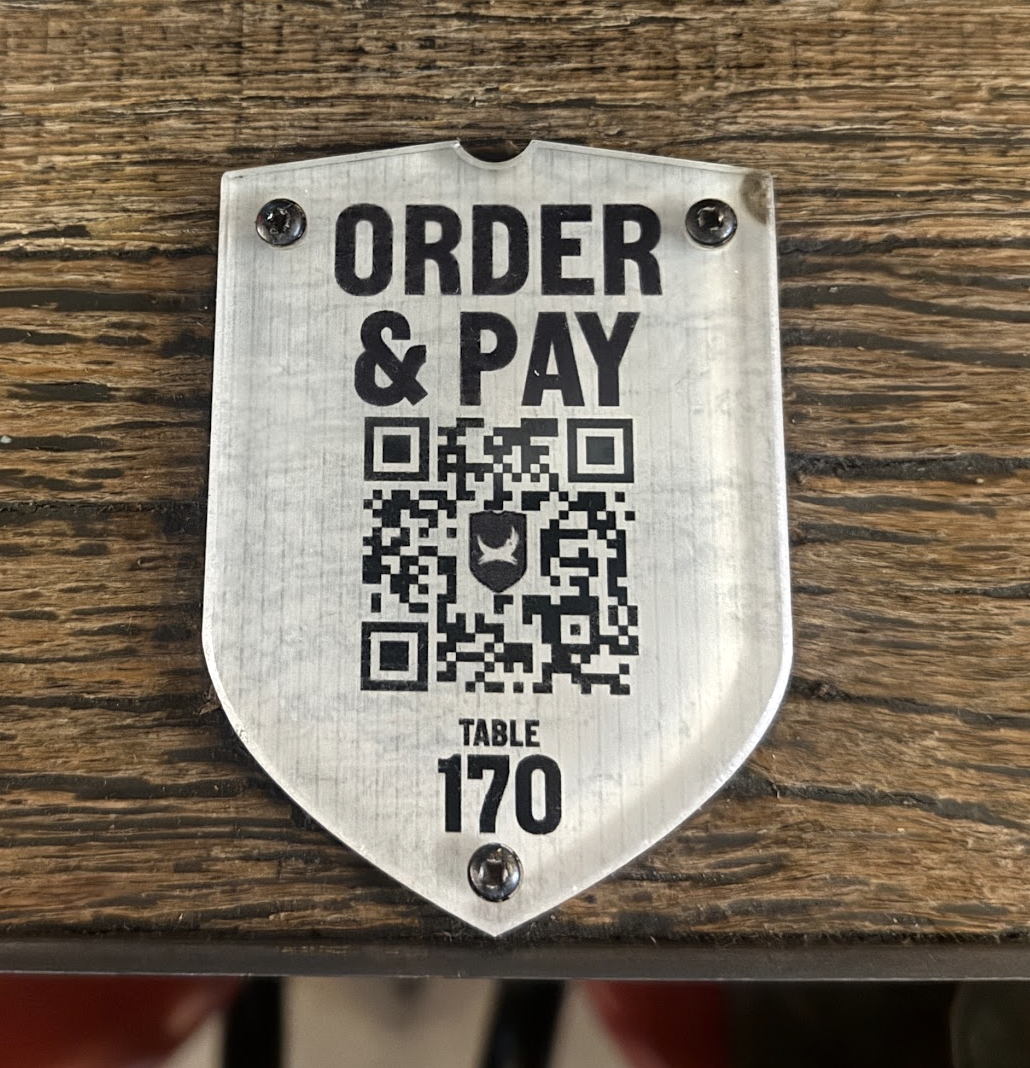
Here’s a pub that builds ordering right into the furniture. It’s a fixed part of the table. So it’s always there when you want another drink.
Think about what that does to the second round. You keep your seat and stay with your friends. Instead of queuing, you scan, tap and carry on chatting.
And since each code carries the table number, staff know where to go. That’s the whole concept, screwed to a table. Put simply, the easier it is to order, the more people order.
See Also