Practical Sales Training™ > How To Convert > Buy to Access

Buy to Access
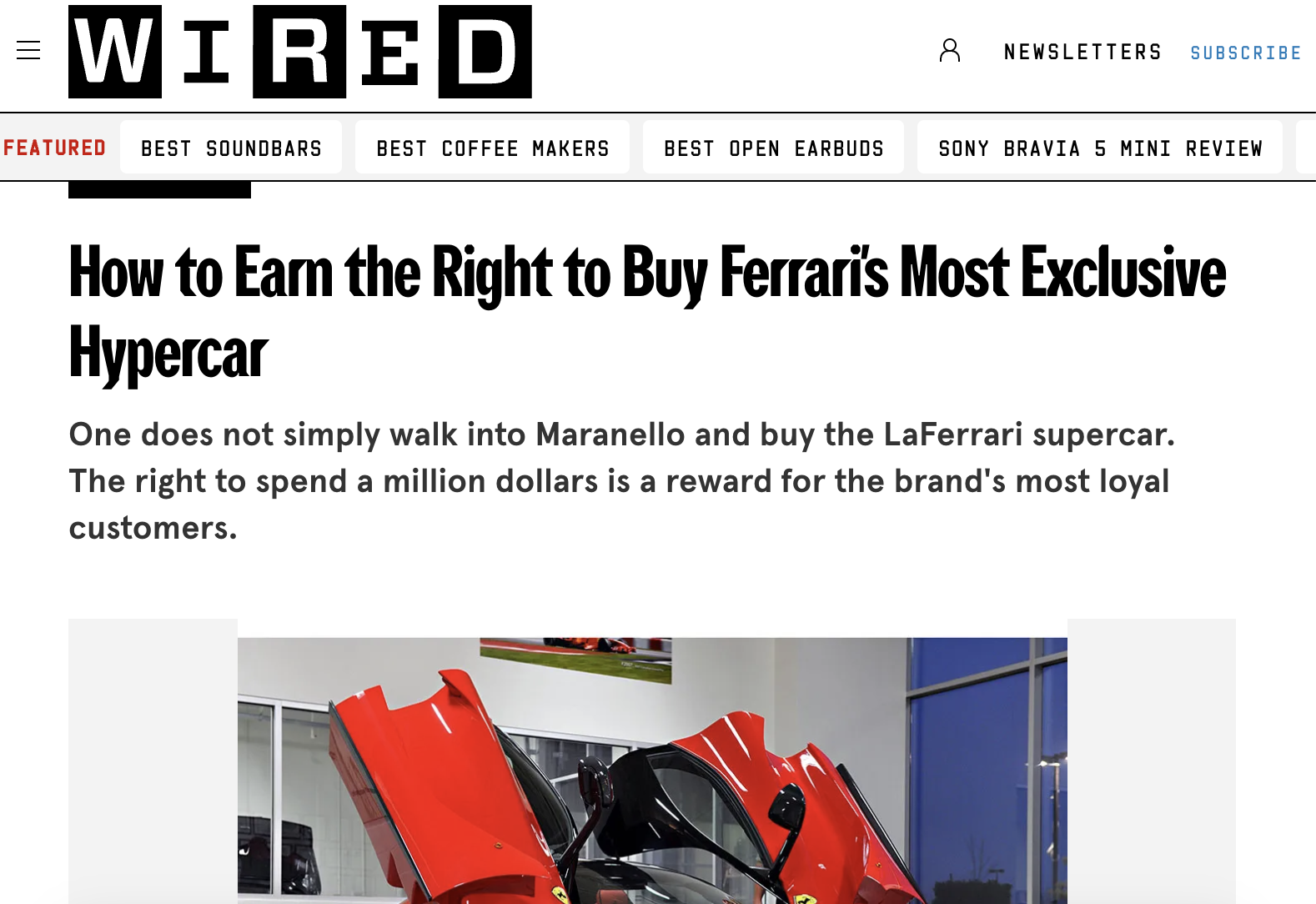
Want a Ferrari LaFerrari? Owning a regular Ferrari first helps. That’s not a rule written down anywhere, but it’s exactly how it works in practice.
That’s buy to access. The first purchase isn’t the goal. It’s the gateway, and it has to happen before the thing someone actually wants becomes available.
This page covers what buy to access means, why it works so well psychologically, and how to use it without it feeling like a barrier.
What Is Buy To Access?
Buy to access is when someone has to purchase one thing in order to unlock, qualify for, or gain access to something else they actually want.
The first purchase isn’t the end goal. It’s the gateway. It signals intent, commitment, or seriousness, before the more valuable opportunity becomes available at all.
So when it’s done well, it doesn’t feel like a barrier. Instead, it feels like a filter.
Why Does Buy To Access Work?
It works by changing the entire nature of the decision.
Instead of asking someone to commit fully upfront, you ask them to take a smaller, clearer step that proves real interest. That step does two things at once. It reduces casual interest, and it raises the perceived value of whatever sits behind the gate.
Psychologically, paying even a small amount shifts someone from observer to participant. So once they’ve crossed that line, access starts to feel earned rather than simply given away.
This also protects the offer itself. Scarce time, attention, or premium experiences stop being available to everyone, because they’re reserved for people who’ve already shown they’re serious.
The key is that the first purchase has to make sense on its own. If it feels pointless or purely there to block people, trust breaks down immediately.
How Can You Use Buy To Access In Sales?
Protect What’s Genuinely Valuable
This works best when the thing being protected is high value, limited, or personal. Requiring a prior purchase creates a natural test of commitment, without any confrontation or pressure involved.
Let The Buyer Justify Their Own Decision
Access feels more valuable once it’s unlocked through action, rather than handed out freely to anyone. That sense of progress builds respect for both the offer and the business behind it.
Make Sure Both Sides Win
The responsibility sits with you here. The gateway purchase needs to deliver real value, and the access it unlocks needs to feel genuinely worth it too. When both line up, the whole mechanic feels fair and intentional, instead of forced.
When Buy To Access Works Best
It works best when demand already outstrips supply, so you need a fair way to filter who gets access first. A waiting list alone often isn’t enough, because it doesn’t separate serious buyers from curious ones.
It also works well for brands built on exclusivity, where being hard to access is part of the appeal rather than something to apologise for.
When Buy To Access Becomes Dangerous
It backfires the moment the first purchase feels like a pointless hurdle rather than a genuine step. If buyers sense they’re just paying to be allowed to pay more, resentment builds fast.
It can also damage trust if the access on the other side doesn’t match the effort it took to get there. A disappointing reward after a real commitment costs you more goodwill than never gating it at all.
Common Buy To Access Mistakes
Making The Gateway Purchase Pointless
If the first purchase has no real value of its own, buyers see straight through it as a paywall rather than a filter. Make sure it stands on its own merit.
Letting The Reward Fall Short
Access that doesn’t live up to the buildup leaves people feeling tricked rather than rewarded. Whatever sits behind the gate needs to genuinely earn its place there.
Gating Something That Should Be Open
Not everything benefits from a filter. Gating something low stakes or widely available just adds friction without adding any real value.
Buy to Access – An Example
Ferrari is a classic example of restricting access based on previous spending. To even be offered a car like the LaFerrari, buyers typically need a history of owning other Ferraris first.
Nobody can simply walk in with the money and buy one outright. Ferrari uses past purchases as proof of genuine commitment to the brand, not just the ability to pay.
That’s buy to access at its most exclusive. The earlier purchases aren’t just sales. They’re the entry test for access to something far more limited and far more wanted.
See also