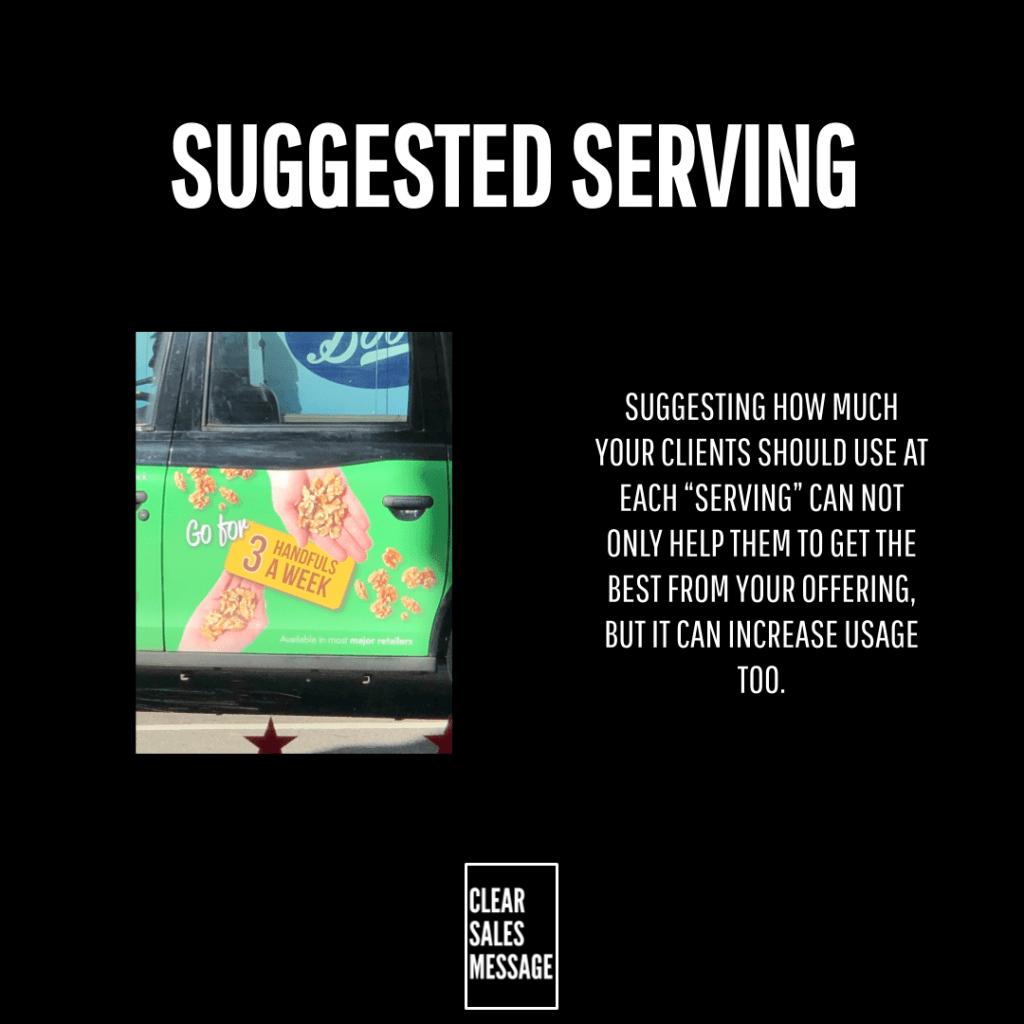


Practical Sales Training™ > How To Connect With Your Buyer > Suggested Serving
Suggested Serving
When a buyer uses your product or service the wrong way, they do not blame themselves. They blame you. The Suggested Serving is how you prevent that.
Most businesses focus on getting buyers to say yes. Far fewer think about what happens after. But how a buyer uses your product determines whether they come back and refer others.
The Suggested Serving guides buyers on how much to use and how to use it for the best result.
What Is the Suggested Serving?
When buyers use too little of something, they do not see the result they expected. They conclude the product does not work. When they use too much, they waste it and see no extra benefit. Either way, the experience disappoints and you lose a repeat buyer.
Because you know your product far better than your buyer, you can define what good use looks like. The Suggested Serving formalises that knowledge and hands it to the buyer at the moment they need it.
There is also a confidence effect. When a buyer knows exactly what to do, they feel more capable and more committed to the result. That makes them more likely to persist, and more likely to succeed. Because they succeed, they come back.
Why Does the Suggested Serving Work?
Most products have an ideal way to be used. But most buyers never find out what that is. They experiment, use too much or too little, and draw the wrong conclusion when things do not work. The Suggested Serving closes that gap before it becomes a problem.
It also improves the buyer’s relationship with your brand. When someone follows your guidance and gets a great result, they associate that result with you. Because you told them exactly what to do and it worked, they trust you more and are far more likely to return.
There is a loyalty dimension too. Buyers who get consistent results stay longer and spend more. So the Suggested Serving is not just about the first experience. It is about every experience that follows.
How Can You Use the Suggested Serving?
Start by thinking about the common ways buyers get your product or service wrong. Too much, too little, at the wrong time, in the wrong conditions. Each of those failure modes is a place where a Suggested Serving can help.
Be Specific
Define what the ideal looks like in precise terms. Not just use daily, but use a pea-sized amount twice a day on clean skin. Or instead of read the book, say read one chapter and apply one idea before you move on. The more precise the guidance, the more useful it is. Vague instructions get vague results.
Put It in the Right Place
Where you put the guidance matters too. The best place is right at the point of use. On the packaging. In the welcome email. At the start of the service. Wherever a buyer is most likely to be starting, that is where the Suggested Serving should appear. The right message in the wrong place is no message at all.
Cover Conditions Too
Think about quantities, but also about conditions. Cold or warm. Morning or evening. A specific sequence to follow. Some drinks are best served chilled and some plants do better indoors. When the conditions matter, saying so is part of the service. In a perfect world, what is the best way to experience what you offer?
When the Suggested Serving Works Best
The Suggested Serving works best for products or services where over or underuse is a common problem. When buyers routinely get the wrong amount or approach, addressing it directly improves the experience for everyone. The result is fewer complaints and fewer refund requests too.
It also works well when the optimal conditions for use are not obvious. When the conditions matter, saying so removes a common source of buyer disappointment. That is a simple thing that many businesses overlook.
It is also effective for any business where the buyer experience depends partly on buyer behaviour. Coaching, consulting, software, supplements, skincare, fitness programmes. In all of these, the buyer’s approach affects the outcome. So guiding that approach is part of delivering the result.
When the Suggested Serving Becomes Dangerous
The main risk is being too vague. A Suggested Serving that says use as directed or apply liberally is not guidance. Buyers interpret vague advice in the easiest way for them. That is rarely the way that gets the best result. Be specific enough that the buyer cannot go wrong.
There is also a risk of overloading the buyer with instructions. A long list of conditions and caveats can feel more like a manual than a simple suggestion. Keep it to one or two clear points. That is usually enough to make the difference between a good outcome and a poor one.
Common Suggested Serving Mistakes
Leaving It Out Entirely
The most common mistake is leaving the Suggested Serving out entirely and assuming buyers will work it out. They will not. Instead, they do what feels natural, which may or may not be the right approach. Do not make buyers guess. Tell them. The cost of adding a Suggested Serving is almost nothing. The cost of not having one is repeat buyers who quietly disappear.
Putting It Somewhere No One Looks
A second mistake is putting the guidance somewhere the buyer will not find it. Burying it in the terms and conditions does not count. Visible, at the moment of use, is the only place that matters. If the buyer has already gone wrong before they find the Suggested Serving, the moment has passed.
Making It Sound Like a Warning
A Suggested Serving should feel helpful, not defensive. When it reads like a legal disclaimer, buyers ignore it. When it reads like a tip from someone who knows the product well, they follow it. Keep the tone warm and practical. You are helping them get the most from something they already bought.
Suggested Serving – An Example
A skincare brand sells a premium moisturiser. On the packaging they include: apply a pea-sized amount twice daily to clean, damp skin for best results. That one line stops buyers using too much and wasting product. It also stops buyers using too little and seeing no change. Because the buyer uses it correctly, they see results, come back, and tell others.
That is the full value of the Suggested Serving. It costs almost nothing to add. But it often makes the difference between a buyer who gets the result and one who does not.
See Also
- The Use Case Effect
- The Repurposing Effect
- 150+ ways to connect with your buyer
- 140+ ways to be easier to buy from