Practical Sales Training™ > How To Connect With Your Buyer > Chameleon Effect
Chameleon Effect
Ever noticed how close friends start to sit alike and use the same phrases? Nobody planned it. It just happens when people feel in sync.
That’s the Chameleon Effect. We naturally copy people we like. It works the other way too. People tend to like those who seem a bit like them.
In sales, a little gentle mirroring can make a buyer feel at ease. So the conversation flows, and trust builds faster.
What Is The Chameleon Effect?
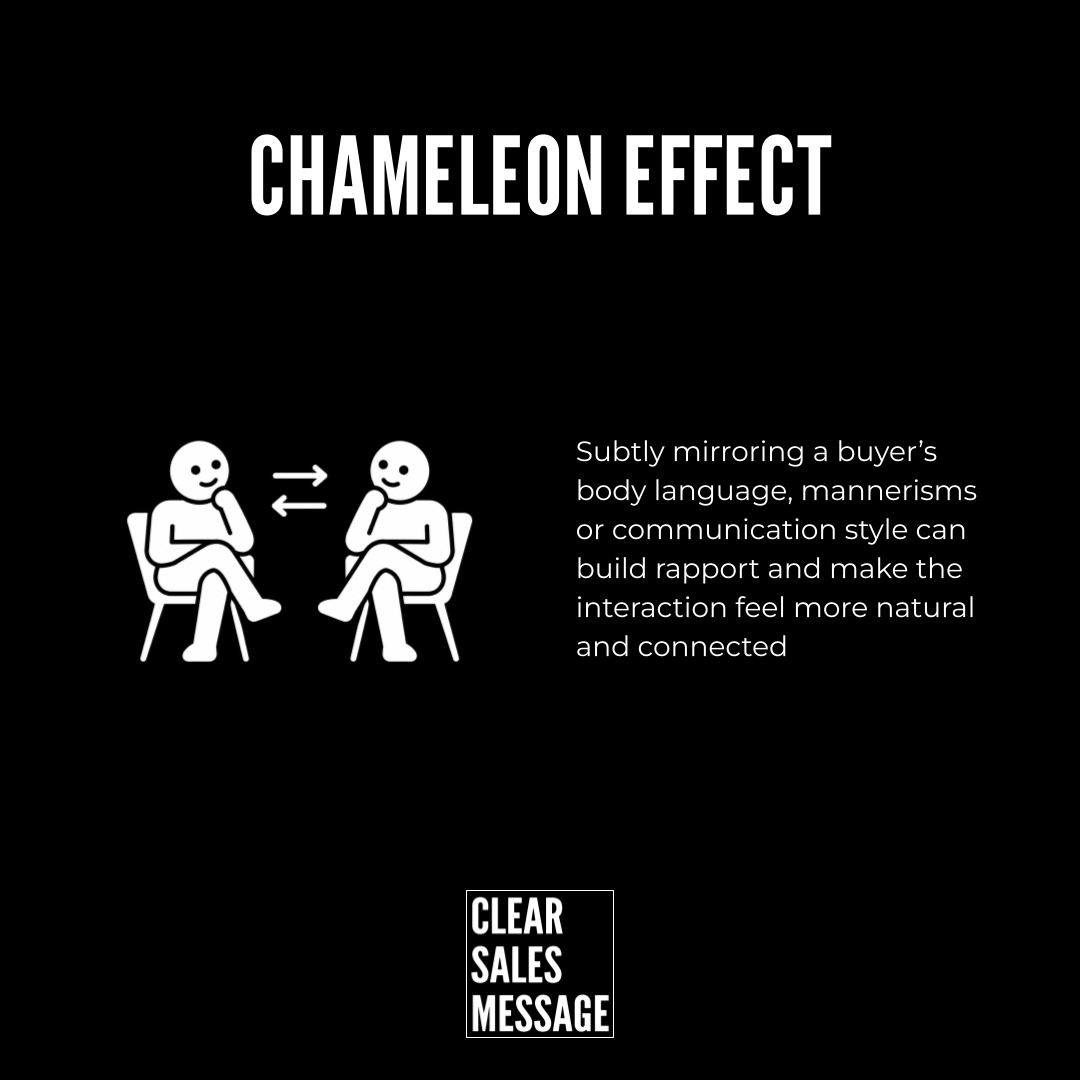
The Chameleon Effect means subtly copying another person’s body language, mannerisms or way of speaking. Most of the time, people do it without thinking.
It shows up in posture, gestures, tone, pace and word choice. For example, a buyer leans back. A few moments later, you lean back too.
In sales, it covers written style as well. Say a buyer sends short, casual emails. A short, casual reply then lands better than a formal essay.
Why Does The Chameleon Effect Work?
It works because people trust what feels familiar. Move and speak a bit like the buyer, and you feel less like a stranger.
It also lowers tension. A calm buyer faced with a hyper-energetic seller feels pushed. In contrast, matching their pace helps them relax.
Then there’s the feeling of being understood. Mirroring their words shows you’re really listening. As a result, buyers feel heard.
Finally, it smooths the conversation. When styles match, there’s less friction. In fact, the whole meeting can feel more like a chat than a pitch.
How Can You Use The Chameleon Effect?
Here’s how to do it without it feeling fake.
Match Their Pace
If the buyer speaks slowly, slow down. If they’re quick and direct, pick up the pace. This is the easiest place to start.
Echo Their Words
Use the buyer’s own phrases when you reply. If they call it “the onboarding mess,” use those words too. Then they know you’ve listened.
Mirror Posture Gently
If they sit back, relax a little too. But wait a few seconds before you shift. So it feels natural, not copied.
Match Their Written Style
Look at how the buyer writes emails. Short and casual? Or long and formal? Then reply in a similar tone.
Follow Their Energy
When a buyer lights up, lift your energy a little. When they turn serious, calm down with them. As a result, you stay in step.
When Does The Chameleon Effect Work Best?
It works best in face-to-face meetings and video calls. Body language and tone are easy to read there.
It also helps with first meetings. When there’s no relationship yet, small signs of similarity help build one.
And it suits buyers who are nervous or guarded. A matched pace can help them open up.
When Does The Chameleon Effect Become Dangerous?
It gets dangerous when it becomes obvious. If the buyer spots you copying every move, it feels creepy. In fact, it can look like you’re mocking them.
It also backfires when you mirror negative moods. Matching a buyer’s frustration or anger only adds fuel. Instead, stay calm and steady.
Watch out for losing yourself too. If you copy so much that you lose your own voice, you’ll seem fake. So keep your personality.
What Are The Common Mistakes With The Chameleon Effect?
Most mistakes come from trying too hard. Here are the ones I see most.
Copying Instantly
Mirroring a move the second it happens looks staged. So leave a short gap.
Mirroring Everything
Copying every gesture feels odd. Instead, pick one or two things, like pace and posture.
Mimicking Accents
Copying how someone sounds can offend them. So match pace and tone, never accent.
Forgetting To Listen
If you’re busy copying, you’ll miss what they say. So focus on the buyer first.
Chameleon Effect – An Example
The Car Showroom
A great real-world example is a car salesperson. They subtly mirror a customer’s body language as they talk.
Imagine a customer sitting back in their chair, speaking slowly and calmly.
Rather than leaning forward with an energetic sales pitch, the salesperson settles into a similar posture. They slow their pace to match.
When the customer becomes more animated, the salesperson naturally matches some of that energy.
This subtle mirroring creates a sense of familiarity and rapport. As a result, the conversation feels more comfortable for the buyer.
This is an illustrative scenario rather than a recorded one. But the lesson holds. Adapt to how your buyer talks, rather than expecting them to adapt to you.
The key is subtlety. Obvious imitation can feel fake or even mocking.

See Also