Practical Sales Training™ > How To Lose The Sale> Clickbait

Clickbait
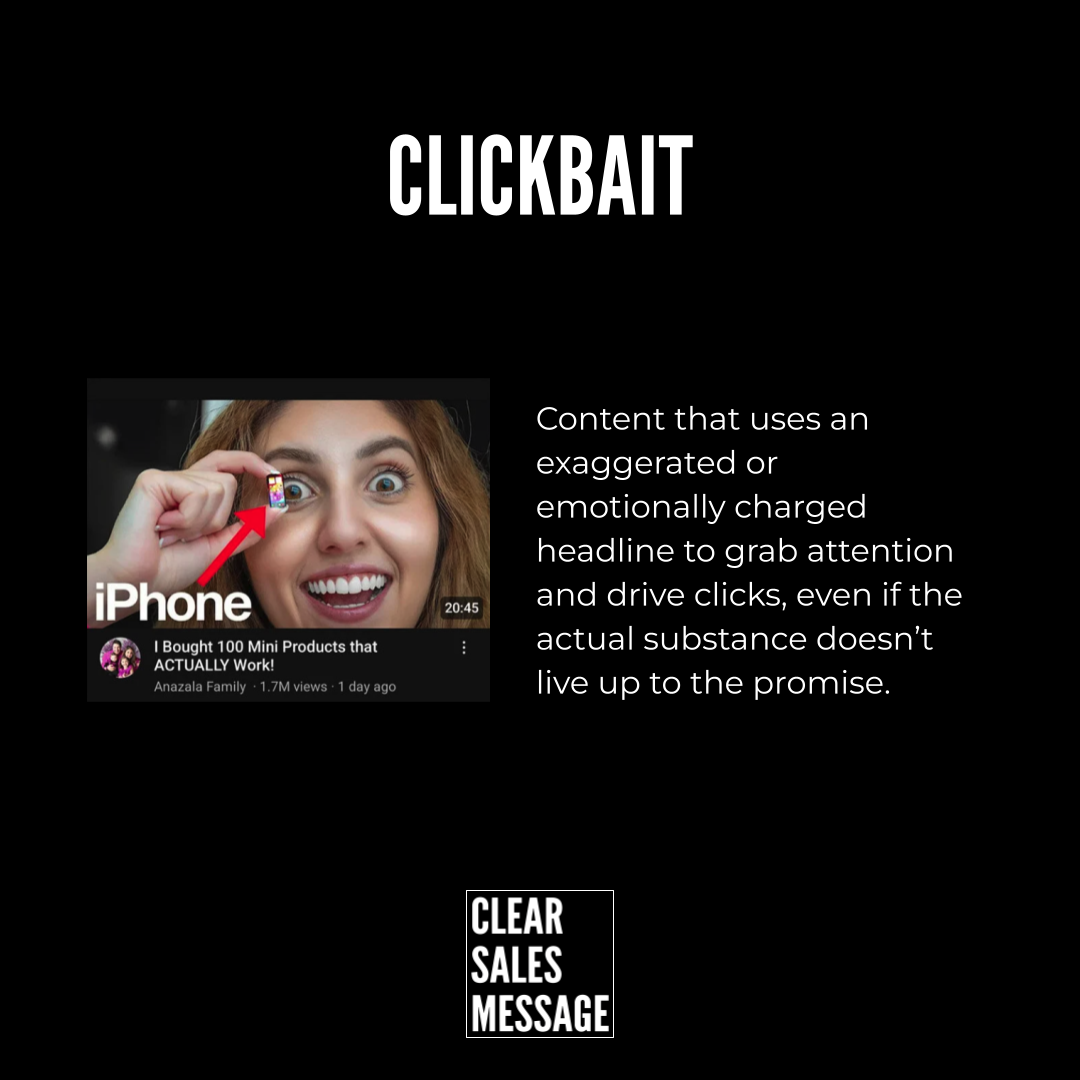
Clickbait is designed to stop the scroll.
It grabs attention fast using explosive headlines, emotional triggers or exaggerated promises.
The problem is that the content often doesn’t match the hype.
What is it?
Clickbait is content that uses:
-
Over-the-top headlines
-
Emotional wording
-
Shock value
-
Impossible promises
-
Curiosity gaps that feel urgent or outrageous
Its only job is to get the click.
Not to educate.
Not to help.
Not to deliver value.
Example headlines:
-
“You WON’T BELIEVE what happened…”
-
“I tried this ONE trick and everything changed.”
-
“This product is ILLEGAL but I bought it anyway.”
Clickbait works fast but rarely builds trust long term.
How does it work?
1. It triggers curiosity
The human brain hates open loops.
Clickbait creates a question that the viewer feels compelled to resolve.
Examples:
-
“What’s the secret?”
-
“How did that happen?”
-
“Is that really true?”
This curiosity pull overrides logic.
2. It hijacks emotion
Strong emotional triggers outperform logic.
Clickbait taps into:
-
Surprise
-
Outrage
-
Fear
-
Excitement
-
Novelty
-
Drama
High emotion equals high click-through rate.
3. It promises a shortcut
Clickbait often sells the idea of:
-
Instant results
-
Zero effort
-
Hidden methods
-
Secret strategies
People click because they want the easy win.
4. It often under-delivers
The content rarely matches the headline.
This creates:
-
Disappointment
-
Distrust
-
Lower retention
-
Less loyalty
-
Less repeat viewing
Clickbait wins the click, but loses the relationship.
How can you use it?
The key is simple.
Use the attention mechanics of clickbait without becoming manipulative.
1. Create curiosity without lying
Good curiosity examples:
-
“The mistake most businesses don’t realise they’re making”
-
“Why most cold outreach fails before it even starts”
-
“The unexpected reason buyers don’t respond”
These open loops are honest but powerful.
2. Use emotional triggers responsibly
You can still tap into emotion:
-
Relief
-
Surprise
-
Hope
-
Frustration your buyer already feels
Examples:
-
“The reason your proposals go ignored”
-
“This one shift can double your replies”
-
“Stop doing this. It’s costing you sales.”
Strong, truthful, not misleading.
3. Promise value, not miracles
Avoid fake shortcuts.
Instead, promise outcomes you can actually deliver.
Examples:
-
“A simple tweak that makes your message clearer”
-
“How to follow up without sounding desperate”
-
“Three ways to get buyers to respond faster”
These still attract clicks but build trust.
4. Make your content match the headline
This is where most creators fail.
If your headline is bold, your content must be bold.
If your headline is specific, your content must deliver specifics.
Trust is built by alignment.
5. Use the framing to your advantage in sales
Clickbait mechanics can support sales messaging:
-
Use curiosity to open conversations
-
Use emotional framing to highlight buyer pain
-
Use bold but honest statements to stand out
-
Use hooks that speak to what buyers care about
Attention first.
Value immediately after.
The result
Used well, clickbait mechanics can help you:
-
Increase engagement
-
Get more eyes on your content
-
Pull in more buyers
-
Stand out in crowded feeds
Used badly, it kills trust instantly.
The goal is not “clickbait.”
The goal is clean bait – strong hooks with real substance behind them.
See also