Practical Sales Training™ > How To Convert > Conditional Close
Conditional Close
The buyer asks, “Could you throw in an extra training session?” You could just say yes. But then they might ask for something else, and then something else again. Each favour costs you, and the deal still hangs in the air.
The Conditional Close fixes that. You say, “If I can add that session, are you happy to go ahead today?” So your yes comes with their yes attached.
What Is The Conditional Close?
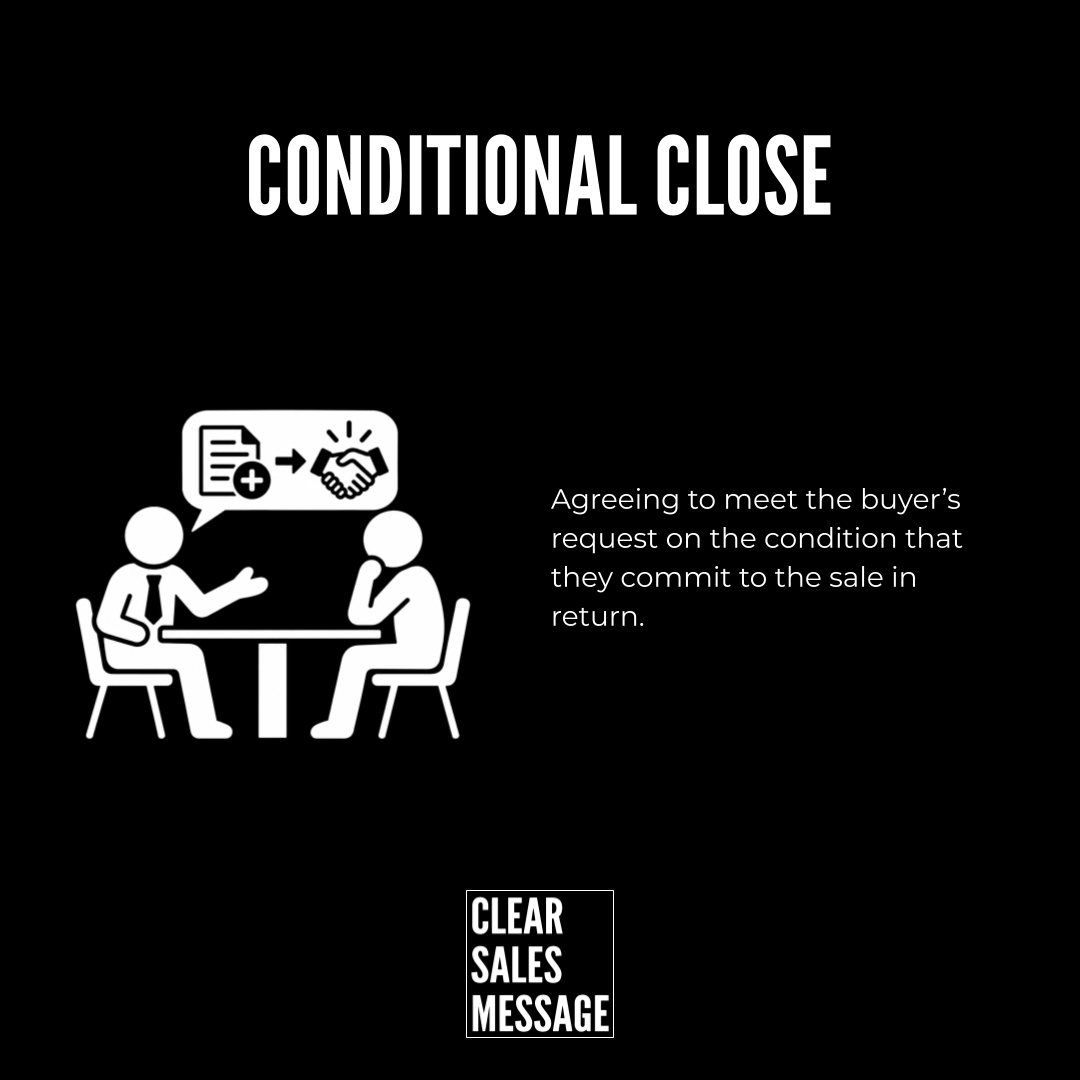
The Conditional Close means agreeing to a buyer’s request on one condition. They commit to the sale in return. It usually starts with “If I can…” and ends with “…will you go ahead?”
It turns a request into a trade. The buyer gets what they asked for. And you get a clear commitment instead of another round of talks.
It works for discounts, delivery dates, extras and contract terms. In B2B, it’s a staple of fair, firm deal-making.
Why Does The Conditional Close Work?
It works because it tests how serious the request is. If the buyer says yes, the request was the last real barrier. But if they hesitate, you’ve learned there’s something else in the way.
It also protects your value. Giving things away for free teaches buyers to keep asking. So tying each concession to a commitment keeps things balanced.
Then there’s fairness. A trade feels reasonable to both sides. As a result, the buyer feels they’ve won something, and you’ve won the deal.
Finally, it creates a natural moment to close. The buyer asked for something. So saying yes to your condition feels like the obvious next step.
How Can You Use The Conditional Close?
Here’s how to do it well.
Wait For A Clear Request
Use it when the buyer asks for something specific. That could be a lower price, a faster start or an extra feature. Vague worries need a different approach. So save this close for clear asks.
Check You Can Deliver First
Only offer what you can actually give. So check with your team before you make the trade. Breaking a promise later costs far more than the sale.
Use “If… Then” Wording
Keep the structure simple. “If I can get delivery by Friday, will you place the order today?” The condition and the commitment sit side by side.
Get Something In Return Every Time
Each concession should earn a step forward. That might be a signature, a longer contract or a faster decision. Otherwise, you’re just giving value away.
Confirm The Deal Straight Away
Once they say yes, lock it in. Send the agreement or take the order right then. As a result, the yes has no time to cool.
When Does The Conditional Close Work Best?
It works best when the buyer asks for something near the end of the sale. By then, the request is often the last barrier.
It also shines in negotiations. When both sides are trading terms, a clear “if, then” keeps things fair and moving.
And it suits buyers who like to feel they’ve won something. A small concession, tied to a commitment, gives them that win.
When Does The Conditional Close Become Dangerous?
It gets dangerous when you offer things you can’t deliver. If the extra never arrives, the buyer feels cheated. And they’ll tell others.
It also backfires when you use it too often. If every request triggers a trade, buyers feel haggled with. So save it for the requests that matter.
Watch out for giving away margin too. A discount traded for a quick yes can hurt your profit. So trade extras that cost you little but mean a lot to them.
What Are The Common Mistakes With The Conditional Close?
Most mistakes come from giving without asking. Here are the ones I see most.
Saying Yes For Free
Agreeing to every request without asking for commitment trains buyers to ask for more. So always attach a condition.
Making Vague Conditions
“If I can help with that, can we move forward?” is too soft. Instead, name the exact request and the exact commitment.
Offering Before They Ask
Some sellers offer discounts nobody asked for. That gives away value and invites more demands. So wait for a real request first.
Forgetting To Follow Through
Once they agree, deliver exactly what you promised. Otherwise, the trust you built vanishes fast.
Conditional Close – An Example
The Extra Training Day
Say you sell project management software to a mid-sized firm. The operations director likes the product but asks, “Could you include an extra training day for our team?”
You check with your trainer and know you can do it. So you reply, “If I can add that training day, are you happy to sign this week?” The director thinks for a moment, then says yes.
The extra day costs you little. Yet it removes the last worry and turns interest into a signed deal. So both sides walk away feeling they got a good result.
See Also