Practical Sales Training™ > How People Work > The Conformity Effect
The Conformity Effect
You’re in a meeting. Everyone around the table backs one supplier. You had doubts, but you keep quiet and nod along.
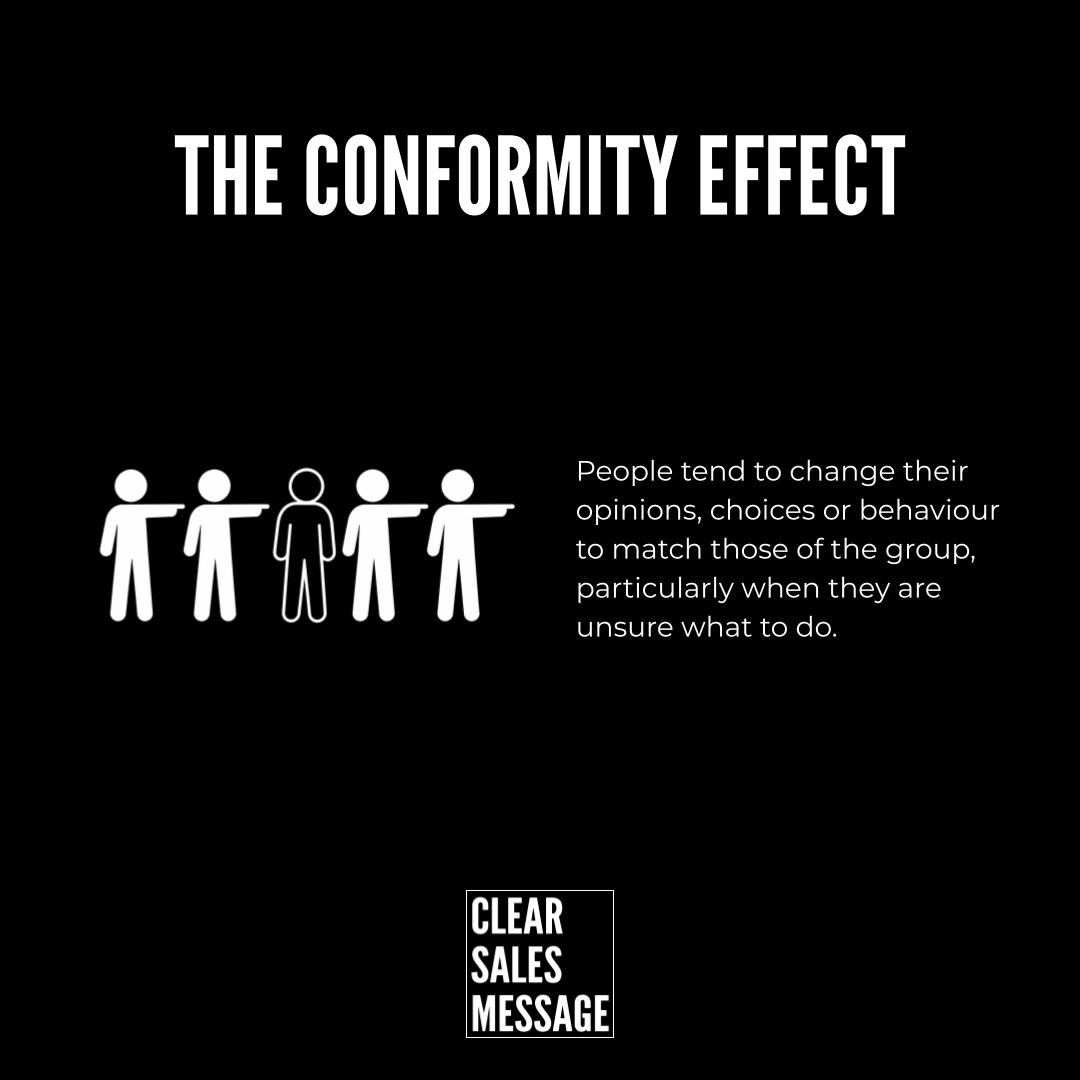
That’s The Conformity Effect. People adjust their opinions and choices to match the group. And they do it most when they’re not sure what’s right.
For sellers, that’s powerful. Show buyers that people like them already chose you. Then saying yes feels normal and safe.
What Is The Conformity Effect?
The Conformity Effect means people change their opinions, choices or behaviour to fit in with a group. It’s strongest when they feel uncertain.
Psychologists have studied it for decades. In famous experiments, people gave answers they knew were wrong. Why? The rest of the group did. So the pull to fit in can be strong.
It’s close to Social Proof, but there’s a difference. Social Proof is about using others as evidence. Conformity is about changing your own choice to line up with the group.
Why Does The Conformity Effect Work?
It works because following the group feels safe. If everyone else made the same choice, nobody can blame you alone.
It also saves effort. Working out the best option takes time. Instead, copying the crowd offers a quick shortcut.
Then there’s belonging. People like to feel part of a group. As a result, standing apart can feel risky, even when there’s no real danger.
Finally, it eases doubt. When buyers feel unsure, the group’s choice acts like a guide. In fact, the less they know, the more they follow.
How Can You Use The Conformity Effect?
Here’s how to put it to work.
Show Who Has Already Chosen You
Logos, case studies and client numbers tell buyers others have gone first. So choosing you feels like joining the group.
Match The Group To The Buyer
People follow groups they relate to. For example, a law firm cares more about other law firms than about tech start-ups.
Highlight Popular Choices
Label your most-chosen option as “Most popular.” Then unsure buyers have a clear, safe default.
Win Over The Whole Group
In B2B, decisions often happen in groups. Once a few people back you, others tend to follow. So build support across the team.
Describe What’s Normal
Phrases like “Most of our clients start with…” show buyers the usual path. As a result, the next step feels obvious.
When Does The Conformity Effect Work Best?
It works best when buyers feel unsure. New categories, complex products and first-time purchases all fit.
It also helps with group decisions. Once the room starts leaning one way, the rest often follow.
And it shines when the group is similar to the buyer. The closer the match, the stronger the pull.
When Does The Conformity Effect Become Dangerous?
It gets dangerous when you fake the crowd. Inflated numbers or made-up reviews destroy trust once buyers find out. So only share real proof.
It also backfires with buyers who want to stand out. Some people deliberately avoid what everyone else does. Instead, show them what makes you different.
Watch out for silent doubters too. A buyer who conforms in a meeting may still have concerns. So check privately before you assume a deal is safe.
What Are The Common Mistakes With The Conformity Effect?
Most mistakes come from showing the wrong crowd. Here are the ones I see most.
Using The Wrong Group
Proof from very different customers won’t sway buyers. So pick examples they relate to.
Hiding Your Popularity
If nobody knows others chose you, the effect can’t work. Instead, make your proof visible.
Showing An Empty Room
“Be our first customer” can scare cautious buyers. So lead with whatever proof you do have.
Mistaking Silence For Agreement
A nod in a group can hide real doubts. So follow up one to one.
The Conformity Effect – An Example
The Busy Restaurant
Imagine two restaurants next door to each other.
One is full of customers. The other is almost empty.
Even without knowing anything about the food, a passer-by picks the busy restaurant. Why? Everyone else seems to have chosen it.
When uncertain, people often follow the behaviour of others. They assume the majority must know something they don’t.
The sales application: show that other customers already chose your product. Then hesitant buyers feel comfortable doing the same.
The lesson: people follow the crowd, especially when they’re unsure what to choose.

See Also