Practical Sales Training™ > How To Convert > CTA Domain

CTA Domain
A CTA Domain turns your web address into a call to action. Instead of a generic company URL, it tells people what to do. Think BookWithSam.com, TryOurCoffee.com, or GetYourQuote.com.
Most web addresses are forgettable. A CTA Domain is different. Rather than a company name, the action sits right in the link. Buyers don’t have to guess what to do next. It tells them.
It’s one of the simplest conversion tools available. So if you run ads or print flyers, a CTA Domain makes every channel work harder for almost no cost.
What Is a CTA Domain?
A CTA Domain is a website address that acts as a call to action. Instead of a generic company name, it uses direct wording that tells people exactly what to do. Examples include BookWithSam.com, TryOurCoffee.com, and GetYourQuote.com.
The address itself becomes part of the pitch. When someone sees it on a billboard or a flyer, they already know the next step before they click.
You register it like any other domain, then point it to your main site or a campaign page. Because it redirects, you don’t need a separate website. The CTA Domain just makes the destination easier to find.
Why Does a CTA Domain Work?
It works because it removes friction. A buyer who sees a clear instruction acts faster than one who has to figure out where to go. The domain does the thinking for them.
It also works in offline settings, which most digital tools don’t. A long company URL on a billboard is useless. But GetYourQuote.com or VisitOurShowroom.com sticks in the mind even hours later.
And because the action lives in the address, the message stays consistent across every channel. So whether someone sees it in an ad or on a business card, the instruction is always clear.
How Can You Use a CTA Domain In Sales?
Pick the right action verb
Pick a verb that matches what you want buyers to do. Words like book, buy, try, visit, get, or join all work well. Keep it short, pair it with your brand or offer, and make sure it reads in one glance.
Register and redirect it
Register it through any domain provider and point it to your landing page. Use a .com where you can, since it carries the most trust. Alternatives like .shop or .app also work for the right context.
Use it everywhere
Put it on ads, flyers, business cards, video descriptions, and social bios. The more places it appears, the more it sticks. Repetition builds recall, and recall drives action.
Match it to your campaign
For seasonal offers or product launches, create a dedicated CTA Domain for that campaign. Something like GrabSummerDeals.com or TryNewBlend.com feels specific, and specific converts better than generic.
When a CTA Domain Works Best
CTA Domains work best in offline marketing, because that’s where most tools fail. Posters and van wraps need a short, easy URL. One well-chosen CTA Domain solves both problems at once.
They also work well in paid ads. When the URL reinforces the call to action in the ad copy, the whole message gets stronger. Buyers see the action twice, so the instruction lands harder.
Similarly, they’re useful for seasonal campaigns or short-term offers. A domain like GrabSummerDeals.com creates urgency and feels specific. That specificity tends to convert better than a generic homepage link.
When a CTA Domain Becomes Dangerous
The biggest risk is choosing a domain that’s too long or too clever. If buyers have to think about it, they won’t remember it. Keep it under five words and avoid hyphens.
There’s also a risk of the domain feeling gimmicky. If the action doesn’t match what buyers find when they arrive, the mismatch damages trust. So make sure the landing page delivers exactly what the domain promises.
And if you run multiple campaigns, things can get confusing fast. Keep a clear record of which domain points where. Review them regularly so old campaigns don’t send buyers to dead pages.
Common CTA Domain Mistakes
Choosing a verb that’s too vague
Choose a verb that’s too vague and the domain loses its impact. Words like “book”, “get”, “try”, or “join” create more urgency because they imply a clear, immediate action. Avoid “visit” or “see” since they push less hard.
Making it too long
Every extra word increases the chance buyers forget it or mistype it. Aim for two or three words and cut anything that doesn’t add meaning. Shorter is almost always stronger.
Forgetting to redirect properly
If the domain points to a homepage instead of a campaign page, buyers land somewhere confusing. So always point it to the most relevant destination, and check the redirect is working before you go live.
Letting old domains go stale
A CTA Domain that still runs but points nowhere damages trust. Review your active domains regularly. When a campaign ends, either redirect the domain somewhere useful or let it lapse cleanly.
CTA Domain – An Example
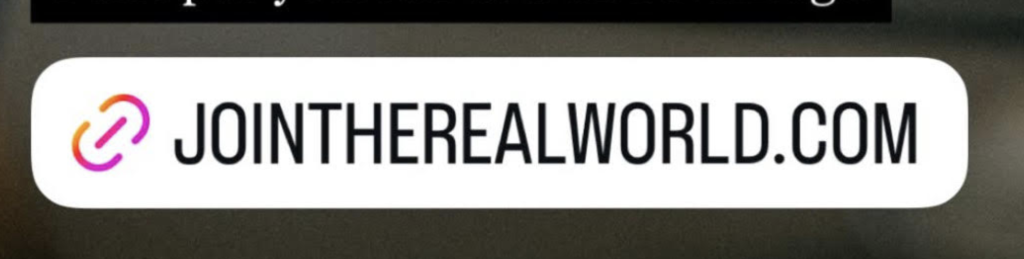
Andrew Tate uses JoinTheRealWorld.com to promote his online learning platform. The domain tells you exactly what to do and where you’re going. There’s no ambiguity and no wasted steps.
It also works as a brand statement. “The Real World” is the platform name. So the domain doubles as both a call to action and a product name. That kind of efficiency is what makes a strong CTA Domain so useful.
See also