Practical Sales Training™ > How To Get Attention > Directory Websites
Directory Websites
Most attention has to be earned. You write the ad, build the campaign, and hope the right person sees it at the right moment. But a directory website skips that step. The buyer already showed up looking for exactly what you offer.
So that’s a different starting point. You’re not interrupting someone’s day. Instead, you’re meeting them in the middle of a decision they’ve already started making.
This page covers what directory websites are, why they work so well, and how to use a listing properly instead of letting it sit there doing nothing.
What Is A Directory Website?
A directory website is a platform where buyers browse, compare, and shortlist providers. It might cover a category, an industry, or a location. For example, think professional service directories, supplier listings, comparison sites, marketplaces, and review platforms.
People don’t land on these sites by accident. Instead, they go there on purpose, because they’re actively looking for options. So the attention is already switched on before you even show up.
That’s what makes a listing valuable. You’re not creating demand from nothing. Instead, you’re stepping into demand that already exists.
Why Does A Directory Website Work?
Attention is far easier to get when you don’t have to build it from scratch. A directory site has already done that work, because it gathers buyers who are researching and getting ready to make contact.
So by listing your business there, you step into a flow of decision-making that’s already moving. You’re not competing for attention somewhere else entirely.
Buyers also tend to scan several listings fast. They form a first impression in seconds, based on how clear and relevant your listing looks. As a result, a well-built profile catches interest during that short window before they move on.
In a way, the directory acts as shared attention. It pulls in the traffic, so your listing borrows from that traffic the moment someone lands on it.
This isn’t just a theory either. In fact, research shows that online directories play a big part in how buyers find and check out a business before making contact. 94% of consumers, for example, used an online directory in the last year to find information about a business. (Source: BrightLocal Business Listings Trust Report)
How Can You Use Directory Websites In Sales?
Show Up Where Buyers Already Search
Industry-specific directories often beat general adverts, because visitors arrive with a clear goal already in mind. So finding where your buyers compare providers matters more than buying extra exposure elsewhere.
Treat Your Listing Like A Sales Page
Most directory profiles sit there half-finished. But a clear description helps. So does outcome-focused language, the right category, and a tight explanation. All of it, as a result, helps your listing stand out during a fast comparison.
Use Proof To Stop The Scroll
Reviews, testimonials, and recognisable client names make a buyer pause. Social proof works especially well here, because the comparison is happening right there in front of them.
Keep It Accurate And Current
Old information makes a listing feel abandoned. Regular updates, however, signal that you’re active. And that activity quietly affects whether a buyer chooses to get in touch.
Give Attention A Clear Next Step
Once someone’s interested, don’t make them hunt for what to do next. Instead, a booking link or a direct contact method turns that interest into action before it fades.
When Directory Websites Work Best
They work best when buyers are comparing options, not just browsing. Someone scrolling a directory has usually already decided they need a provider. They just haven’t picked one yet, so your listing is competing in exactly the right moment.
They also work well for trades and services where trust matters more than flash. A buyer comparing tradespeople or consultants, for example, often leans on a directory because it feels more neutral than a polished ad.
When Directory Websites Become Dangerous
A neglected listing can do more harm than no listing at all. Buyers are actively comparing, so a weak profile stands out fast. If yours is outdated or half-empty, they’ll notice straight away.
Relying on the directory alone is risky too. You don’t control the platform, its ranking, or its rules. So a listing should support your visibility, instead of becoming the only place buyers can find you.
Common Directory Website Mistakes
Treating The Listing As A Formality
A bare profile with one line of text wastes the attention the directory already brought you. So fill it out properly, or don’t list at all.
Leaving Out Proof
No reviews. No examples. Nothing to back up the claim. As a result, that gap sends the buyer to the next listing instead in a side-by-side comparison.
Making The Next Step Unclear
If a buyer has to dig around to find your contact details, most won’t bother. Attention fades fast, so the next step needs to be obvious right away.
Directory Websites – An Example
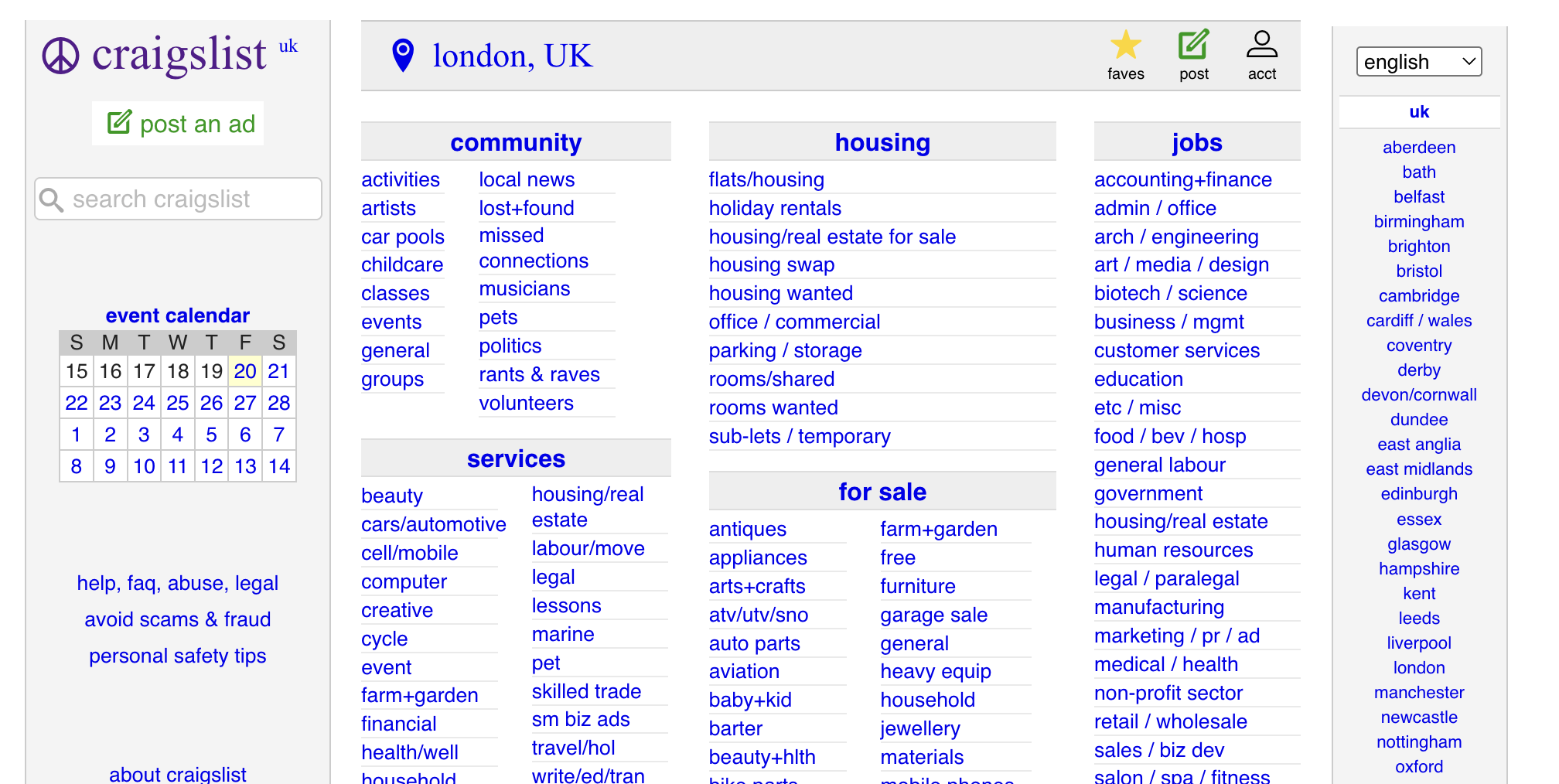
Craigslist’s homepage is about as plain as a directory gets. No images, no styling. Just a list of categories and locations stacked on the page.
And yet it still works. Nobody lands there by accident. Instead, every visitor arrives already looking for something, whether that’s a flat to rent or a sofa to buy. The directory doesn’t need to look good. It just needs to be there at the moment someone’s already searching.
That’s the core lesson for any listing. The platform’s job is to bring the buyer to the door already interested, so your job is everything that happens once they open it.
See also