Practical Sales Training™ > How People Work > Endowment Effect
Endowment Effect
Try selling your car to a dealer. Suddenly it’s worth far more to you than any price they offer. It’s the same car you’d happily have swapped a year ago. But now it’s yours, and that changes everything.
That’s the endowment effect. Ownership makes things feel more valuable. And for sellers, that’s a big clue. If you can help buyers feel they already own what you sell, they’ll want to keep it.
What Is the Endowment Effect?
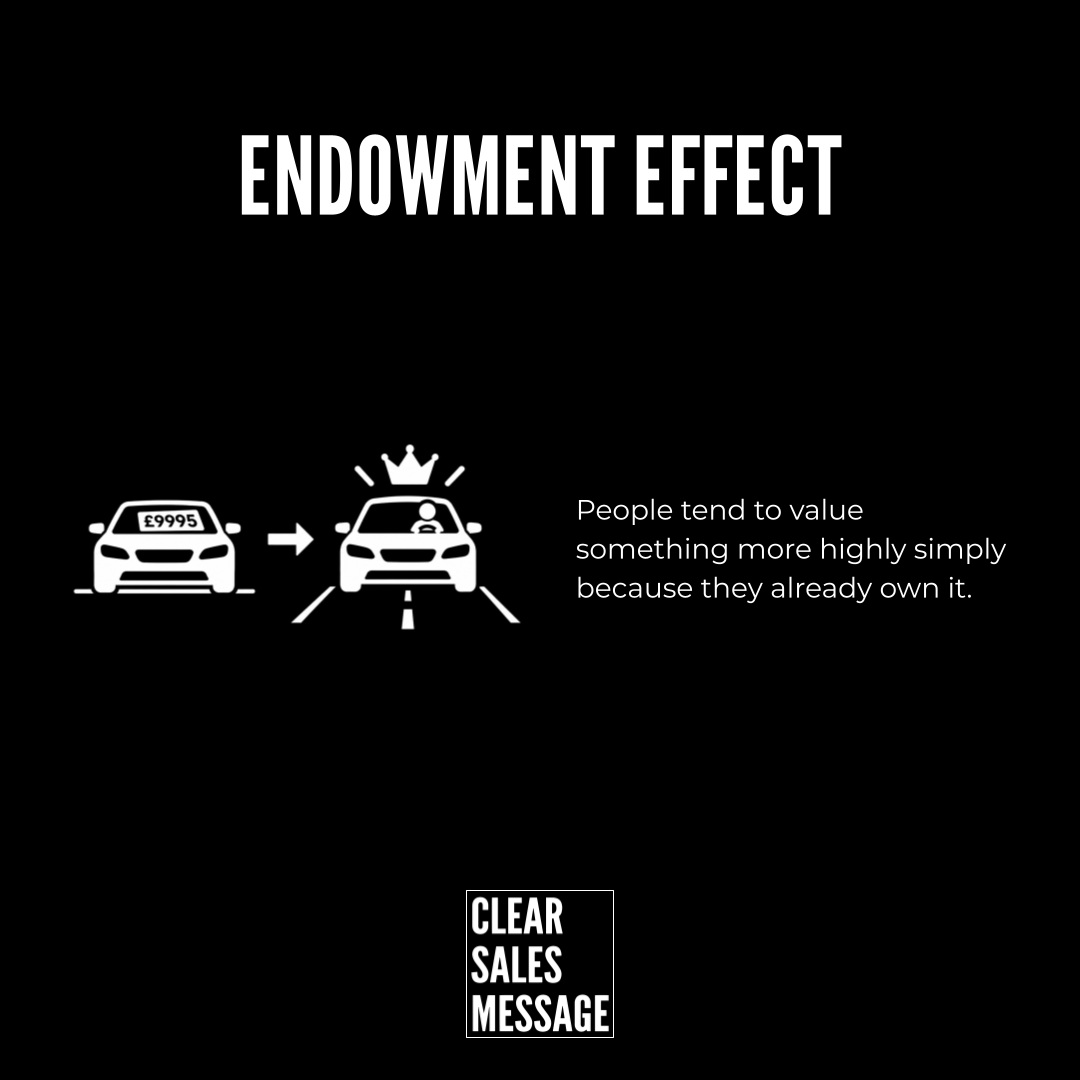
The endowment effect means people tend to value something more highly simply because they already own it.
It doesn’t take much. Owning something for a few minutes can be enough. In fact, the feeling of ownership can kick in before money changes hands. A free trial, a test drive or a custom quote can all make something feel like “mine.”
Researchers Daniel Kahneman, Jack Knetsch and Richard Thaler made the idea famous with a simple experiment. It used a coffee mug.
Why Does the Endowment Effect Happen?
Losing something hurts more than gaining the same thing feels good. So once a buyer owns something, giving it up feels like a loss. As a result, they want more to let it go.
Ownership also builds attachment. People picture using the thing, talk about it and make it part of their routine. Then it stops being just an item. It becomes part of how they live or work.
And we tend to like our own choices. Once we’ve picked something, we look for reasons it was a good call. That makes us value it even more.
How Can You Use the Endowment Effect?
Let Buyers Try It First
Free trials, samples and test drives all create a sense of ownership. Once buyers start using something, giving it back feels like losing it. So the decision shifts from “should I buy this?” to “do I want to give this up?”
Use “Your” Language
Words shape ownership too. Say “your dashboard” or “your new kitchen” rather than “the product.” It’s a small change. But it helps buyers picture the thing as theirs.
Let Them Customise It
When buyers choose colours, add their logo or set up their account, they put a bit of themselves in. That way, it feels personal. And personal things are hard to walk away from.
Remind Them What They’d Lose
Near the end of a trial, show buyers what they’ve built or saved. Their data, their settings and their results all count. Then the choice to leave feels like giving something up.
When Does the Endowment Effect Work Best?
The endowment effect works best when buyers can use the product before they pay. Software, cars, furniture and clothes all fit well.
It also works well when using the product creates something personal. Saved work, custom settings or a lived-in feel all add to the pull.
Finally, it suits renewals. Existing customers already own the relationship. So they often value it more than any new offer.
When Does the Endowment Effect Become Dangerous?
The endowment effect gets risky when you trap people. Making it hard to cancel or holding data hostage might keep customers for a while. But they’ll resent you.
It also works against you when buyers already own something else. They overvalue their current supplier too. So expect them to rate it higher than it deserves.
And watch out for overvaluing your own work. Sellers fall for this as well. You might love your offer because it’s yours, while buyers see it very differently.
What Are the Common Mistakes With the Endowment Effect?
Making Trials Too Short
Ownership needs time to build. A trial that ends before people use it properly creates no attachment. So give them long enough to feel hooked.
Leaving Buyers Alone During the Trial
A trial nobody uses does nothing. So help buyers get set up and see a quick win. Then the sense of ownership grows.
Talking About “the Product”
Distant language keeps buyers at arm’s length. Instead, talk as if it’s already theirs.
Ignoring the Rival They Already Own
If buyers already use something, they overvalue it. So show clearly what staying put costs, as well as your benefits.
Endowment Effect – An Example
The famous coffee-mug experiment.
Researchers gave some participants a mug, then asked how much they would sell it for. They asked others what they’d pay.
- Owners wanted $7.12 to sell.
- Buyers would pay $2.87 for the same mug.
Simply owning it more than doubled its perceived value. That’s the endowment effect.
Think about how small that ownership was. It was a plain mug, and people had owned it for minutes. Yet that was enough to make them value it far more. So imagine what a few weeks with your product could do.
See Also